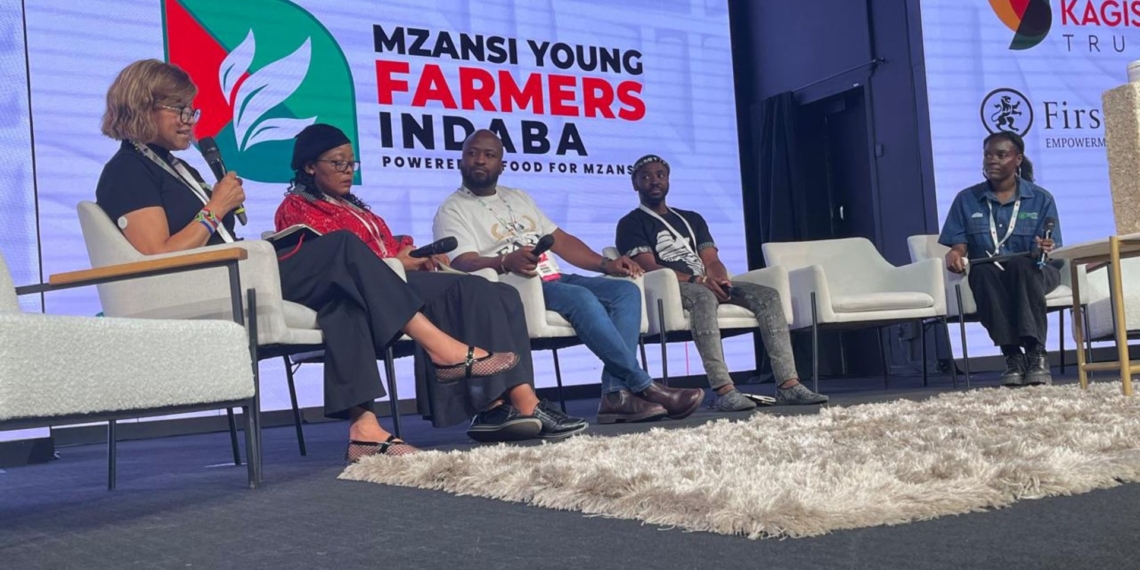
Agroprocessing is a powerful pathway for farmers to move beyond the farm gate and into real economic participation. At the recent Food For Mzansi Young Farmers Indaba, a panel unpacked how black-owned wine brands and homegrown food products are making their way from processing facilities to national shelves.
At the heart of the discussion, facilitated by Food For Mzansi’s specialist journalist Patricia Tembo, was a clear message: agroprocessing is where farming begins to translate into ownership, branding, and long-term value.
Industry voices shared both the opportunities and the tough lessons that come with building products that can compete, scale, and ultimately shift farmers from producers to players in the broader food economy.
Complex rules, multiple opportunities
A big part of the conversation focused on the cannabis industry, particularly its complex legal framework in Mzansi. Co-founder and director of Cheeba Africa, Linda Siboto, explained that while cannabis can be grown and shared legally under certain conditions, selling it remains restricted.
He said this has created a grey area where clubs and informal systems operate, but cautioned farmers to follow formal routes, such as hemp, research, or indigenous knowledge systems permits.
“I would get phone calls from businesswomen in the Eastern Cape with buckets of cannabis selling for R20 or R50,” he said.
He explained that the street value of that cannabis could run into hundreds of thousands of rands, adding that traditional growers’ livelihoods have been severely impacted by the shift in the market.
“This is not like growing a tomato; it’s a very complex legal framework,” Siboto said.
“Before it becomes medicine, it starts as an agricultural commodity.”
Linda Siboto
Meanwhile, Karin Kleinbooi, executive manager for inclusion and development at South Africa Wine, said the wine industry is often misunderstood as a single-entry sector, when in reality it offers multiple pathways.
“If you look at the wine industry in its totality, there is not just one way in,” she said, adding that many players enter from fields such as business and law, bringing critical skills that shape success beyond production.
She explained that entering the wine industry is not only about growing grapes or making wine, but also about understanding the broader business environment that supports it.
“In many cases, people arrive from different places; there is not just one way in,” she said.
Kleinbooi added that the sector is open to new entrants from diverse professional backgrounds, with success often shaped by a mix of production, business, and legal expertise.
Related stories
- Turning goat milk into gold: Farmers tap agro-processing power
- Agro-processing: Farmer’s guide to turning crops into cash
- De Bruyn’s butternut brew turns coffee on its head
- Spreading the spirit of Ubuntu through olive oil
Closing the gap in local food access
The discussion also touched on food systems, access to local produce, and the importance of platforms that connect farmers directly with buyers. Ska Moteane, a Lesotho-based chef, said better platforms are needed to link food producers with consumers.
“We need to have more platforms like this where we really talk about our food and connect with people producing our food,” she said.
She added that she often ends up buying imported products because locally produced goods are not always easy to find, despite being available. “Sometimes I end up going to big brands of imported goods because I can’t find locally produced products, even though they are actually being grown locally.”
Moteane emphasised that the disconnect between production and access remains a major challenge for indigenous food practitioners and farmers.
For Bayanda Maseko, an agripreneur and founder of Noliqua Legacy Snail Farm, shifting commodities should not be foreign to farmers who want to grow.
He said he moved into snail farming after becoming frustrated with ongoing challenges in poultry, particularly around market access and funding. “I got tired of that because we are all talking about the same challenges, market access, funding and all of that.”
He said the business quickly became commercially viable, with off-take agreements secured for snail meat, mainly targeting export markets. “I started looking for a system that is more scalable, accessible and future-focused.”
Maseko added that research into global trends revealed strong demand for micro-livestock, including snails, which remain largely untapped in Africa.
READ NEXT: Rooibos cosmetics offer growth path for agripreneurs