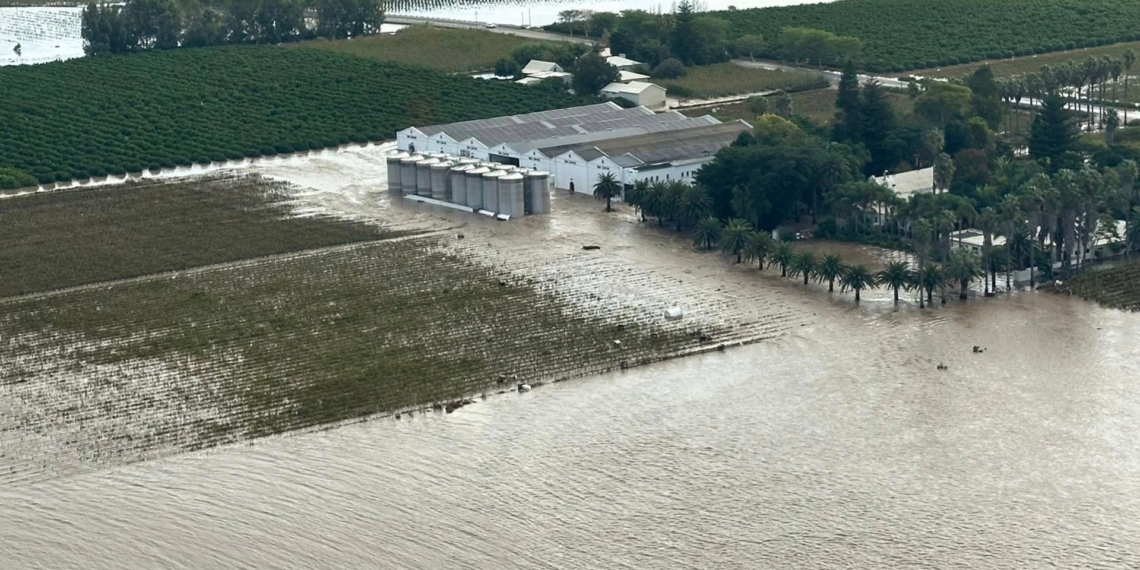
The South African Table Grape Industry (SATI) has called on both provincial and national government authorities to urgently provide disaster relief and recovery support to table grape producers and rural communities affected by the recent severe storms, flooding and strong winds across parts of the Western Cape.
Although the 2025/26 table grape harvest season concluded recently, widespread damage to farming infrastructure has been reported across several production regions.
The most severely affected areas were parts of the Berg River, Hex River and Olifants River regions, where some farming operations have been partially or severely disrupted.
The chief executive officer of SATI, Mecia Petersen, said a major concern at present is access and in several areas, access roads have been damaged or washed away, leaving some farms inaccessible.
According to feedback received through a survey conducted among SATI members in the affected regions, some farming operations remain severely disrupted due to extensive infrastructure damage.
- Citrus farmers count losses as floods drown export hopes
- Farmers battle floods, snow and damaged infrastructure
- Plan before you plant: Key insurance lessons for SA farmers
- Vaccines alone won’t save SA agriculture from biosecurity threats
Petersen said producers have reported widespread damage to vineyards and agricultural infrastructure, including flooded vineyards, collapsed netting and poles, damaged trellising systems, and irrigation infrastructure. “Some farms reported that more than a third of their plantings had been affected.”
The flooding has been particularly devastating for producers in the Hex River region, which has now experienced severe flooding for the third time in five years, resulting in repeated damage to vineyards and infrastructure.
Crucial post-harvest period affected
“In some cases, vines that were replanted in August 2025 to replace vineyards damaged during the 2024 floods have now been washed away again. The average cost of establishing one hectare of table grapes can be up to R1.2 million, making the financial impact on affected producers extremely severe.
“Government disaster relief processes must be accelerated to address these extenuating circumstances,” Petersen said.
SATI emphasised that the timing of the disaster is particularly concerning as producers are now entering a critical post-harvest period during which essential vineyard management practices must be carried out.
“These post-harvest activities are crucial in determining the size, quality and productivity of next season’s table grape crop. It is therefore essential that affected producers can restore operations as quickly as possible to limit longer-term impacts on productivity, sustainability and employment in the industry,” she added.
SATI has appealed to both provincial and national authorities to urgently provide the necessary disaster relief and recovery support to assist producers and rural communities in rebuilding damaged infrastructure and restoring farming operations.
“Without urgent intervention, the impact of these storms could extend far beyond the immediate damage already suffered by producers and rural communities,” Petersen said.
Affected producers are strongly encouraged to complete the Western Cape department of agriculture’s damage assessment survey as soon as possible. Accurate information is essential to help quantify the impact and motivate for the necessary support measures.
READ NEXT: SA’s water crisis: A permanent threat to farming and economy