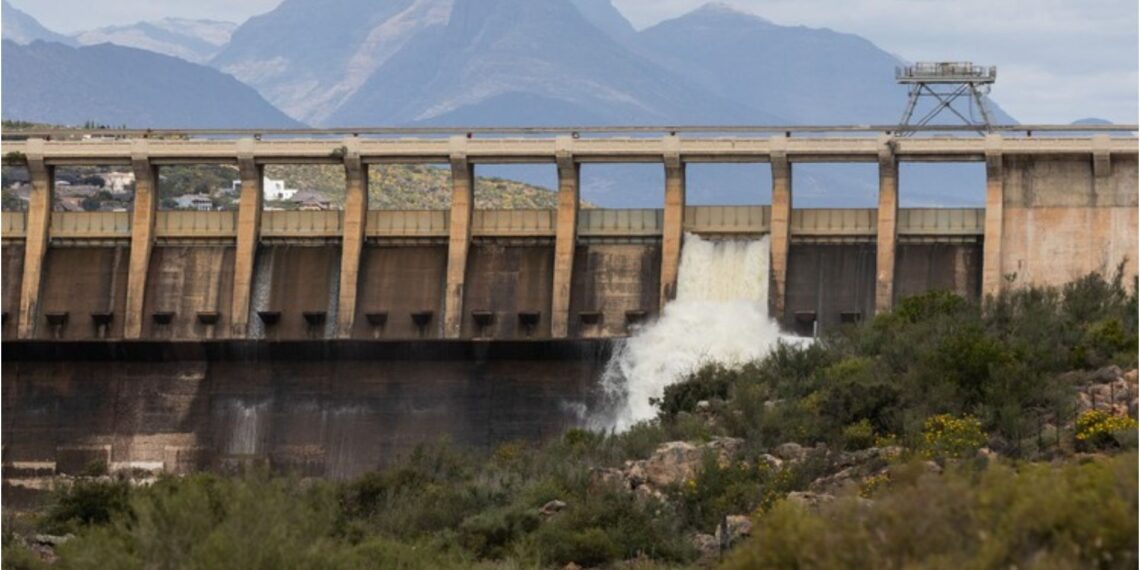
As part of Water Month, minister of water and sanitation Pemmy Majodina visited the R5.7 billion project aimed at raising the Clanwilliam Dam wall in the Western Cape. The visit comes after President Cyril Ramaphosa said the government needs to do more to ensure water access.
Upon completion in 2028, the dam is set to benefit farmers in the area. The raising of the dam wall is part of the Olifants-Doorn River Water Resources Project (ODRWP) currently underway. It entails surface preparation by means of concrete demolition, drilling and blasting to prepare for the construction of the spillway and the intake tower of the dam.
Benefits to surrounding rural communities
According to the department of water and sanitation, the completed project will supply raw water from the Clanwilliam Dam to farmers, municipalities, mines, and industries in the Olifants River valley between the dam and the estuary (river mouth).
The pre-construction activities at the dam commenced in 2018 and the construction progress is currently at 21% as of 01 March 2025.
Although the project has faced numerous challenges that led to its delay since its inception, Majodina said she is satisfied with the construction progress and is confident the project will be finalised on time.
Related stories
- Clanwilliam Dam delays frustrate farming communities
- Clanwilliam Dam extension set to create 70k agri jobs
“Let us ensure that we accelerate the project so that it can be finalised on time. The project will not only determine the safety of the dam but will also bring economic spin-offs to the area of Clanwilliam and its surroundings. I am satisfied with the progress of the project and the multiple work that is running concurrently. This will speed up the completion of the project.
“The main beneficiaries will be local farmers, households and historically disadvantaged farmers.”
Majodina said sourcing funds to cover the costs of the project was one of the reasons why the project was delayed, citing that the government was now in the position to finish the project.
“We must deliver on this project because the issues of irrigation and agriculture are extremely important in this area, and this industry relies heavenly on this dam functionality so we have to do it fully.”
Improving safety standards
The minister said the project comprises several components. “The main one was the alignment of the N7 National Route completed in 2017. Old Cape Road will also be raised and realigned, together with the raising of Algeria Road crossing the Olifants River. Other infrastructure affected by the projects are the farms and houses along Renbaan Road as well as the hydropower plant.
“In October 2007, the department of water and sanitation assessed the Clanwilliam Dam’s safety regulations. It was discovered that it posed a potential danger to the public and could cause damage to property or negatively affect the resource quality. Following the dam safety inspections and the assessments, recommendations for remedial work were made to stabilise the dam wall and improve its safety under high flood conditions,” she explained.
Majodina said agriculture is going to be the biggest winner on the project as it will not only improve the dam safety standards under high flood conditions but will also improve assurance of water supply to the existing irrigators.
“The newly renovated dam will also increase its annual yield by approximately 70 million cubic metres per year, thereby benefitting and developing the emerging and small-scale farmers in the area,” she said.
READ NEXT: Godongwana increases VAT as state’s pockets run dry
Sign up for Mzansi Today: Your daily take on the news and happenings from the agriculture value chain.