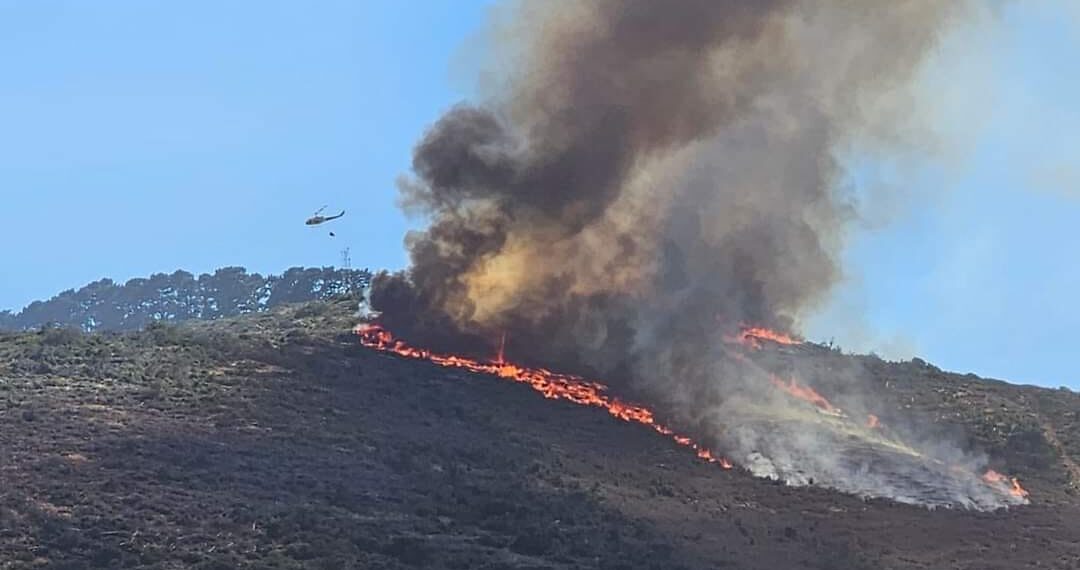
As climate change drives temperature increases and lower precipitation in southern Africa, research has found that there is likely to be an increase in the number of wildfires in regions that are already hot, dry and water-scarce.
Massive wildfires broke out in South Africa’s KwaZulu-Natal province on 12 and 13 July 2024, killing six firefighters who were trapped in a blaze and seven other people. The same fires killed 1 600 livestock animals and burnt 14 000 hectares of land.
About 84% of all human settlements in South Africa are located in fire-dependent ecosystems – places in which natural fires can contribute to the health of the ecosystem by clearing out old plant matter. But when fires rage out of control, the damage can include loss of life and injury. Infrastructure, industrial facilities, livestock, fodder banks, agricultural equipment, plantations, homes and resorts are often destroyed.
Causes of veld fires
The major causes of wildfires in South Africa are:
- very dry and hot conditions with temperatures of over 42°C
- high winds
- dry vegetation such as areas where trees have been cut down, with branches, leaves and twigs left on the ground. Land that has become infested with alien and invasive plant species that dry out fast and then burn quickly is another cause.
- depopulation of commercial farming areas, with nobody available to fight wildfires when they break out
- gentrification and resorts that are separate from resident communities, leaving nobody around to fight fires when these start
- new and unskilled people with no capacity to fight fires moving to fire-prone rural areas
- landowners who do not adapt their land to the increased risk of fire and who do not keep firefighting equipment on the property
- human culpability like dropping lit cigarettes from a car window or carrying out dangerous activities on high fire risk days.
My research aimed to find out how many civil wildfire lawsuits have been decided by South African courts since 1994, and whether these are linked to the warming climate. The cases I found show how the rules for allocating liability for wildfire damages are evolving. The cases make reference to climatic conditions, such as rivers and other conditions on the land being much drier and hotter than normal.
I found that there have been at least 22 wildfire lawsuits decided between 1997 and 2023. There is no climate change law yet that sets out how people who’ve suffered losses from climate-related fires can sue. But the law of delict, which sets out how to claim compensation for injuries and damages, and the National Veld and Forest Fire Act have been used.
These lawsuits are important because if the courts uphold claims for civil damages against negligent landowners, this should compel landowners to comply with the law and put preventive measures in place. These court judgments could limit the number of wildfires that break out.
What do South Africa’s laws say about wildfires?
What does the law say?
In South Africa, wildfires are known as veld (open, natural grassland) fires. The Veld and Forest Fire Act says that owners of land must keep firefighting equipment, people trained to fight fires and protective clothing available. If they are away, a responsible person must extinguish fires and notify neighbours. Landowners are obliged to create fire breaks on their land to stop the spread of fire. However, there are wide ministerial powers to grant landowners exemptions.
To sue for damages from a fire, there must be proof that the fire was started intentionally or as a result of negligence. To claim compensation, there has to be damage that is quantifiable (such as losing a house or a breadwinner). The damage also needs to be wrongful.
In law, this relates to whether holding someone liable for wildfire-related loss is viewed as reasonable in the eyes of the community. In some cases, the courts have accepted that landowners did everything they could to fight wildfires that broke out because of hot and dry weather and quickly became unusually uncontrollable and ferocious.
However, because the risks of climate change are becoming better known, it is more foreseeable these days that wildfires will occur. Landowners who don’t take precautions against wildfires will find it difficult to argue in court that they could not have foreseen a fire starting during a hot, dry period. If they also fail to maintain fire breaks, train personnel or keep fire-fighting equipment on site, they could fail the reasonableness test, especially on high fire danger days.
Related stories
- EC govt. supports Zilandana farmers after devastating veld fires
- Safety first! Prepare your farm for veld fires
- Joining Fire Protection Associations key to combat veld fires
What I found
Litigation about the risks associated with climate change is happening. In South Africa, the state has done a reasonable job of putting in place a regulatory standard against wildfires. Using this standard to sue landowners or companies for failing to adapt to the changing climate will become more important as climate-change disasters, such as wildfires and floods, increase.
The failure to maintain a fire break is also a crime. Further research is needed to understand whether criminal penalties have been imposed on negligent landowners.
To date, the claimants in wildfire lawsuits have mainly been historically advantaged farmers or landowners who have claimed from other landowners, business owners, municipalities, the state-owned transport entity, and even the Moravian Church. The claims have ranged from R74 000 (US$4,120) to R23 million (US$1.27 million) for burnt plantations, areas of fynbos, sawmill stock, agricultural land, farm fences, orchards, electric wire and livestock.
I did not find any lawsuits brought by working-class communities whose shacks or homemade shelters had been destroyed by fire although there are many such cases. As there are more people in those communities than commercial farmers who are affected by wildfires, this is a clear gap.
There have only been two lawsuits which even mentioned damage to the environment (one lawsuit mentioned trapped lions and another destruction to fynbos). Only three lawsuits mentioned personal injury or destruction of homes by wildfires.
Climate change science has shown that the southern African region is becoming hotter and drier and an increase in the number of high fire danger days is inevitable. The way in which courts are using existing laws to allocate liability for climate risks can reinforce preventive behaviour and highlight key gaps. Parliament or the state executive can then address the gaps.
*Author’s note: there is no definition of “wildfire” in South African law and veldfire is the legally correct term in use in South Africa.
This article was first published by The Conversation.
ALSO READ: Farmers urged to embrace conservation agriculture
Sign up for Mzansi Today: Your daily take on the news and happenings from the agriculture value chain.