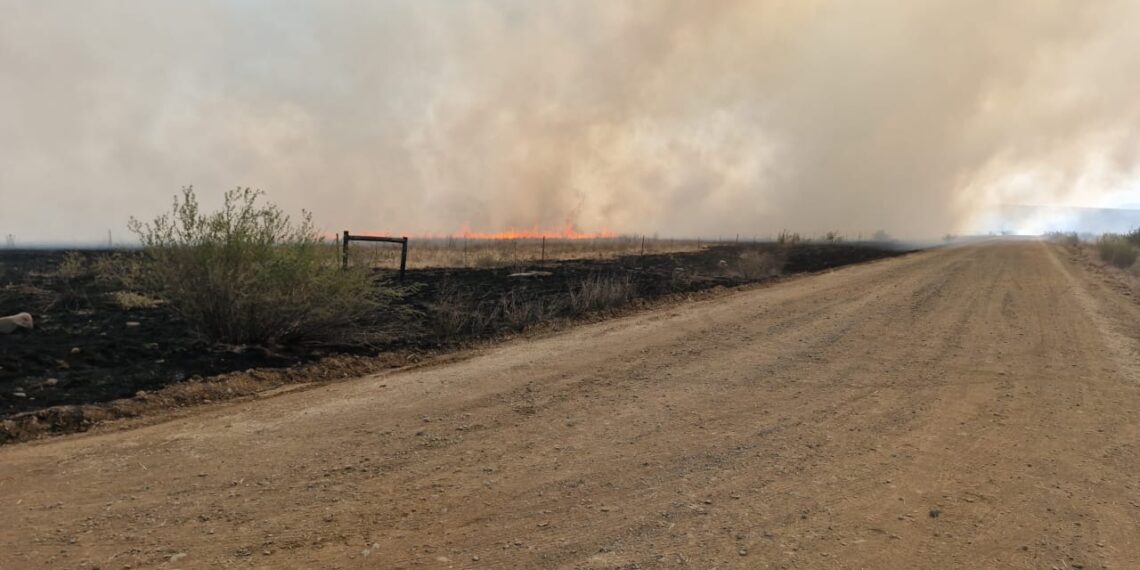
As veld fires continue to ravage grazing lands across some parts of the country, the government and organised agriculture have called for a more proactive strategy to combat these blazes. These fires have already consumed nearly ten thousand hectares of land, destroyed infrastructure, and resulted in the loss of lives.
Food For Mzansi spoke to Dr Jack Armour, commercial manager at Free State Agriculture, for further guidelines and insight in preparing for veld fires.
Armour highlighted the importance of farmers being actively part of the local Fire Protection Association (FPA).
According to Armour, the National Veld and Forest Fire Act states that if a farmer is not part of a registered FPA, the landowner needs to have their own firebreaks to prevent the spread of fires from their land.

Patricia Tembo: Which regions ought to be most aware of veld fires and who do they affect?
Jack Armour: All regions are equally vulnerable, however, not all regions have the same levels of preparedness and risk. The higher the fuel load (grass/bush/tree density), the greater the risk.
Municipal communities and farmers bordering them are particularly vulnerable, and many in townships and informal settlements still rely on fires for heating and cooking and this is where the risk lies.
Should firebreaks be maintained all year round or are they specifically for veld fire season?
Firebreaks should be made before the fire season! No fires are to be made for the maintenance of firebreaks during high fire danger index conditions or without the express permission and instruction of the district fire control officer.
Manual maintenance through, for example, overgrazing with an electric fence or spraying of molasses on the grass or mechanical with a disk, can be done where it won’t pose an erosion risk.
Related stories
- FS farmers struggle after devastating veld fires
- Rain needed as veld fires destroy over 400 000 hectares
How can farmers identify safe zones for grazing on their farms during the veld fire season?
Areas within the firebreaks as designated by the local Fire Protection Association. In extremely dangerous conditions or where there is a confirmed fire approaching, fences or gates need to be quickly opened or unlocked and animals be chased to an area which can be sprinkled (e.g. a garden) or a bare kraal (often around a watering point) or a feedlot.
What should a farmer look for when inspecting their farm that could be hazardous or result in a veld fire?
The Eskom power lines, birds’ nests or weak or broken infrastructure swaying in the wind and lines touching and creating sparks need to be reported asap before a fire occurs to the power utility.
In terms of workers’ housing, it is important to have safe electrical connection points and pits where smouldering embers from a fireplace can be discarded and put out properly with water. [There should be] farm rules that children may not make random fires without the supervision of a responsible adult.
What responsibilities do farmers have in preventing veld fires?
To ensure no workers or contractors are welding or working with a grinder in the veld or road verges or servitudes under power lines during high-risk times. And if they are, to ensure that there is sufficient firefighting equipment on hand.
It is very important to ensure that their staff are trained and equipped to assist in fighting veld fires and that their own firefighting equipment is ready and in working order.
ALSO READ: Agriculture must build on gains from previous administrations
Sign up for Mzansi Today: Your daily take on the news and happenings from the agriculture value chain.