“In the past, my ancestors depended on and lived off nature,” said Simon Mafela, the secretary of the Tshivhula Community Property Association, “the idea now is that we have to live off it, in different way”.
Following the Biodiversity Economy and Investment Indaba, South African National Parks (Sanparks) invited the media to Tshivhula Game Lodge in Limpopo last week, which is a community-owned land and beneficiary of the Biodiversity and Wildlife Economy.
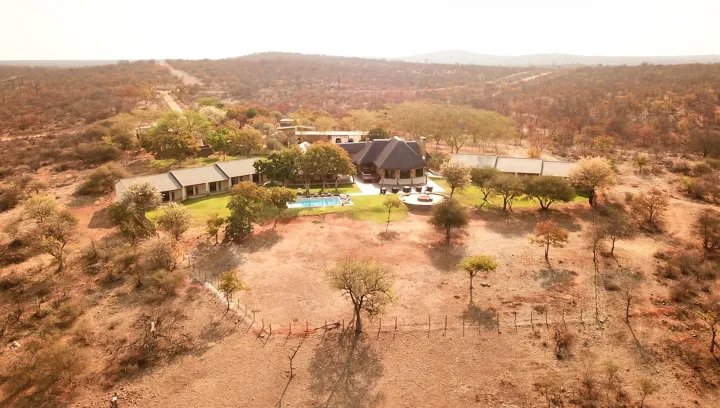
The 14 200-hectare game farm is part of the land that was claimed by the Tshivhula community, otherwise known as Vhatwanamba, in 1998 under the leadership of Chief Abel Tshivhula on behalf of his community.
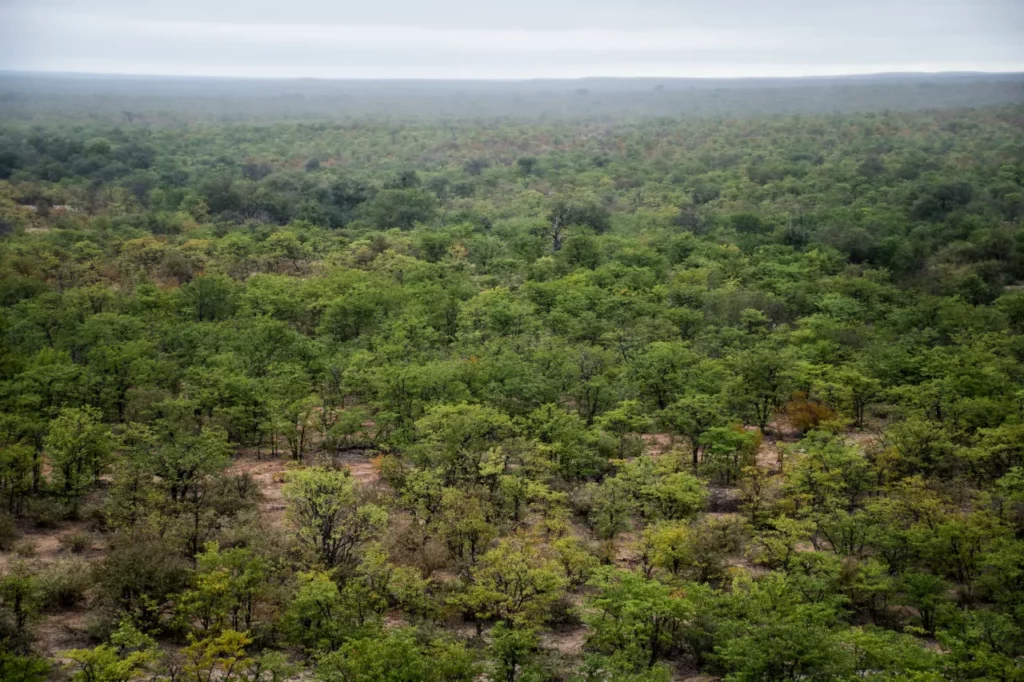
After a successful land restitution process, the government bought three farms for R71-million from willing sellers in 2009, and a Communal Property Association (CPA) – a body that holds the land on behalf of the beneficiaries – was formed.
Mafela, a school principal in the Vhembe-West district of Limpopo, explained that the Tshivhula community are descendants of the Mapungubwe Kingdom and have ancestors who lived on this land for hundreds of years, before being displaced by the apartheid government.
His ancestors lived off the land, hunting, gathering mopane worms and eating berries. Now, having reclaimed the land, the community has chosen to use their land to run a game farm – despite having diamonds and other lucrative minerals on their property.
SA’s largest producer of diamonds, De Beers’ Venetia Diamond Mine, is nearby. Mafela said the CPA was given prospecting records by the Department of Mineral Resources and Energy that showed diamonds are on their land, but they chose a more sustainable route to benefit their community.
When asked why the CPA didn’t go after the minerals, Mafela said that it might take years before the community saw any profit from mining, and after the life of a mine, the land would be destroyed and unusable.
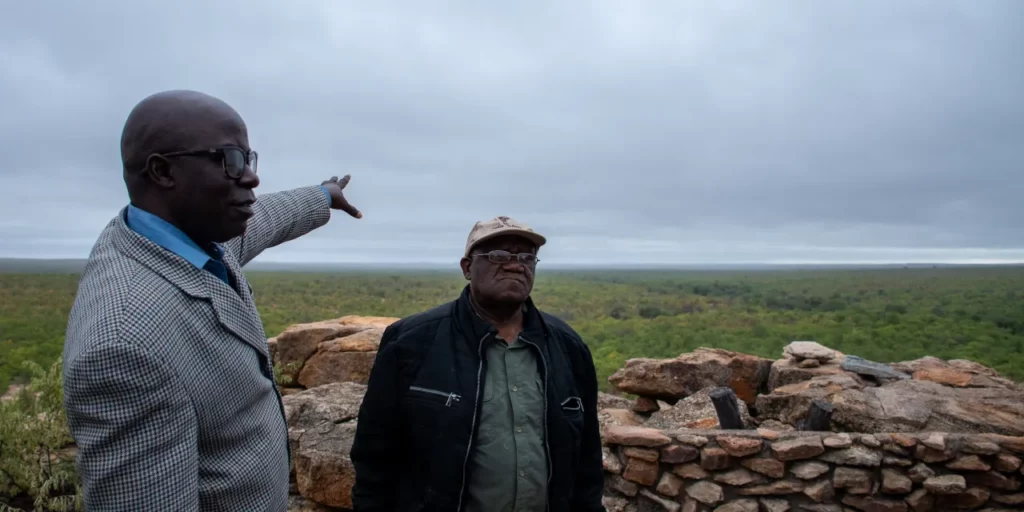
Ngcali Nomtshongwana, the acting head of socio-economic transformation at Sanparks, who has worked with community-based natural resource management projects for over 20 years, told Daily Maverick, “any communally owned property presents challenges from word go – it’s like a familial business.”
“So what excites me most here, if you listen to Simon [Mafela], is why they chose wildlife economy and conservation,” said Nomtshongwana, speaking about the long-term sustainability and community benefits. “In these times of socioeconomic challenges, how many empowered people can make such a wise decision?”
The Tshivhula Game Farm, which is near the border of Botswana and a one- hour drive from Mapungubwe National Park, has two luxury lodges and one budget-friendly lodge on its property and offers ecotourism services and trophy hunting for international and domestic tourists.
The lodges were built in 2015, mainly funded by investment from Bono Holdings, a management and export company, that has a 48% stake in Ndou Safaris (the name of the business that includes all three game lodges on Tshivhula game farm).
Malokisa (Evans) Nevondo, managing director and owner of Bono Holdings, told Daily Maverick that since 2015 he’s invested at least R25-million in infrastructure, as well as buying wildlife from the previous farm owner.
Nevondo, who grew up in Murunwa village in Limpopo – the same area Mafela teaches – said that the Department of Agriculture, Land Reform and Rural Development also injected R12.8-million for recapitalisation as grant funding in 2018 into Ndou Safaris.
Funding constraints
But running a game farm is expensive. Mafela said that the game farm costs at least a quarter of a million rand a month to run – from the high electricity costs (which include pumping water from over a dozen boreholes to watering holes for the animals) to fixing the constant damage to property from free-roaming elephants and regular theft.
And since Covid-19, Ndou Safaris has lost some of their international tourists, dropping from 80% occupancy to 60%, reducing their main income stream of trophy hunting.
Malefa said that after the Russia-Ukraine war began, the lodge lost close to R6-million in bookings from Russian clients.
So they are in need of more investment to keep going either from the UNDP Biofin Biodiversity Investment Portal or from more clients. They are looking at between R30 million and R50 million needed for capital expenditure, expanding and upgrading infrastructure working capital.
Besides investment, selling game meat and increasing hunting could help the lodge become more lucrative.
Game meat
As part of their wildlife economy programme, the Department of Forestry, Fisheries and Environment (DFFE) have committed R10 million for infrastructure at Tshivhula game lodge, much of which will go toward building an abattoir on their premises, so they can process game meat they’ve hunted. Additionally, 140 game have been donated by Sanparks, and two young local women attended the Professional Hunting training.
The DFFE said that 76 game farmers are approved for funding for infrastructural development, with over R200-million in investment unlocked.
The revised draft for the new National Biodiversity Economy Strategy (Nbes), presented at the Indaba in March, aims to optimise biodiversity-based business potentials across the terrestrial, freshwater, estuarine, marine and coastal realms.
Part of the Nbes is the goal to promote the consumptive use of game from extensive wildlife systems with the aim of increasing GDP contribution of consumptive use of game from extensive wildlife systems from R4.6-billion (2020) to R27.6-billion by 2036.
This is in line with the Game Meat Strategy, which was published in November last year, and aims to transform and scale up the game meat sector.
The game meat strategy aims to increase game meat production from the current 59,184 tons per annum to over 100 000 tons per annum by 2030, as well as increase compliance (meat fit for human consumption) of game meat from the current 10% to 85% by 2030.
Lactitia Tshitwamulomoni, director of Wildlife Economy for the DFFE, explained to Daily Maverick that formalising this sector includes ensuring compliance with game meat legislation and regulations – which includes meat having to be slaughtered in an approved facility (abattoir) and involvement of veterinary services and meat inspectors to ensure meat is fit for human consumption.
Currently, game meat is consumed throughout the country, but Tshitwamulomoni explained that we don’t have a compliance system to monitor and quality check the meat.
The target market is for plains game, antelopes like springbok, impala, wildebeest, kudu, eland etc – which Tshitwamulomoni explained reproduce in large numbers and historically has been consumed by communities and is a healthy lean meat.
Hunting
The Nbes, somewhat controversially, also includes an action to formalise and expand sustainable recreational hunting (growth of 25% by 2036) and increase the number of Big Five animals available for fair-chase trophy hunting, especially in community-owned areas.
“There are limited wild trophies available, especially of elephant and lion, and there is potential for additional hunting of leopard in a manner that promotes the thriving of the leopard species in the wild with pointed reduction of poaching,” the draft strategy states.
Environmental reporter Don Pinnock wrote for Daily Maverick in response to the Nbes that the plan would “make South Africa one of the world’s top destinations for trophy hunters at a time when that practice is coming under increasing disapproval internationally”.
The article also quotes Dr Ross Harvey, the director of research at Good Governance Africa, who said that a plan to commodify wildlife “ignores the biological reality that trophy hunting removes prime males (never ‘surplus’ males, which is a convenient myth). It also ignores robust research which shows that the opportunity costs of trophy hunting in SA render the practice unsustainable.”
DFFE Minister Barbara Creecy later told Daily Maverick, “hunting is a big industry, and whatever everyone’s subjective views are about hunting, one cannot detract from the fact that hunting contributes an enormous amount of income [to] conservation”.
The North West University’s Tourism Research in Economic, Environs and Society unit found that in 2016/2017, the hunting industry (domestic and international) contributed R13.6 billion to the SA economy.
Their research also found that hunters (consumptive wildlife tourists) spend double the amount than non-consumptive wildlife tourists (bird watching, game viewing and trails etc.)
Notably, Daily Maverick reported that according to research quoted in Africa Geographic, between 1991 and 2016 the number of hunters in the US fell by 18.5%, from 14.1 million to 11.5 million. In France, the number dropped by half in 40 years.
South Africa also saw a 60.5% drop in eight years, from 16,594 in 2008 to 6,539 in 2016. The number of trophies exported fell from 5,049 in 2014 to 1,993 in 2018. Lion trophies during this time dropped from 1,160 to 259.
Tshivhula Game Farm has a Biodiversity Stewardship status, meaning it has been declared a protected environment by the Limpopo Department of Economic Development, Environment and Tourism, as a buffer zone to Mapungubwe National Park. Regulations or restrictions are site-specific in a declared Protected Environment, hence the CPA as the Landowner has developed a Management Plan where hunting and ecotourism activities are allowed.
Along with drawing tourists to see the four of the Big Five (no rhino), and the unique bird and plant life — Tshivhula lodge draws in clients who want to hunt.
The game farm averages 130 trophy hunting tours per annum, which comes as no surprise as Limpopo is SA’s hunting capital — with 34.4% of hunting done there — mainly impala (61.6%), blue wildebeest (12%) and kudu (9.5%). But with the new Nbes, this could lead to more of the Big Five falling into hunters’ cross hairs.
The North West University Tourism unit’s calculations also show that between 70% and 80% of trophy hunters’ spending takes place in the area of the hunt, which includes accommodation, the game hunted and, in some cases, also trophy handling and processing.
Tshivhula Game Farm has 25 full-time employees (managers, cleaners, cooks, foremen, game drivers etc.), but can employ up to 150 people if a group comes to hunt, where trackers, hunters, skinners, taxidermists etc are required.
The community is trying
Onset Moyo, the “everyman” at Tshivhula Game Lodge, has been working on this land since he was a young man, in 2001.
While the land has passed through three owners in that time, Moyo has remained. He chose to stay because his family lives in a nearby town, Senwabarwana, also known as Bochum.
Moyo was taught how to drive by one of the previous owners and taught how to professionally hunt and track by another. His work now consists of fixing fences, doing safari drives and, when the clients want it, helping with hunting and skinning. In many ways, he is the core of the skills transfer in this operation.
Moyo said that the lodge has provided him with much support – if there’s an emergency at home, no questions asked he can take one of the cars and go. And throughout the financial challenges the lodge has faced since 2020, the CPA has made sure their employees are not neglected.
“They care,” reflected Moto. “The reason I say they care is because there is not even one month when they didn’t jump to give us money. Every month, each worker is getting paid.”
Nevondo, who has worked with many community-owned enterprises, said that the Tshivhula community is one of the best he’s worked with, “peaceful and very focused”.
“In our language [Venda] we say, ‘hu vuswa I di Vusaho’ – which roughly means, ‘you help those who help themselves’,” he said.
“This community, as you can see, are trying.”
This story was first published on Daily Maverick-Our Burning Planet
ALSO READ: End of term: Minister Didiza reflects on her legacy
Sign up for Mzansi Today: Your daily take on the news and happenings from the agriculture value chain.