Barry Schiever and his family have transformed Foundation Farm into one of KwaZulu-Natal’s top dairies. However, success has not come easy, Schiever shares in our Farmer Mentor podcast series on Farmer’s Inside Track.
From humble beginnings to running one of KwaZulu-Natal’s largest family-owned dairies, Barry Schiever, co-owner of Foundation Farm in Weenen, knows the hard work and dedication it takes to thrive in the ever-challenging dairy industry.
Starting with just 20 cows in 1990, the Schiever family now manages about 2 000 cows, supplying milk to top brands like Nestlé, Douglasdale, and Dairyland. The road to success has been anything but smooth. It has demanded much of the family and a willingness to embrace technology.
Dynamics in a family business
“One of the beauties of a family business is that the founding generation often did much of the foundation work to establish the business,” says Schiever.
For them, that is how it began. The hard work and operational aspects were largely handled by his father and grandfather.
“The question became: ‘What do we do next?’ The farm was becoming too big for a single couple to manage.”
The Schievers took the leap of formally incorporating the farm into a company and professionalising their operations. Schiever emphasises the importance of succession planning and treating the family business like any other enterprise.
“It’s critical to document processes clearly and ensure there’s no misunderstanding. Family businesses are inherently challenging, but with a shared vision, sacrifices, and a strong team, they can succeed.”

No room for flip-flopping
While the younger generation may enter the business with advantages built on the hard work of those before them, Schiever is quick to acknowledge the unique challenges they face.
The dairy industry is not for the faint of heart. Margins are tight, and smaller dairies continue to close as the need for scale and efficiency grows. For Schiever, the shift in focus from managing cows to managing people has been a significant change.
“A big challenge is staying competitive. You need big numbers to control costs effectively. However, managing and uplifting people is just as important as managing cows. Building a reliable team and motivating them is a skill of its own.”
Schiever’s passion for agriculture runs deep. After studying agriculture, he initially worked for a citrus co-op before returning to dairy farming.
“When I told my directors I was going back to dairy, one of them joked, ‘Did you lose a bet?’”
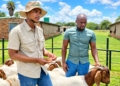
Barry Schiever
While dairy farming is long, hard work, it has been rewarding for this family of farmers. Success in dairy farming, according to Schiever, lies in staying focused on core goals and maintaining consistency.
For Foundation Farm, that means prioritising high-quality milk production with a solid Jersey herd.
“You can’t chop and change strategies overnight. Sticking to your principles and goals is critical.
“We’ve also benefitted greatly from joining dairy study groups, which are invaluable for learning and benchmarking. Farm visits help us identify areas where we can improve, even when we think we’re doing well.”
Related stories
- Honouring excellence in dairy: KZN couple takes top award
- How to boost dairy farm efficiency with genetic testing
How technology changed the game
Embracing technology has been a game-changer for Foundation Farm. Years ago, sorting cows for a vet visit would take hours of manual work. Today, dairy programmes allow them to separate cows automatically using a computer system.
“We monitor production daily, track weight gain, and feed cows individually to maximise their performance at different lactation stages. Technology has transformed how we operate,” Schiever says.
The farm has also adopted variable speed drives (VSDs) to optimise energy efficiency for their pumps, as well as irrigation technology to monitor and apply water precisely. While they have been slower to adopt advanced machinery, Schiever sees it as the next step in their growth.

Always having a plan B
Like many farmers, Schiever acknowledges the challenges of operating in an industry that is largely a “price taker”. Fresh milk prices can fluctuate dramatically, depending on supply and demand.
Foundation Farm attempts to mitigate this volatility by supplying multiple processors, spreading their risk.
Reflecting on hard-earned lessons, Schiever recalls a particularly difficult year when hail destroyed their maize silage crop.
“We’d planted a lot of maize silage on a neighbouring farm but chose not to insure it. When hail wiped us out, we realised the cost of not having a plan B.
“In dairy farming, you must have a buffer to feed your animals. If you drop the ball and fail to meet their nutritional needs, it will cost you dearly. Recovery can take years.”
Despite the challenges, Schiever remains optimistic about the future of Foundation Farm.
“There are always challenges but if you stick to your principles, embrace technology, and focus on efficiency, there’s no reason you can’t thrive. Watching the growth and progress year after year is what makes it all worthwhile.”
Want to know more? Listen to the full episode of Farmer’s Inside Track.
Option 1: Click here to listen on Spotify (all mobile and other devices).
Option 2: Click here to listen on any Apple device.
READ NEXT: Sheena’s Tri Toad Nursery: Where seeds of faith flourish
Sign up for Farmer’s Inside Track: Join our exclusive platform for new entrants into farming and agri-business, with newsletters and podcasts.