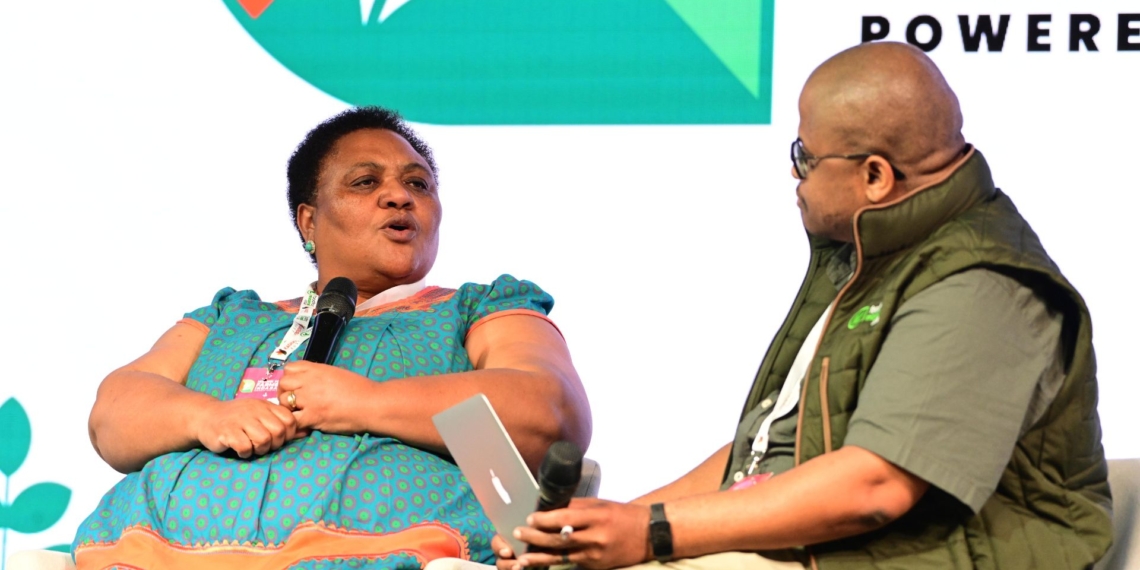
The historical barriers preventing women and youth from accessing land took centre stage on the final day of the Food For Mzansi Young Farmers Indaba, as the speaker of the national assembly, Thoko Didiza, called for a radical shift in how the state and financial institutions view land tenure.
Speaking during a high-level fireside chat titled “Land power, policy and what lies ahead”, Didiza reflected on how far the country has come from the days when women could only acquire land through marriage or male relatives.
“I want to believe that there have been major achievements that have been made in the past years; however, government and civil society can do more to ensure that land reform in South Africa is realised without failure,” she said.
While she noted that women can now approach traditional leadership in their own right to be allotted land, she stressed that the country must still work toward codifying customary systems to ensure secure access.
The title deed and wealth gap
A major focus of the discussion, moderated by Food For Mzansi news editor Tiisetso Manoko, was the inability of first-generation farmers to break into a financial system designed for established wealth.
Related stories
- What a ride! Young farmers hail life-changing indaba
- Energy and innovation ignite 5th Mzansi Young Farmers Indaba
- The business of farming: How to make your farm bankable
Didiza explained that the majority of South African families have never had assets to pass down, leaving young, often unemployed graduates at a disadvantage when approaching banks.
“If we are serious about youth empowerment as a country, we need to look at our financial systems,” Didiza said. She argued that institutions should look beyond the land as the only asset and instead evaluate whether a business idea is workable enough to repay a loan.
She highlighted the struggle of start-ups in backyards that cannot produce three-month bank statements or security, effectively locking them out of the developed financial system.
Bridging the debt burden
To bridge this gap, Didiza proposed that the state play a more deliberate role in land allocation and financial buffering. She suggested that land acquired through proactive state programmes should be allocated to young people without a price tag to serve as a foundation for their success.
“Maybe the state should come and say, ‘How do we become a buffer for those young people so that the state becomes a surety for the ones that want to go into farming?’”
Didiza envisioned an arrangement where the state works with young farmers over five years to ensure they can pay back their loans, using the land not as a debt burden but as an asset to ensure long-term sustainability.
She called on the government to ensure that, following the distribution of land, there is a serious oversight in compliance, so that land can continue to be productive.
READ NEXT: Agri leaders urge farmers to think beyond production