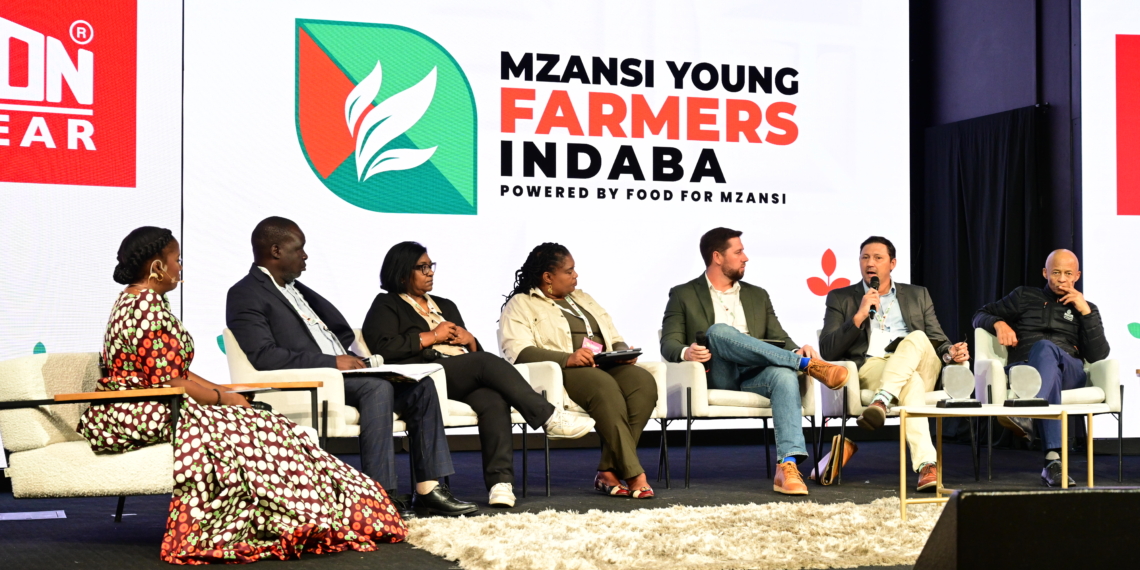
The Mzansi Young Farmers Indaba 2026 brought together industry executives to unpack the challenges shaping South Africa’s agricultural sector, with a strong focus on what this means for farmers on the ground.
From partnerships to investment and innovation, the conversation centred on real solutions. Drawing from experience, panellists shared how big players are adapting, while highlighting where farmers can find their place in a changing market.
Chief executive officer of Kagiso Trust, Dr Mankodi Moitse, said working closely with farmers has reshaped how the organisation understands agricultural development.
The reality of running an agribusiness
Reflecting on the journey, she noted that building sustainable farming businesses has not been easy, but has highlighted the importance of operating within a broader, connected ecosystem.
Moitse said one of the key lessons has been that funding in agriculture goes far beyond inputs and infrastructure. Instead, it must respond to the full reality of running a farming business, including market access, long-term viability, and the ability to grow.
“As Kagiso Trust, we are humbled to be in this space intentionally.We really had to listen to farmers and observe that this is not just about projects.”
She emphasised that a critical question raised in engagements with farmers is where the market is, pointing to the need for stronger alignment between production and demand.
Related stories
- Land Bank back on track, boosting support for farmers
- Farmers demand fairer fresh produce markets
- Land reform: How the private sector can bridge the funding gap
Development is the new future
Meanwhile, Leona Archary, chief executive officer of Agricultural Development Agency (Agda), said development efforts must move beyond keeping farmers at subsistence level. She stressed that continuous training without progression does not lead to meaningful change.
“When we talk about development, we are not talking about people staying at subsistence level and being trained repeatedly. We are talking about moving forward and building a sustainable agricultural business,” she said.
Archary added that agriculture must be approached as an integrated value chain, rather than focusing only on production. She noted that while producing quality output is important, it is not enough on its own to ensure success.
“You have to look at the entire value chain. Development cannot only be about giving people the skills to farm. It must include the ability to run a business and understand what the market wants.”
She said farmers also need to understand broader economic conditions within the agricultural sector, as these influence both opportunities and risks.
Risky beneficiary
Bertie Huggett, CEO of FNB Commercial Agri, echoed these views, highlighting the risks that farmers face. He said uncertainty remains a common concern across the sector, but that better use of production data can help farmers demonstrate progress and reduce perceived risk.
“It is important to show that you are moving forward,” he said, noting that tracking improvements over time can strengthen a farmer’s position.
Huggett added that farmers must also focus on factors within their control, such as securing land tenure, maintaining reliable records, and building strong partnerships. These elements, he said, are critical in supporting long-term sustainability and improving access to finance.
Together, the panellists emphasised the need for a more holistic approach to agricultural development, one that connects farmers to markets, finance, and the broader ecosystem needed to sustain growth.
READ NEXT: Young farmers tackle land tenure and market barriers