Friday, October 23, 2026
SUBSCRIBE
22 GLOBAL MEDIA AWARDS
Food For Mzansi
  • News
  • Changemakers
  • Lifestyle
  • Farmer’s Inside Track
  • Food for Thought
No Result
View All Result
  • News
  • Changemakers
  • Lifestyle
  • Farmer’s Inside Track
  • Food for Thought
No Result
View All Result
Food For Mzansi
No Result
View All Result
in Between the Headlines

Drop the beef with beef to live and eat healthy

by Hettie Schönfeldt
21st October 2020
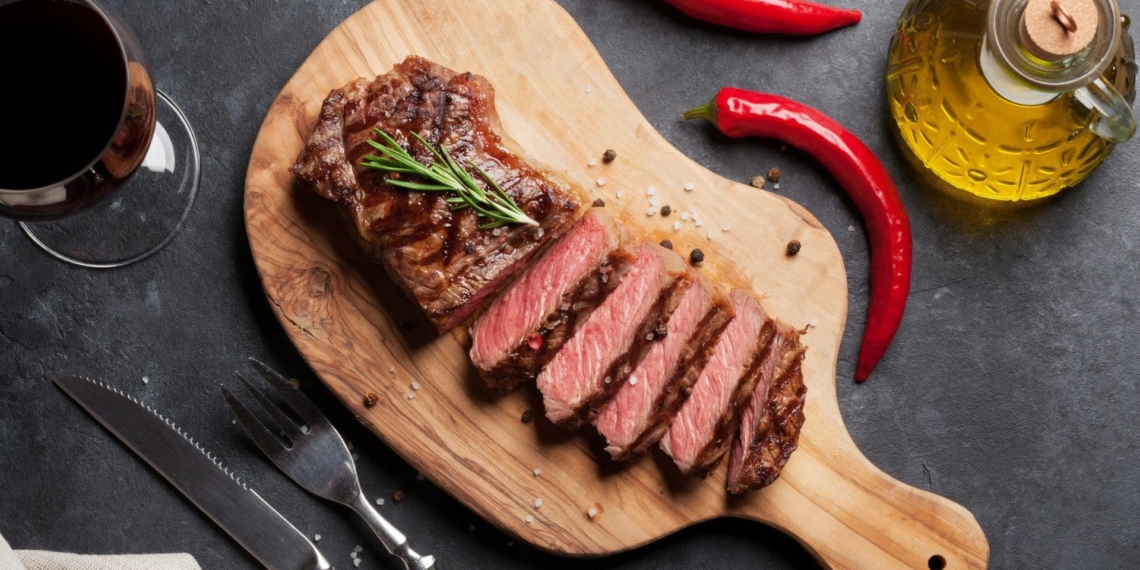
Beef may actually help maintain lean mass and reduce excess weight, argues a leading researcher, prof. Hettie Schönfeldt. Photo: Supplied

Beef may actually help maintain lean mass and reduce excess weight, argues a leading researcher, prof. Hettie Schönfeldt. Photo: Supplied

Share on FacebookShare on TwitterShare on WhatsApp
Following the World Food Day commemorations, prof. Hettie Schönfeldt, research manager of the Red Meat Research and Development, argues that optimal nutritional status is more than the absence of disease or infirmity. It contributes to a state of complete physical, mental and social well-being.

As people across the world focus on food and agriculture as a significant part of the covid-19 response, it is important to bear in mind that all countries experience malnutrition in at least one of its forms. Malnutrition is, in fact, among the top risk factors in disease burdens.

Every year, the Food and Agriculture Organisation of the United Nations (FAO) hosts World Food Day on 16 October to place food security, nutrition, and agricultural transformation on the global agenda.

The widespread concurrence of overweight and nutritional deficiencies, referred to as the “triple burden” of malnutrition, is a consequence of dietary deficiencies and excesses. At the individual level, malnutrition manifests as under-nutrition, over-weight and obesity, unbalanced dietary intake and hidden hunger in the form of micronutrient deficiencies.

These conditions have high costs in both the short and the long run. In the short run, reduced productivity of the workforce results in low levels of output produced, and in the long run, it increases the cost of health care due to the disease burden associated with poor nutrition.

Many benefits to eating red meat

Optimal nutritional status is more than the absence of disease or infirmity. It contributes to a state of complete physical, mental and social well-being. Signs of malnutrition include wasting (severely underweight for age), stunting (short for age), underweight (weight for age) as well as overweight and obesity and are caused by imbalances in macronutrient or micronutrient intake, or both. Undernutrition includes energy, macronutrient (protein, fat and carbohydrates contributing to total energy intake) and micronutrient (vitamin and mineral) deficiencies.

Prof. Hettie Schönfeldt, research manager of the Red Meat Research and Development. Photo: Supplied

Food products from animals provide a variety of macro- and micronutrients. Red meat contain both high quantity and quality protein as it contains all the essential amino acids in the right proportions. As a natural source of protein, amino acids and an array of essential fatty acids, beef contain large quantities of high biological value protein proven to assist in maintaining lean body mass.

Reasons why beef may help maintain lean mass and reduce excess weight include the increased satiating properties of protein which may explain decreased food intake, as well as the effect that increased protein intake has on thermogenesis, body composition and decreased energy efficiency.

In South Africa eight micronutrients, namely vitamin A, vitamin B1, vitamin B2, vitamin B6, vitamin B12, niacin, iron and zinc were identified as lacking in the population diet. Beef contains a highly-bioavailable form of iron and zinc as well as B-vitamins including Vitamin B6 and B12, the latter only found in red meat and red meat products. Beef is nutritious and plays an important role in a balanced diet.

  • Prof. Hettie Schönfeldt is the research manager of the Red Meat Research and Development South Africa. She is an advocate for nutrition research, promoting excellence through the creation, translation, and dissemination of science-based information into policies, programmes and training programmes, both nationally and internationally. Her focus is on affordable food diversity underpinned by nutrient composition and delivery.


 

Hettie Schönfeldt

Prof. Hettie Schönfeldt is the research manager of the Red Meat Research and Development of South Africa.

Godongwana unveils fuel relief and R10 billion El Niño buffer
News

Godongwana unveils fuel relief and R10 billion El Niño buffer

by Tiisetso Manoko
21st October 2026

Finance minister Enoch Godongwana has announced key measures to buffer South Africa’s agricultural sector against global oil shocks and El...

Read moreDetails

Smart irrigation: Precision tools boost crop yields while cutting costs

21st October 2026
Record farm exports overshadowed by growing drought disaster

By-laws vs. livelihoods: Barriers facing WC smallholder farmers

21st October 2026

CPAs urged to register for free governance support toolkits

21st October 2026

Potatoes and tomatoes plunge while avocado prices soar

20th October 2026

Build your future in agriculture with Agri Skills Transfer

Agda pushes for pathways to commercialise emerging farmers

Fixing SA’s agricultural visa system to protect seasonal harvests

Limpopo teen farmer turns dream into growing poultry business

Patensie claims Agri’s Got Talent crown for second year running

Join Food For Mzansi's WhatsApp channel for the latest updates!

JOIN NOW!
Next Post
Chilli Sauce Phathutshedzo Madula and Mpfariseni Rasimphi are the owners of Marvel Chilli Sauce producing three products, including tomato jam, fruits jam and vegetable atchaar sauces. Photo: Supplied

Rejection is merely a redirection, says agripreneur

THE NEW FACE OF SOUTH AFRICAN AGRICULTURE

With 21 global awards in the first six years of its existence, Food For Mzansi is much more than an agriculture publication. It is a movement, unashamedly saluting the unsung heroes of South African agriculture. We believe in the power of agriculture to promote nation building and social cohesion by telling stories that are often overlooked by broader society.

Agda conference: Why giving farmers land isn’t enough

Limpopo teen farmer turns dream into growing poultry business

How to protect poultry from damaging sticktight flea infestations

Eskort announces Herman Janse van Rensburg as group CEO

Agda pushes for pathways to commercialise emerging farmers

Karoo sheep tallow finds new purpose in Mzansi beauty brand

  • Awards & Global Impact
  • Our Story
  • Contact Us
  • Cookie Policy
  • Privacy Policy
  • Copyright

Contact us
Office: +27 21 879 1824
News: info@foodformzansi.co.za
Advertising: sales@foodformzansi.co.za

Contact us
Office: +27 21 879 1824
News: info@foodformzansi.co.za
Advertising: sales@foodformzansi.co.za

  • Awards & Global Impact
  • Our Story
  • Contact Us
  • Cookie Policy
  • Privacy Policy
  • Copyright

Chat Options

About this assistant

This feature generates automated answers summarised from Food For Mzansi articles. By using it, you are interacting with an AI system (provided by Google), not a human. AI can make mistakes. Please refer to the source articles for verification and citation purposes.

Our staff do not check or moderate Lerato’s answers in advance, but may review some later. Our journalists continue to write and edit all the articles Lerato uses as sources.

To estimate unique and returning web users, we store a random browser ID in this browser. WhatsApp users are counted by phone number. The same person using both channels may be counted twice.

I'm Lerato, your AI assistant!
No Result
View All Result
  • News
  • Changemakers
  • Lifestyle
  • Farmer’s Inside Track
  • Food for Thought

Copyright © 2026 Food for Mzansi