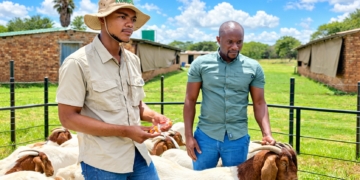
There are many challenges due to industrial farming, urban migration, and weakened community ties in South Africa. To address this, Emeritus Professor Leon Hugo and post-graduate student Jean Hugo advocate for revitalising small-scale farming through traditional African practices and modern technology.
In a world increasingly dominated by industrial farming and monoculture, the negative impacts of such practices are becoming ever more evident. Since the start of the colonial system, the agricultural system and population distribution of South Africa have changed radically.
Today, 67% of its population lives in urban areas, projected to increase to around 80% by 2050. The devastating impact of this on family life and community structures in rural areas is well known. It is imperative to assess the farming system and make small-scale farming viable again.
African cultural beliefs provide a holistic approach to health, encompassing physical, mental, and spiritual care. These cultural values contribute to resilience in the face of adversity. The sense of community, adaptability, and resourcefulness embedded in these values can help individuals and societies navigate challenges.
In modern agricultural practices, excessive use of herbicides and pesticides is harming biodiversity and soil health. The condition of soil structure is also impaired due to heavy machinery. Furthermore, social bonds and family ties weaken considerably when migrant workers move to cities to work on large farms.
Therefore, small-scale farming, enriched with age-old African culture and customs, may offer a sustainable and fulfilling alternative.
This article explores the desire of people in urban environments to reconnect with their roots and embrace farming as a dignified vocation. By integrating traditional practices with modern technologies, it aims to promote food security, community connection, and self-respect, fostering a well-being society inspired by the principles of ubuntu.
The longing for the land
Imagine Nkosi, a young man five years ago, tired of the empty promises that city life offers. The bustling city, with its promise of wealth and opportunity, has left him disconnected and disillusioned.
What he misses most is the genuine connection he had growing up in his village: the connection with his crops, pets, farm animals, neighbours, and, most importantly, his family.
He dreams of owning 10 hectares of land to cultivate crops, raise livestock, and provide for his family, just as his grandfather did.
In Southern Africa, small-scale farmers typically operate on small plots of land, often less than five hectares. They practise diverse cropping systems, growing maize, beans, sorghum, millet, and vegetables, and raising livestock like chickens, goats, and cattle. This polyculture approach ensures food security, manages risk and supports soil fertility.

Farming practices are generally labour-intensive, relying on manual labour from family members and traditional tools like hoes and ploughs. This fosters community and family involvement in farming activities, creating a strong sense of connection and shared purpose.
The promise of lucrative careers in metropolitan areas tempts young people to leave their simple way of life. Many fail and soon find themselves relying on social services.
In a recent article, agriculture minister John Steenhuisen was quoted, as promising to support small-scale farmers. He encouraged inclusive growth, aiding smallholder farmers in accessing foreign markets, emphasising that they must contribute and coexist with larger farmers.
He stressed the importance of new technologies, products, and practices, recognising finance’s role in unlocking the full potential of new-era farmers. He sees brilliant potential in the agricultural sector as an “engine room” of job creation, economic growth, and rural economic development.
Embracing new technology
This vision resonates with Nkosi, one of a new generation of hopeful farmers across Africa embracing modern techniques, technologies, and sustainable practices.
He envisions incorporating innovative approaches to enhance productivity and sustainability. For example, IoT devices and apps on cell phones provide access to real-time data collection on soil moisture, weather conditions, and crop health.
These technologies help him optimise resource use, reduce waste, and improve yields.
Nkosi’s approach to farming emphasises sustainable practices that promote environmental health and long-term agricultural viability. He adopts methods such as organic farming, permaculture, and regenerative agriculture, aiming to create more resilient and productive farming systems.
After becoming commercially viable, Nkosi began incorporating urban farming techniques, such as hydroponics.
Related stories
- Take farming to the next level with drone technology
- Empowering women in land reform key to rural development
- Boost women’s participation in SA’s farming future – Sihlobo

Overcoming challenges
As he ventures to make his dream a reality, Nkosi faces many challenges, including limited access to credit and financial services, inadequate infrastructure, and the impacts of climate change.
However, he overcomes these challenges in affordable, environmentally friendly ways. He adopts conservation agriculture practices, such as minimal soil disturbance, crop rotation, and cover cropping, enhancing soil health and resilience.
He implements agroforestry systems by integrating trees and shrubs into his farming system to improve biodiversity and provide added income sources, such as farm tourism.
Education and advocacy are key components of Nkosi’s farming philosophy. He raises awareness about sustainable food systems, healthy eating, and supporting local agriculture.
He offers farm tours, workshops, and community events to educate the public and promote his sustainable practices. By sharing his unique farming practices, deeply rooted in community and tradition, he also generates extra income from tourism.
The spirit of ubuntu
Nkosi encourages visitors to shift their mindset from self-interest to one of ubuntu, emphasising sharing and caring. Ubuntu, a Nguni term meaning “humanity”, emphasises the interconnectedness of all people and the importance of community. By fostering a sense of shared responsibility and mutual support, Nkosi believes small-scale farming can contribute to the well-being of society.
Small-scale farming in Southern Africa is essential for maintaining agricultural biodiversity, supporting rural economies, and preserving cultural traditions related to farming and food production. Despite facing numerous challenges, small-scale farmers like Nkosi demonstrate resilience and adaptability, contributing significantly to the region’s food security and sustainable development.
By pioneering a shift towards more sustainable, efficient, and resilient agricultural systems, farmers like Nkosi are transforming agriculture and contributing to a more sustainable future. Nkosi’s journey serves as a testament to the power of combining traditional wisdom with modern technology, fostering genuine connections, and promoting a society rooted in the principles of ubuntu.
*Prof Leon Hugo is an Emeritus Professor in the geography department of the University of Pretoria; and Jean Hugo is a post-graduate student in video technology, at the Tshwane University of Technology. The views and opinions expressed in this article are those of the author and do not necessarily reflect the views or positions of Food For Mzansi.
READ NEXT: Tourism revives rural communities through land reform
Sign up for Mzansi Today: Your daily take on the news and happenings from the agriculture value chain