Many have argued in favour of decentralising South Africa’s energy system into a competitive multimarket structure. Although this may seem appealing at the surface, it is a largely misguided form of market fundamentalism, argues Matthew Guest.
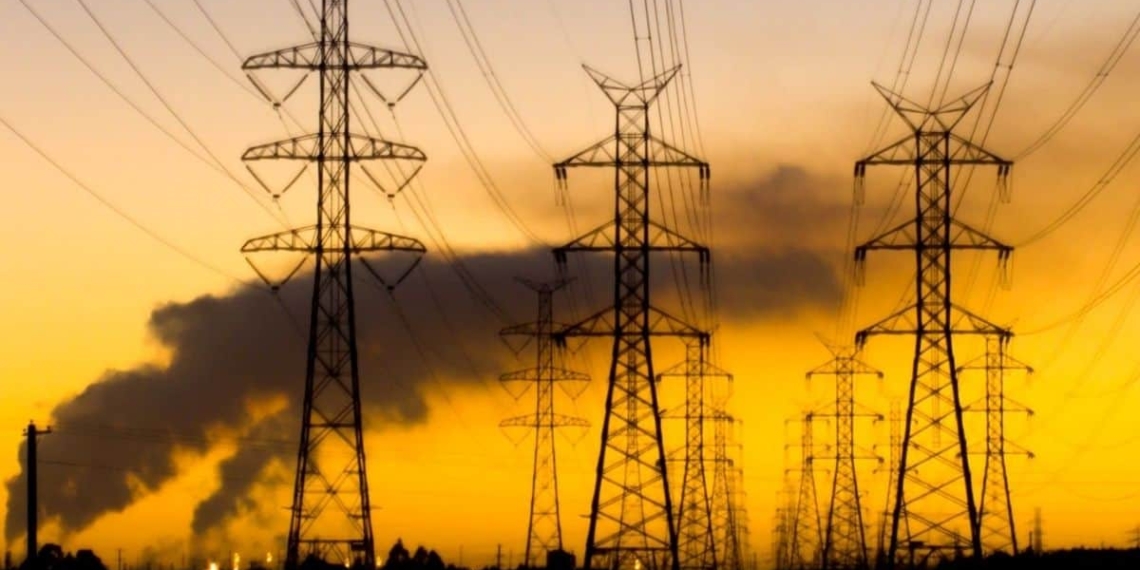
To affix a market structure onto a natural monopoly, in this case electricity markets, would render those markets unstable largely at the cost of consumers and the environment. The National Energy Regulator of South Africa (Nersa) has awarded an electricity trading licence to Remgro’s The Energy Exchange. The Energy Exchange, PowerX, Enpower, and Etana are now licensed traders between electricity generators and distributors or large consumers in South Africa.
The second amendment of the Electricity Regulation Act of 2006 supports a competitive multimarket system to decrease sole reliance on Eskom. This form of market-fundamentalism will bring much needed short-term relief for both people and firms but will undoubtedly create long-term hardships as experienced under the Thatcherite and European models, to name a few.
Naturally, a monopoly
Electricity supply is unequivocally a natural monopoly for the following reasons:
- It is perfectly homogenous and undifferentiated. There is no competition in terms of the quality of the product. The only differentiating factor for consumers is the price.
- It is an essential input with no substitutes, unlike the internet, which has several substitutes (cable, optic fibre, hotspot, etc).
- The infrastructure is at an exorbitant fixed cost, making it impossible to replicate (i.e., Yanis Varoufakis’s “single wire” theory which argues that access is through a single supply infrastructure). This implies that competition is socially undesirable as it requires duplication of the fixed costs. Additionally, this means that the average cost declines at higher units allowing for a monopoly to exploit economies of scale.
Profiteering over people

In a competitive multimarket system, marginal cost pricing is used, in which the lowest cost electricity resources are dispatched first. As demand increases, more expensive resources are dispatched. The price of electricity is therefore determined by the cost of the most expensive resource needed to meet demand.
Renewable energy is produced at a zero marginal cost (only the initial fixed cost and maintenance cost of the facilities). Marginal cost pricing means that consumers pay for this energy as if it were produced by the most expensive and polluting gas sources. The idea here is to reward the lowest cost producers with a profit premium and thus incentivise further investment into cleaner, low-cost energy sources.
But what if the lowest-cost energy sources were not the cleanest? The rise in the price of natural gas from 2020 to 2022 has exposed the endemic failures of this market-fundamentalist approach throughout the United Kingdom and other European countries. As winter approaches, the UK and other European governments have warned about the reality of power cuts.
Their proposal centred on privatising and dividing power generation, allowing competition to provide electricity to the grid. The need for profiteering of these competitors has passed on higher costs to consumers, undoubtedly fuelling the cost-of-living crisis rather than home furnaces.
Other failed multimarket systems
Apart from examples in continental Europe and the UK, other countries with market-oriented electricity schemes are experiencing blackouts and skyrocketing electricity costs. Australia imposed a cap on wholesale prices in New South Wales and Queensland before suspending their electricity market completely, with Australian Energy Market Operator’s (AEMO) chief executive, Daniel Westerman, stating in an AEMO media release that “suspending the market would simplify operations during the significant outages across the energy supply chain”.
Similar multimarket systems in China and India have been plagued by blackouts and increasing consumer costs.
SA’s coal situation
According to Nersa, coal is undoubtedly the cheapest source of electricity in South Africa, while photovoltaics and wind power tend to be more costly. It is no wonder why investments are still funnelled towards new coal-burning power plants.
This is ironic for the world’s 12th largest emitter of greenhouse gases whose constitution proclaims the “right to a healthy environment, and also to have the environment protected from pollution”. As the price of exhaustibles (such as coal and gas) increases, the marginal cost pricing strategy will impose an ever-increasing cost onto distributors, which will be passed onto consumers.

An alternative five-step proposal
A simulated market cannot replace a natural monopoly indefinitely. When the unexpected happens, the cracks in the system tend to appear. Although this simulated “competitive multimarket” may help alleviate some of Eskom’s endemic problems, it is not a sustainable solution.
There are five primary issues that need to be addressed: Firstly, the cost of South Africa’s carbon tax should not be passed on to consumers. Secondly, despite the $ 8.5 billion investment plan, further immediate investments are necessary – this cannot be achieved through the current marginal cost pricing system.
Thirdly, a municipally owned network of renewables should be utilised to empower communities by turning them into beneficiaries, owners, and managers of their own power sources. Fourth, public energy networks are necessary to effectively appropriate a natural monopoly. Lastly, marginal cost pricing must be eliminated. Public utilities should not be profiteering entities. Instead, an average cost pricing strategy plus a small mark-up (5-10%) should be introduced to ensure financial viability.
Time to move away from this failed experiment
The South African public utility sector has come under fire in recent years, with many arguing that privatisation is the way forward. South Africa should learn from other countries who have attempted to graft a market onto their natural monopolies and move away from this failed experiment. Eskom’s problems do not stem from ownership, but rather its callous management.
- Matthew Guest is an MScAgric student at Stellenbosch University with a Bachelor’s degree in agricultural economic analysis. He is a proponent of conservational and regenerative agricultural methods as well as integrated agricultural production. He has a keen interest in newfound alternative economic theory that promotes inclusive and sustainable growth. The views and opinions expressed in this article are those of the author and do not necessarily reflect the views or positions of Food For Mzansi.
READ NEXT: Farmers cautiously optimistic about better 2023
Sign up for Mzansi Today: Your daily take on the news and happenings from the agriculture value chain.