Friday, October 23, 2026
SUBSCRIBE
22 GLOBAL MEDIA AWARDS
Food For Mzansi
  • News
  • Changemakers
  • Lifestyle
  • Farmer’s Inside Track
  • Food for Thought
No Result
View All Result
  • News
  • Changemakers
  • Lifestyle
  • Farmer’s Inside Track
  • Food for Thought
No Result
View All Result
Food For Mzansi
No Result
View All Result
in News

Families to be kicked off state farm

Twenty families living on a Western Cape farm, owned by the Agricultural Research Council, face an uncertain future. They may soon be evicted to make way for a commercial producer

by GroundUp
25th July 2022
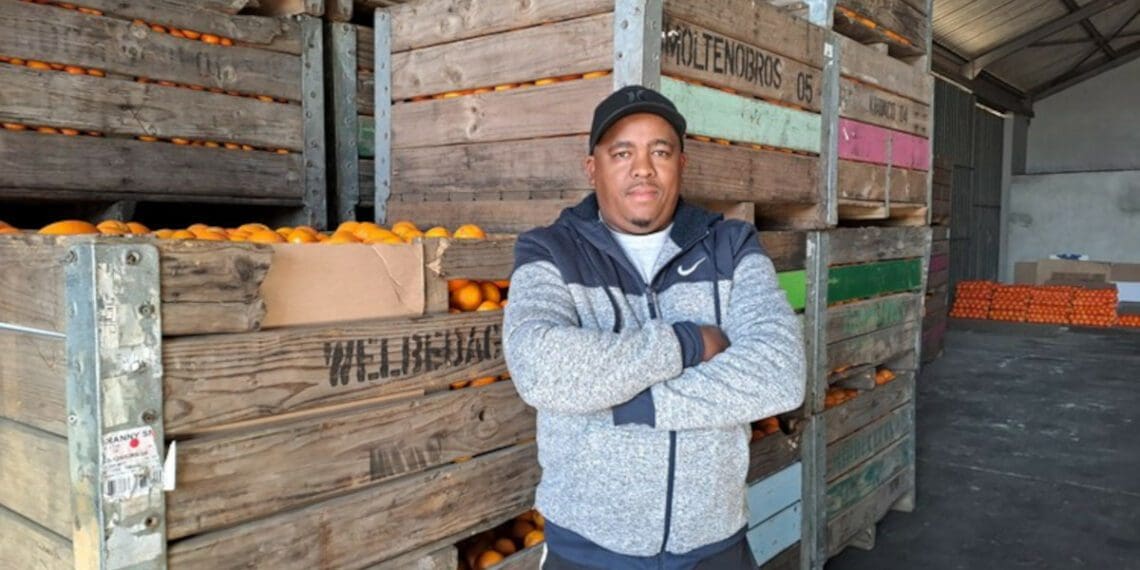
Albert Klaase grows citrus and other vegetables on a section of Proefplaas. He also uses this big storeroom on the property, which he says he fixed up with his own money. Photo: Liezl Human/GroundUp

Albert Klaase grows citrus and other vegetables on a section of Proefplaas. He also uses this big storeroom on the property, which he says he fixed up with his own money. Photo: Liezl Human/GroundUp

Share on FacebookShare on TwitterShare on WhatsApp

About 20 families living on a state farm near Citrusdal in the Western Cape fear they may be evicted. Most of the families have lived on the farm for nearly three decades. While no formal eviction process has started yet, residents are hoping they will still be allowed to stay and that their living conditions on the farm will be improved.

The 120-hectare “experimental farm” along the N7, called Proefplaas, is owned by the Agricultural Research Council (ARC). The ARC was established in 1990. It is the principal agricultural research institution for South Africa.

Last week, farm dwellers from Proefplaas picketed next to the N7, demanding to be allowed to remain living on the farm. Municipal officials had informed them of a decision by the ARC to lease the land to a commercial farmer. The new farmer, yet to be confirmed publicly, apparently wants the families evicted from their homes on the property. Most of the residents at Proefplaas are seasonal workers on surrounding farms.

According to residents, the farm is mostly uncultivated and has sat dormant since 2000. They told GroundUp that most families moved to houses on the farm in the 1990s and paid rent directly to the ARC.

Melvin Bezuidenhout said he has lived on the farm for nearly 26 years. He said households had been paying a fee to the ARC for electricity and rent for many years. He said they stopped paying when conditions on the farm deteriorated and they no longer had access to running water. He accused the ARC of cutting the water and removing the sewerage and piping from the property some years ago.

Proefplaas residents picketed next to the N7 recently, demanding to be allowed to live on the farm and for water infrastructure to be reinstalled on the farm. Photo: Liezl Human/GroundUp

Earlier eviction notice

The families first received an eviction notice in 2006. They were informed that the farm would be “resuming operations” and the houses would be needed for ARC staff. But nothing ever came of this, said Bezuidenhout.

Fifteen years later, residents again face a threat of eviction.

“ARC owes this community a fair answer,” said Bezuidenhout. He said that in a meeting with municipal officials, residents were told that the section which houses his family and four others needed to be vacated.

“They can’t just plan behind the scenes. We are the people who looked after this farm for years,” he said. Bezuidenhout said his two children, who are now young adults, were born on Proefplaas, as were many children on the farm.

Bezuidenhout said their requests to the ARC that ownership of the farm should be handed over to them have been ignored. He said they have instead been labelled as “squatters” and “land invaders”.

Another resident, Dennis Brandt, said it was unfair that they had funded the maintenance on the buildings for 25 years and now the ARC wanted to evict them.

“If we hadn’t looked after this farm, it would’ve been a squatter camp,” said Brandt. He said they had been stopping people erecting structures on the farm.

Dennis Brandt’s family is among 20 households who live in farmhouses owned by the Agricultural Research Council (ARC), which abandoned operations on the farm years ago. Now ARC wants to lease the land and buildings to a commercial farmer. Photo: Liezl Human/GroundUp

Keeping farming activities going

Anna Pieterse says she moved in 17 years ago. Pieterse and her husband, Trevur, plan to grow rooibos in an open space next to their home. Pieterse said the lack of water on the farm makes farming more challenging.

Citrusdal farmer Albert Klaase has been working some pieces of the land for the past seven years. He said he made a deal with the residents. He grows citrus and a variety of vegetables.

Klaase also uses a big storeroom on the property which he fixed up. He employs some of the Proefplaas residents. “I can still create more jobs. But I don’t want to invest in uncertainty,” he said.

When GroundUp contacted the Agricultural Research Council with detailed questions last week, ARC spokesperson Derusha Crank confirmed that the farm will be leased to a commercial farmer. Crank told GroundUp that no former or current ARC staff members live on the farm, and “any resident concerns should be raised with the local authorities such as the municipality”.

GroundUp contacted the Cederberg Municipality over a week ago and again last Wednesday. The spokesperson promised to respond by Thursday afternoon but never did.

This article was written by Liezl Human and first published by GroundUp.

ALSO READ: Farmworkers march for labour rights on wine farms

Sign up for Mzansi Today: Your daily take on the news and happenings from the agriculture value chain.

GroundUp

News

CPAs urged to register for free governance support toolkits

by Staff Reporter
21st October 2026

With 82% of registered CPAs facing non-compliance issues, Vumelana Advisory Fund has introduced free support toolkits to improve land management...

Read moreDetails

Potatoes and tomatoes plunge while avocado prices soar

20th October 2026
Becoming bankable: How to get your farm ready for finance

Becoming bankable: How to get your farm ready for finance

20th October 2026

Fixing SA’s agricultural visa system to protect seasonal harvests

20th October 2026
‘Beware the dangers of illegal foot-and-mouth vaccines’

SA and Namibia reevaluate livestock trade after FMD outbreak

20th October 2026

Farmers urge urgent support for resilient local supply chains

Karoo sheep tallow finds new purpose in Mzansi beauty brand

Godongwana unveils fuel relief and R10 billion El Niño buffer

Agda pushes for pathways to commercialise emerging farmers

FNB puts relationships at the heart of commercial farming

Join Food For Mzansi's WhatsApp channel for the latest updates!

JOIN NOW!
Next Post
The wool industry, which has been closed off from the Chinese market for nearly four months now, has lost R734.15 million in revenue to date. Photo: Supplied/Food For Mzansi

China’s wool ban has cost Mzansi R700m. so far

THE NEW FACE OF SOUTH AFRICAN AGRICULTURE

With 21 global awards in the first six years of its existence, Food For Mzansi is much more than an agriculture publication. It is a movement, unashamedly saluting the unsung heroes of South African agriculture. We believe in the power of agriculture to promote nation building and social cohesion by telling stories that are often overlooked by broader society.

Agda pushes for pathways to commercialise emerging farmers

Karoo sheep tallow finds new purpose in Mzansi beauty brand

Why simple farm records beat complex systems

Crowdfunding breathes new life into neglected Limpopo citrus farm

Mogogelo farmers receive packhouse and cold storage facilities

Godongwana unveils fuel relief and R10 billion El Niño buffer

  • Awards & Global Impact
  • Our Story
  • Contact Us
  • Cookie Policy
  • Privacy Policy
  • Copyright

Contact us
Office: +27 21 879 1824
News: info@foodformzansi.co.za
Advertising: sales@foodformzansi.co.za

Contact us
Office: +27 21 879 1824
News: info@foodformzansi.co.za
Advertising: sales@foodformzansi.co.za

  • Awards & Global Impact
  • Our Story
  • Contact Us
  • Cookie Policy
  • Privacy Policy
  • Copyright

Chat Options

About this assistant

This feature generates automated answers summarised from Food For Mzansi articles. By using it, you are interacting with an AI system (provided by Google), not a human. AI can make mistakes. Please refer to the source articles for verification and citation purposes.

Our staff do not check or moderate Lerato’s answers in advance, but may review some later. Our journalists continue to write and edit all the articles Lerato uses as sources.

To estimate unique and returning web users, we store a random browser ID in this browser. WhatsApp users are counted by phone number. The same person using both channels may be counted twice.

I'm Lerato, your AI assistant!
No Result
View All Result
  • News
  • Changemakers
  • Lifestyle
  • Farmer’s Inside Track
  • Food for Thought

Copyright © 2026 Food for Mzansi