Sunday, September 6, 2026
SUBSCRIBE
22 GLOBAL MEDIA AWARDS
Food For Mzansi
  • News
  • Changemakers
  • Lifestyle
  • Farmer’s Inside Track
  • Food for Thought
No Result
View All Result
  • News
  • Changemakers
  • Lifestyle
  • Farmer’s Inside Track
  • Food for Thought
No Result
View All Result
Food For Mzansi
No Result
View All Result
in News

China’s wool ban has cost Mzansi R700m. so far

What happens if you suddenly lose 70% of your customer base? South Africa’s wool industry now finds itself in this nightmare scenario and is hoping for the eradication of FMD or a special arrangement to help it survive

by Tiisetso Manoko
25th July 2022
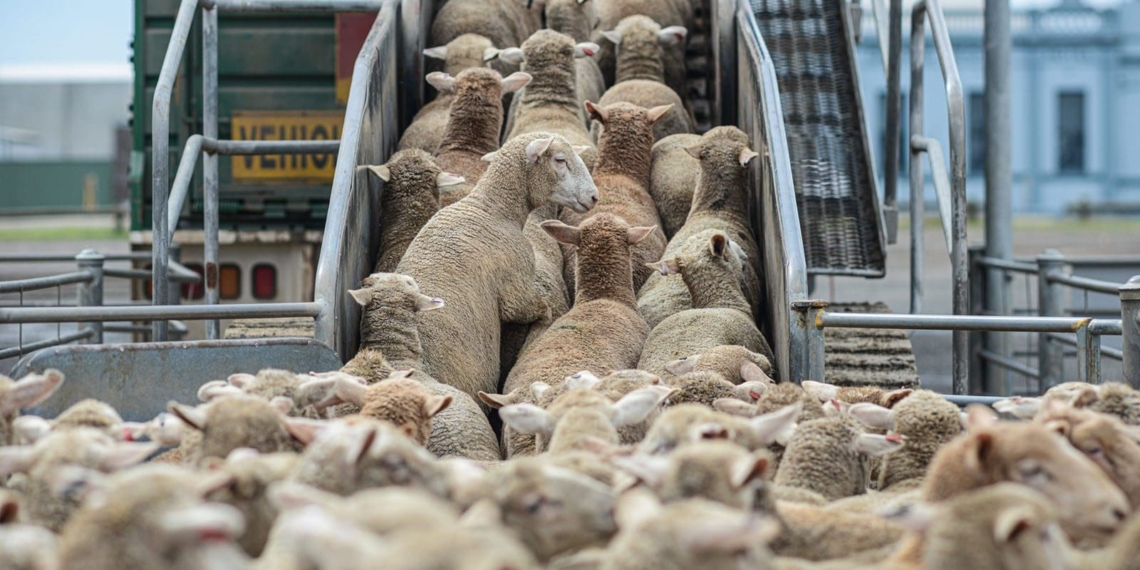
The wool industry, which has been closed off from the Chinese market for nearly four months now, has lost R734.15 million in revenue to date. Photo: Supplied/Food For Mzansi

The wool industry, which has been closed off from the Chinese market for nearly four months now, has lost R734.15 million in revenue to date. Photo: Supplied/Food For Mzansi

Share on FacebookShare on TwitterShare on WhatsApp

South Africa’s wool industry has been at a complete standstill for nearly four months and has lost about R734.15 million in revenue. This is due to China’s ban on wool imports from South Africa because of foot-and-mouth disease (FMD) in the country. Experts warn that, if the ban is not lifted soon, it could spell disaster for Mzansi’s wool producers.

“If the ban from China is not resolved, it will have a devastating impact on communal producers, as most of their wool is exported to China,” says the general manage of the National Wool Growers Association, Leon de Beer.

Leon de Beer, general manager of the National Wool Growers Association. Photo: Supplied

Because China is South Africa’s primary wool export market, accounting for roughly 70% of exports in value terms, industry experts have flagged this as a massive problem that could lead to widespread job losses.

While Mzansi has other wool markets that include the Czech Republic, Italy, India, Bulgaria, Germany, the United States, Malaysia, Japan and Mexico, these are relatively small, and cannot offset the losses resulting from China’s restrictions.

“South Africa, like Australia, is heavily dependent on China to process wool because that is currently how the world has developed with the processing capacity,” De Beer says.

“It is not good for South Africa, nor any other country, due to the risk we are now experiencing. There are alternative markets like in India, Europe and Egypt, but limited in volume.”

Loss of income

A wool farmer in the Eastern Cape, Eben du Plessis, says that the ban also brought wool auctions to a halt. As a sheep farmer, Du Plessis is heavily dependent on auctions and he has already suffered losses.

He has managed to avoid retrenching any staff members to date, but is actively looking for other income streams. “We are very fortunate to have a very proactive organisation in the wool industry. I am very confident that they are doing everything in their power to make sure that we as producers can sell our products.”

De Beer says the long-term solution is for South Africa to develop its own capacity to process wool locally. He acknowledges that the industry is pursuing the idea, but he also knows that it will not happen overnight.

Hopes on industry leaders

According to Wandile Sihlobo, chief economist at Agbiz, South Africa needs to forge a unique relationship with China specifically on wool trade, which could insulate the industry at such critical times.

Such strategic interventions can only occur at the political level, he says, and adds, “Without access to the Chinese market, the wool industry is likely to be under strain for some time.

Inflation: Agriculture policy: Commenting on government credibility: Wandile Sihlobo
Agbiz chief economist Wandile Sihlobo. Photo: Supplied/Food For Mzansi

“At a national level, this will also show in export earnings. Wool was the eighth most significant agricultural exportable product in 2021, accounting for 3% or $326 million of South Africa’s exports of $12.4 billion.”

The present-day ban arrives at an even more economically challenging time with farming input prices for all agricultural industries rising, Sihlobo notes.

For the livestock sub-sector and wool industry, animal feed prices and all logistics costs are adding to the cost pressures which farmers need to bear. There are also household financial pressures for small- and medium-scale farmers that rely on the proceeds of this industry to sustain their families.

Du Plessis says wool farmers in the Eastern Cape are looking at their provincial and national wool growers’ association to protect their interests as members.

“We are very fortunate to have leaders in those organisations who will lead the fight together with organised agriculture, ensuring that the wool farmer can keep on producing.”

ALSO READ: Agro-processing: A look into the wool industry

Sign up for Mzansi Today: Your daily take on the news and happenings from the agriculture value chain.
Tiisetso Manoko

Tiisetso Manoko is a seasoned journalist with vast experience in community media. He possesses diploma in media studies majoring in journalism, certificate in civic leadership. He loves news from all angles with particular interest in local government, agriculture and politics. He is a staunch Mamelodi Sundowns Football club supporter.

Tags: China wool banLeon De BeerNational Wool Growers’ AssociationWandile Sihlobowool industry
The future of Mzansi's sugar industry hangs in the balance
News

Government hikes sugar import price, but industry warns of gap

by Staff Reporter
3rd September 2026

South Africa’s government has adjusted the sugar import reference price from $680 to $785 per tonne to curb surging imports....

Read moreDetails

Chicken is booming, but the real money is in the supply chain

2nd September 2026
How Tebogo beat post-harvest losses with smart agro-processing

How Tebogo beat post-harvest losses with smart agro-processing

2nd September 2026

Aucamp outlines strategy for biosecurity, trade, and infrastructure

2nd September 2026
Tobias Doyer, CEO of Grain SA. Photo: Supplied/Grain SA Facebook

Rising costs, climate risk push Swartland wheat farmers to the brink

2nd September 2026

Chicken is booming, but the real money is in the supply chain

Farmers rethink water use as shortages threaten food production

Potato turning point ahead as onions double in price year-on-year

Early calf care: Key growth targets every cattle farmer must track

RSVP now: Emerging farmers’ programme at Nampo Cape

Join Food For Mzansi's WhatsApp channel for the latest updates!

JOIN NOW!
Next Post
Ncumisa Mkabile, is a farmer, community activist that has won numerous awards for her work in agriculture. Photo: Supplied/Food For Mzansi

Farmer, influencer, go-getter – Ncumisa’s all that

THE NEW FACE OF SOUTH AFRICAN AGRICULTURE

With 21 global awards in the first six years of its existence, Food For Mzansi is much more than an agriculture publication. It is a movement, unashamedly saluting the unsung heroes of South African agriculture. We believe in the power of agriculture to promote nation building and social cohesion by telling stories that are often overlooked by broader society.

RSVP now: Emerging farmers’ programme at Nampo Cape

Community-led farms boost food security and incomes in Limpopo

Farmers rethink water use as shortages threaten food production

Honoured roots: A father’s legacy, a daughter’s farming dream

Gauteng farmers urged to harness massive urban market

Foot-and-mouth crisis hits SA dairy industry with R1-billion loss

  • Awards & Global Impact
  • Our Story
  • Contact Us
  • Cookie Policy
  • Privacy Policy
  • Copyright

Contact us
Office: +27 21 879 1824
News: info@foodformzansi.co.za
Advertising: sales@foodformzansi.co.za

Contact us
Office: +27 21 879 1824
News: info@foodformzansi.co.za
Advertising: sales@foodformzansi.co.za

  • Awards & Global Impact
  • Our Story
  • Contact Us
  • Cookie Policy
  • Privacy Policy
  • Copyright

Chat Options

I'm Lerato, your AI assistant!
No Result
View All Result
  • News
  • Changemakers
  • Lifestyle
  • Farmer’s Inside Track
  • Food for Thought

Copyright © 2024 Food for Mzansi

This website uses cookies. By continuing to use this website you are giving consent to cookies being used. Visit our Privacy and Cookie Policy.