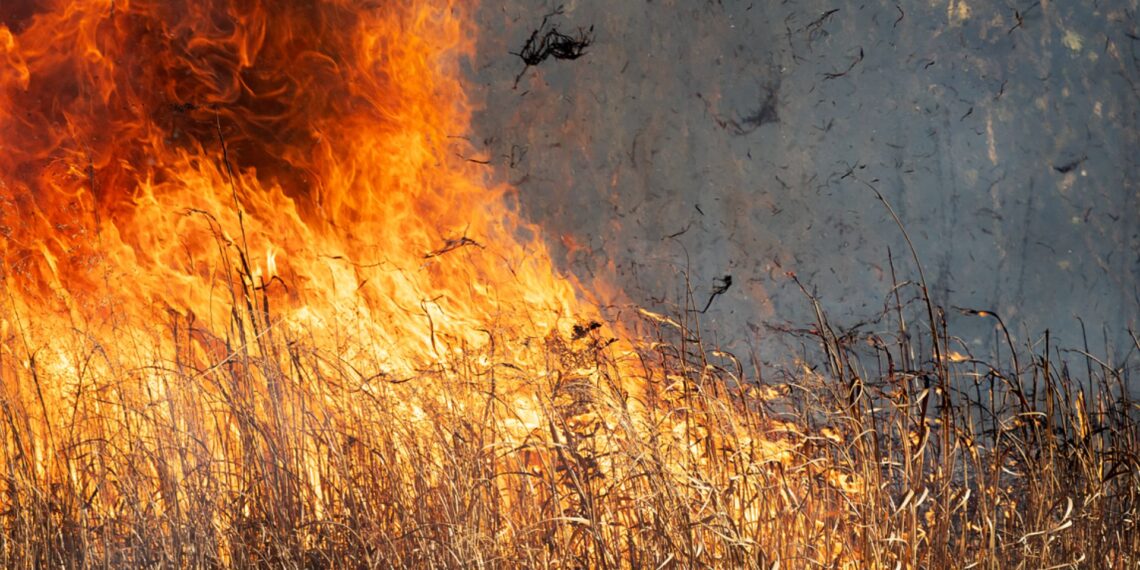
With fire season tightening its grip on some of South Africa’s agricultural regions, farmers are being urged to take proactive steps to protect their land. This comes as hundreds of hectares of grazing land were damaged last year in provinces like the Free State, North West, Northern Cape, Western Cape, and Gauteng.
Gauteng-based livestock farmer Vuyisile Yende is among those who have faced severe losses due to recent veld fires.
“There’s so much damage that now we have to dig deep in our pockets. We have also started using what we had reserved for the winter season, so basically we have to sell a few cows to feed the rest because it’s easier for cattle to eat their value,” Yende said.
Yende highlights the importance of farmer-to-farmer support networks. Recovery has come through shared knowledge and better preparation.
“In the past, no assistance was received unless it was from fellow farmers letting you know where to buy your feed at a cheaper price. We have recovered by listening to other farmers on how they are safe and prepare for such incidents. We try to prepare in time, store and keep a minimum of livestock that we will be able to feed. We also try to avoid grazing in veld that is prone to easy fires,” Yende said.
Planning and working together for greater good
According to Andre Scheepers of the Mpumalanga Fire Protection Association, many of the fire-related challenges on farms are the result of poor planning and communication. He stressed the importance of coordination among farmers.
“The main causes and problems farm owners have with firebreaks are not checking your weather, not informing their neighbours, and also burning of firebreaks or burning of areas when it is not conducive in the right conditions to burn. It is also important to inform your neighbours when burning operations take place so that you can pool your resources and do it together,” Scheepers said.
Related stories
- Fires, frost, floods: Low insurance uptake threatens farmers
- Livestock, crops at risk as farmers battle snow and rain
- Safety first! Prepare your farm for veld fires
Eric Stoch of the North West Umbrella Fire Protection Association is leading research into traditional fire management systems, highlighting the long-standing ecological knowledge of South African communities.
“Indigenous knowledge systems offer valuable insights for contemporary wildfire prevention strategies. Traditional fire management approaches demonstrate sophisticated ecological understanding,
“Traditional commercial (Boer) farmers developed the ‘brandpad’ system. This system established protective fire belts around farmlands through controlled burning. They ingeniously incorporated existing transportation infrastructure. Roads and railway lines were used as anchors for firebreaks,” he said.
According to Stoch, this adaptive approach maximised efficiency in their fire control efforts. It also minimised resource requirements for establishing and maintaining firebreaks.
Stoch noted that both knowledge systems shared key principles, including seasonal timing, landscape-based strategy, and coordinated community action in combating veld fires. Both traditional systems recognised fire as a vital part of managing the land, not just a danger to be extinguished.
Govt issues extreme weather warning
The department of agriculture has also issued a stern warning as veld conditions continue to deteriorate. They advise farmers to prepare for both fires and other winter weather events.
“The risk of veld fires is increasing as the veld continues drying out. Therefore, the creation and maintenance of fire belts should be prioritised along with adherence to veld fire warnings.
“The creation and maintenance of the belts should be prioritised along adherence to veld fire warnings,” the department said.
Meanwhile, Free State MEC of the department of agriculture, rural development and environmental affairs, Elzabé Rockman, has urgently appealed to all farmers to be vigilant and prepare for severe weather conditions as it is the beginning of the annual veld fire season.
“We are seriously concerned about the potential dangers this weather conditions pose, particularly to farmers and farming communities. I urge all farmers to take the necessary steps to protect their lives, livestock and crops against adverse weather conditions.
“We also urge all communities to ensure that proper precautionary measures are taken to manage fire as a source of heating and cooking. Avoid making fires in windy conditions, never leave fires unattended and ensure fires are properly extinguished,” she said.
ALSO READ: Insects key to reducing food waste
Sign up for Mzansi Today: Your daily take on the news and happenings from the agriculture value chain.