Sunday, September 6, 2026
SUBSCRIBE
22 GLOBAL MEDIA AWARDS
Food For Mzansi
  • News
  • Changemakers
  • Lifestyle
  • Farmer’s Inside Track
  • Food for Thought
No Result
View All Result
  • News
  • Changemakers
  • Lifestyle
  • Farmer’s Inside Track
  • Food for Thought
No Result
View All Result
Food For Mzansi
No Result
View All Result
in News

Farmers get 24-hour hotline for labour-related matters

by Sinesipho Tom
30th April 2021
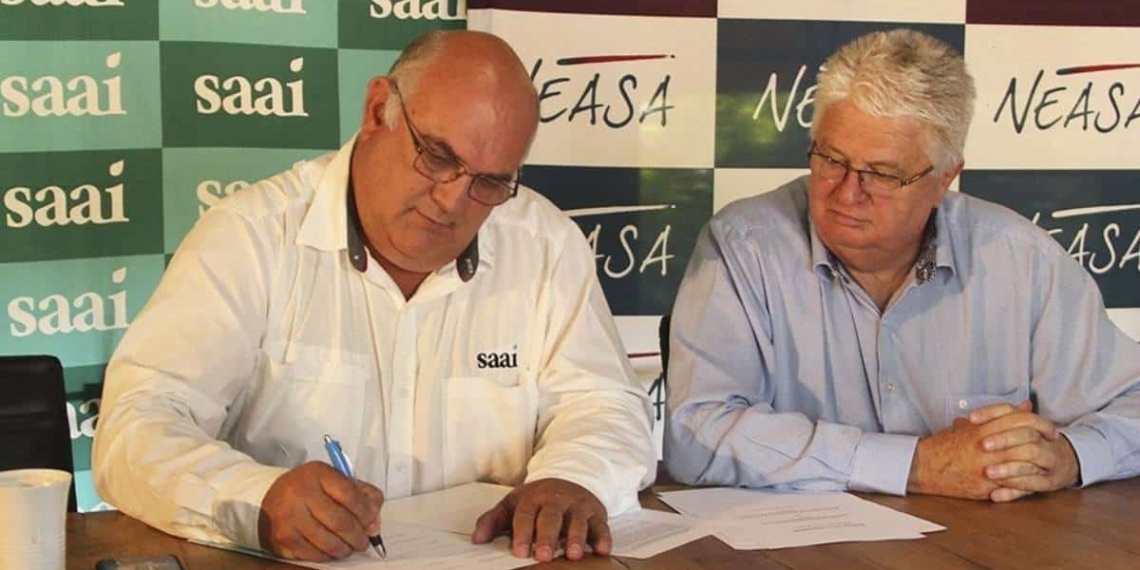
Mzansi farmers with any labour issues now have a 24-hour access line to lawyers who are there to provide them with advice or assistance. This has been made possible by a partnership formulated by the family farming organisation, the South African Agri Initiative (SAAI) and employers’ organisation, the National Employers Association of South Africa (Neasa). Photo: Supplied/Food For Mzansi

Mzansi farmers with any labour issues now have a 24-hour access line to lawyers who are there to provide them with advice or assistance. This has been made possible by a partnership formulated by the family farming organisation, the South African Agri Initiative (SAAI) and employers’ organisation, the National Employers Association of South Africa (Neasa). Photo: Supplied/Food For Mzansi

Share on FacebookShare on TwitterShare on WhatsApp

Mzansi farmers with any labour-related issues now have a 24-hour access line to lawyers who are there to provide them with advice or assistance.

This has been made possible by a partnership formulated by the family farming organisation, the South African Agri Initiative (Saai) and employers’ organisation, the National Employers Association of South Africa (Neasa).

Dr Theo de Jager, board chairperson of Saai, told Food For Mzansi that the partnership agreement was signed on 22 April 2021. The vision of the partnership agreement is to bridge labour issues in agriculture and assist farmers with labour problems, as well as policy influencing.

Theo de Jager, president of the World Farmers’ Organisation and chairperson of the Southern African Agri Initiative. Photo: Supplied/Food For Mzansi

“The objective of the partnership is to give our members legal advice and structural advice on labour issues. We also share the same values and policies on the most contentious issues in agricultural labour such as the minimum wage. Together we will be launching a big joint campaign against the 16%-increase in minimum wages.”

De Jager says at this stage, they are only collecting the data to see how many jobs this increase has destroyed so far. He also adds that the increase has destroyed more than just jobs.

“It has also closed down schools on farms. The school on my farm has been closed since the minimum wage increased because there are simply no longer enough children to feed that school,” he says.

Both organisations feel that unemployment is a heavy burden hampering an already limping economy and is the major driving force behind poverty and runaway crime statistics.

Yet, they find that the legal framework and “populist policy decisions” on critical aspects of employment such as minimum wages, right of residence and the space an employer has to get rid of a problem worker, are making it all but impossible for farmers to make a material contribution to job creation.

According to De Jager small and medium-scale farmers more often than not feel themselves being in the firing line of political statements and media allegations claiming that all farmers are exploiters, slave drivers and lawbreakers.

Instead, they wish to be viewed as partners to help create jobs where South Africa needs it most – in the deep rural areas.

Agriculture as employer has been performing in fields where no other sector can compete, he says. Farmers employ people who have no other place in the labour market; the most unqualified, most inexperienced and unskilled and most unequipped jobseekers in the rural areas are accommodated on farms.

ALSO READ: Farmworker faces eviction despite residency rights

Farmworkers never get rich

Farmworkers at Elandsfontein in Citrusdal harvesting Rooibos. Photo: Henk Kruger/African News Agency (ANA)

“Millions of people acquire their basic skills for other careers on a farm. There, they learn to drive a tractor, then a bakkie and later a truck and eventually they become drivers of heavy vehicles that allow South Africa’s logistical wheels to turn. Employers in agriculture are training people for many other sectors of the economy.

“Farmworkers never get rich, but neither do they ever suffer from hunger. Where food production thrives on commercial farms, many more people than just farmworkers, their families and extended families eat from those farms.

“When they lose their jobs as a result of unaffordable minimum wages or other labour regulations, the government has a dismal record of failure to look after them or to support hungry families.”

De Jager explained that both Saai and Neasa feel that the voices of small and medium enterprises are not being properly heard within Business Unity South Africa (Busa), the National Economic Development and Labour Council (Nedlac) and the department of employment and labour.

So, by joining forces they hope to give a stronger voice to small and medium businesses and family farmers probably make close to 99% of that category, he says.

“Agriculture can create work if it is not hampered by bad policy. Saai and Neasa have already joined forces in our fight against unaffordable minimum wages and with emergency food parcels for hungry communities during the lockdown period, opposing a bargaining council in agriculture and several actions against expropriation without compensation.

“Formalising the partnership offers Neasa a legitimate presence in agriculture, substantially broadens its reach and sphere of influence, and offers family farmers the most powerful protection, representation and audibility available in the field of agriculture,” says De Jager.

ALSO READ: What every farmer should know about security of tenure
Sinesipho Tom

Sinesipho Tom is an audience engagement journalist at Food for Mzansi. Before joining the team, she worked in financial and business news at Media24. She has an appetite for news reporting and has written articles for Business Insider, Fin24 and Parent 24. If you could describe Sinesipho in a sentence you would say that she is a small-town girl with big, big dreams.

Tags: Farmerslabour issuesSouth African Agri Initiative (SAAI)Theo De Jager
The future of Mzansi's sugar industry hangs in the balance
News

Government hikes sugar import price, but industry warns of gap

by Staff Reporter
3rd September 2026

South Africa’s government has adjusted the sugar import reference price from $680 to $785 per tonne to curb surging imports....

Read moreDetails

Chicken is booming, but the real money is in the supply chain

2nd September 2026
How Tebogo beat post-harvest losses with smart agro-processing

How Tebogo beat post-harvest losses with smart agro-processing

2nd September 2026

Aucamp outlines strategy for biosecurity, trade, and infrastructure

2nd September 2026
Tobias Doyer, CEO of Grain SA. Photo: Supplied/Grain SA Facebook

Rising costs, climate risk push Swartland wheat farmers to the brink

2nd September 2026

Farmers rethink water use as shortages threaten food production

Chicken is booming, but the real money is in the supply chain

Dragon fruit thrives in KZN valley despite tough national season

Rising costs, climate risk push Swartland wheat farmers to the brink

Honoured roots: A father’s legacy, a daughter’s farming dream

Join Food For Mzansi's WhatsApp channel for the latest updates!

JOIN NOW!
Next Post
Speaking at a media briefing in Pretoria earlier today minister Thoko Didiza said she is convinced that the monetary value of the support, ranging from R1 000 to R9 000 per subsistence farmer, was more than enough for their needs. Photo: Twitter

Govt. vows to blacklist farmers who sell PESI vouchers

THE NEW FACE OF SOUTH AFRICAN AGRICULTURE

With 21 global awards in the first six years of its existence, Food For Mzansi is much more than an agriculture publication. It is a movement, unashamedly saluting the unsung heroes of South African agriculture. We believe in the power of agriculture to promote nation building and social cohesion by telling stories that are often overlooked by broader society.

RSVP now: Emerging farmers’ programme at Nampo Cape

Community-led farms boost food security and incomes in Limpopo

Farmers rethink water use as shortages threaten food production

Honoured roots: A father’s legacy, a daughter’s farming dream

Gauteng farmers urged to harness massive urban market

Foot-and-mouth crisis hits SA dairy industry with R1-billion loss

  • Awards & Global Impact
  • Our Story
  • Contact Us
  • Cookie Policy
  • Privacy Policy
  • Copyright

Contact us
Office: +27 21 879 1824
News: info@foodformzansi.co.za
Advertising: sales@foodformzansi.co.za

Contact us
Office: +27 21 879 1824
News: info@foodformzansi.co.za
Advertising: sales@foodformzansi.co.za

  • Awards & Global Impact
  • Our Story
  • Contact Us
  • Cookie Policy
  • Privacy Policy
  • Copyright

Chat Options

I'm Lerato, your AI assistant!
No Result
View All Result
  • News
  • Changemakers
  • Lifestyle
  • Farmer’s Inside Track
  • Food for Thought

Copyright © 2024 Food for Mzansi

This website uses cookies. By continuing to use this website you are giving consent to cookies being used. Visit our Privacy and Cookie Policy.