Saturday, September 5, 2026
SUBSCRIBE
22 GLOBAL MEDIA AWARDS
Food For Mzansi
  • News
  • Changemakers
  • Lifestyle
  • Farmer’s Inside Track
  • Food for Thought
No Result
View All Result
  • News
  • Changemakers
  • Lifestyle
  • Farmer’s Inside Track
  • Food for Thought
No Result
View All Result
Food For Mzansi
No Result
View All Result
in News

Farmers lead with agroecology to build greener food systems

From higher soybean yields to healthier soils, agroecology is proving its value across Africa. At the Sacau roundtable, farmers urged regional cooperation, inclusive leadership, and reduced reliance on costly synthetic inputs

by Duncan Masiwa
3rd September 2025
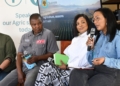
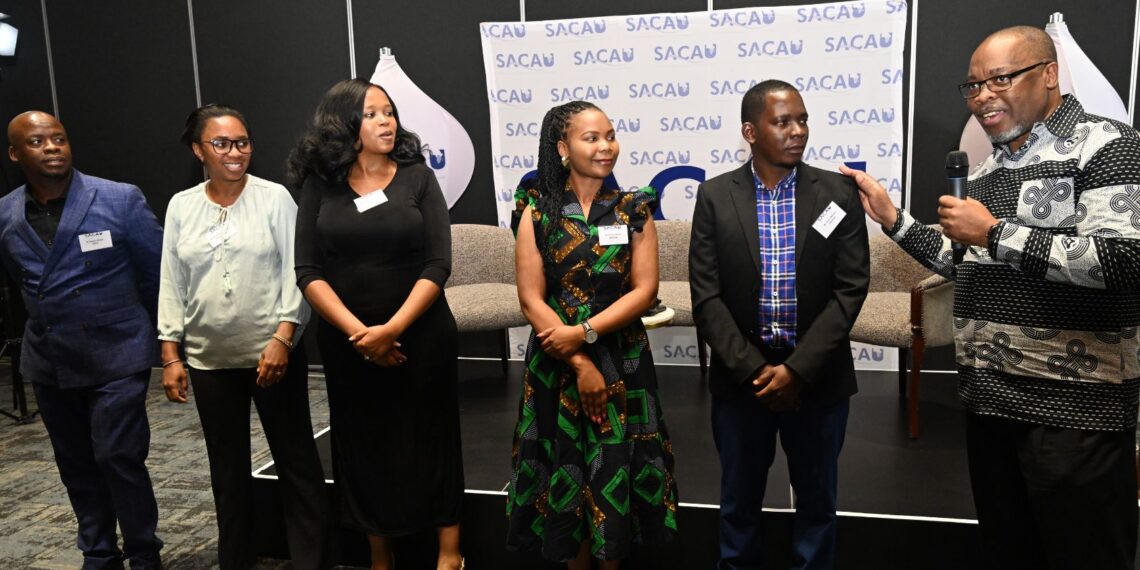
Farmers at the recent Sacau event called for a new approach to agriculture: scaling agroecology without repeating past mistakes. Photo: Food For Mzansi

Farmers at the recent Sacau event called for a new approach to agriculture: scaling agroecology without repeating past mistakes. Photo: Food For Mzansi

Share on FacebookShare on TwitterShare on WhatsApp

Farmers at the recent Southern African Confederation of Agricultural Unions (Sacau) event rallied around a common agenda: scaling agroecology without repeating the mistakes of the past. 

In roundtable discussions, they weighed the lessons of conventional farming, explored ways to revive indigenous practices, and mapped out pathways for fairer, more sustainable food systems. 

One group, represented by aquaponics horticulturalist Gugulethu Mahlangu, cautioned that while conventional farming has boosted yields and created viable agribusinesses, these gains should not blind policymakers to the environmental and health risks that threaten long-term sustainability.

Furthermore, heavy reliance on synthetic inputs also comes at a cost.

“Previously, soybean farmers would harvest less than five tonnes per hectare. Now, through agroecological practices, we are seeing over 5.5 tonnes per hectare,” Mahlangu noted.

Yet she cautioned that the continuous use of synthetic fertilisers and herbicides has harmed soil health, polluted water sources, and compromised nutrition.

The high cost of imported inputs also poses a barrier for smallholder farmers across Africa, often leaving them dependent on subsidies that can be mismanaged or fail to reach intended beneficiaries.

Bottom-up policies

The group also underscored the need for region-specific research and testing, adding that a blanket approach, where farmers replicate their neighbours’ practices, has proven ineffective. 

Locally adapted cultivars, targeted soil health management, and investment in regional research and development were identified as priorities by Mahlangu’s group. 

On policymaking, Mahlangu emphasised the need for bottom-up approaches that include farmers, researchers, extension officers, and other key players. “Right now, we are operating in silos. We need a multidisciplinary effort, mindset change, and harmonised policies across SADC that farmers can adapt in their respective countries,” she said.


Related stories
  • Sacau: Farmers and leaders call for inclusive agroecology
  • Agroecology: Make farmers profitable, not poor

Vision for regional agroecology

Cephas Kamanga, president of Sacau Youth and an agronomist, farmer, and agro-input entrepreneur with the Zambia Farmers Union, described the roundtable as “fruitful and inclusive.”

“We had our questions addressed, especially around strategies for youth-led enterprises. We do not only want to be producers – we want to lead in the value chain,” Kamanga said. 

He praised Sacau and its partners for ensuring youth are part of policy discussions. “As we transition, we need wisdom from older generations and the training to equip us for leadership.”

Looking ahead, participants expressed hope for a regional agroecology model built on collaboration, indigenous knowledge, inclusive policymaking, and education.

“Feed a woman, feed a village,” Mahlangu reminded the room, highlighting the importance of empowering women farmers.

Everyone agreed that making agroecology work is not just about changing how we farm. It also means changing laws, attitudes, and the way money and markets work so that farmers of all ages in Southern Africa can succeed while keeping the land and environment healthy.

READ NEXT: From backyard to 650 ha: Malete’s farm feeds more than families

Sign-up to Farmer's Inside Track for the best farming tips, news and advice to thrive!

Duncan Masiwa

DUNCAN MASIWA is the assistant editor at Food For Mzansi, South Africa’s leading digital agriculture news publication. He cut his teeth in community newspapers, writing columns for Helderberg Gazette, a Media24 publication. Today, he leads a team of journalists who strive to set the agricultural news agenda. Besides being a journalist, he is also a television presenter, podcaster and performance poet who has shared stages with leading gospel artists.

Tags: agroecologyCommercialising farmerConservation agricultureInform meRegenerative agriculture
News

Aucamp outlines strategy for biosecurity, trade, and infrastructure

by Tiisetso Manoko
2nd September 2026

In an exclusive interview with Food For Mzansi, agriculture minister Willie Aucamp outlines his vision to accelerate the AAMP, tackle...

Read moreDetails
Tobias Doyer, CEO of Grain SA. Photo: Supplied/Grain SA Facebook

Rising costs, climate risk push Swartland wheat farmers to the brink

2nd September 2026
Sick spuds: No need to panic as SA’s potatoes are banned in Zim

Potato turning point ahead as onions double in price year-on-year

1st September 2026
Early calf care: Key growth targets every cattle farmer must track

Early calf care: Key growth targets every cattle farmer must track

1st September 2026

How to align your farming cycles with long-term financial success

1st September 2026

Former electrical engineer builds farming powerhouse on tribal land

Foot-and-mouth crisis hits SA dairy industry with R1-billion loss

Early calf care: Key growth targets every cattle farmer must track

Mamelodi farmers learn how to test soil with just a bottle and spade

Potato turning point ahead as onions double in price year-on-year

Join Food For Mzansi's WhatsApp channel for the latest updates!

JOIN NOW!
Next Post
Ramaphosa urges regional farming unity at Zimbabwe agri show

Ramaphosa urges regional farming unity at Zimbabwe agri show

THE NEW FACE OF SOUTH AFRICAN AGRICULTURE

With 21 global awards in the first six years of its existence, Food For Mzansi is much more than an agriculture publication. It is a movement, unashamedly saluting the unsung heroes of South African agriculture. We believe in the power of agriculture to promote nation building and social cohesion by telling stories that are often overlooked by broader society.

Honoured roots: A father’s legacy, a daughter’s farming dream

Gauteng farmers urged to harness massive urban market

Foot-and-mouth crisis hits SA dairy industry with R1-billion loss

Tough times, hardy cattle: Why Mzansi farmers are choosing Nguni

Dragon fruit thrives in KZN valley despite tough national season

Government hikes sugar import price, but industry warns of gap

  • Awards & Global Impact
  • Our Story
  • Contact Us
  • Cookie Policy
  • Privacy Policy
  • Copyright

Contact us
Office: +27 21 879 1824
News: info@foodformzansi.co.za
Advertising: sales@foodformzansi.co.za

Contact us
Office: +27 21 879 1824
News: info@foodformzansi.co.za
Advertising: sales@foodformzansi.co.za

  • Awards & Global Impact
  • Our Story
  • Contact Us
  • Cookie Policy
  • Privacy Policy
  • Copyright

Chat Options

I'm Lerato, your AI assistant!
No Result
View All Result
  • News
  • Changemakers
  • Lifestyle
  • Farmer’s Inside Track
  • Food for Thought

Copyright © 2024 Food for Mzansi

This website uses cookies. By continuing to use this website you are giving consent to cookies being used. Visit our Privacy and Cookie Policy.