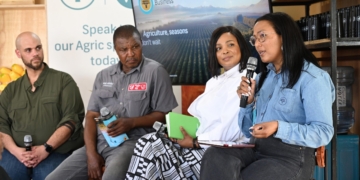
“Every farmer needs to start planning for an electric future. The sooner we adapt, the sooner we can benefit from this incredible transformation,” said Joubert Roux, widely regarded as the father of electric vehicles (EVs) in South Africa and co-founder of Zero Carbon Charge.
At Food For Mzansi’s recent Emergency Summit on Climate Change and Agriculture, Roux noted electric vehicles’ crucial role in farming. He called on farmers to embrace this shift, particularly as climate change escalates and government incentives for EV adoption continue to increase.
Electric vehicles are not just the future – they are here now, as Roux noted, with countries like China already ahead of the curve.
“China has reached 50% market penetration for electric vehicles. They were planning on reaching that milestone in 2030,” he said, stressing the significance of South Africa catching up.
Adapting for a sustainable future
The recent government announcement of incentives and reduced import tariffs for EVs is a step in the right direction, but Roux warns that South Africa needs to move fast: “Nobody in the world is going to build cars just for the South African market.”
Zero Carbon Charge is pivotal in ensuring that South Africa not only adapts to electric vehicles but does so sustainably. Roux and his team are working on a groundbreaking off-grid charging network that will stretch across the country, primarily focused on rural areas.
“We concentrated on rural areas, and it’s a rural network by definition – it’s built on agricultural land,” says Roux.
The idea is simple: farmers can diversify their income streams by leasing their land for solar-powered charging stations. In return, these landowners receive 5% of the station’s sales and surplus energy at no cost.

An agricultural revolution
Agriculture, as one of the most energy-intensive sectors, stands to benefit greatly from this electrification. Roux argues that electrifying farming equipment is easier than many realise.
“Farming equipment is easy to electrify. You don’t mind weight; you actually want more weight on your tractor. So batteries and an electric motor are easy to implement,” he said.
For farmers, the advantages go beyond electrification itself.
The rising cost of fuel and the growing pressures of climate change have made sustainable energy alternatives more attractive.
Roux paints a vivid picture of the future.
“We are very close to the point where you can install solar and batteries and make yourself energy independent. The beauty is, once you’ve spent that money, you are your own utility for the next 30 to 50 years.”
As South Africa navigates its commitments to reducing carbon emissions, the role of agriculture will become increasingly important. Zero Carbon Charge’s rural focus aligns well with the country’s green energy goals, offering farmers a chance to become energy producers and reduce the sector’s carbon footprint.
“If we manage to migrate our entire fleet of cars and trucks to electric vehicles, the country will save in the order of R300 billion a year in foreign exchange that we now spend on petrol and diesel imports,” Roux says, highlighting how this transformation will inject money back into local economies – particularly in rural areas.

Partnering with rural communities
Roux’s vision for Zero Carbon Charge goes beyond merely supplying power. By building charging stations on agricultural land, Zero Carbon Charge ensures that rural communities actively participate in the clean energy revolution.
Roux sees this as a form of empowerment for landowners: “It’s a diversification for that landowner. The rural areas really become part of that energy value chain.”
He explains that when the project’s first test site is fully operational, landowners could earn between R300 000 and R700 000 per hectare of solar panels, making it a substantial source of income.
This partnership model stands in stark contrast to traditional extraction industries, which often take resources from rural areas without leaving much behind.
As Roux explains, Zero Carbon Charge’s approach is different: “We sign a long-term lease agreement with the landowner, and the landowner gets 5% of the sales on his land. So, we never have to negotiate the price again, and the rural areas become part of that energy value chain.”
The broader implications of this energy transition cannot be understated. Roux sees it as an opportunity for South African farmers to insulate themselves from rising energy costs and contribute to the country’s climate goals.
“If we migrate the current fleet of vehicles on our roads to electric, the country will save 97 million tonnes of carbon emissions a year. That takes us 20% towards the country’s commitments for 2050.”
Paving the way for a green future
By developing a world-first off-grid, solar-powered charging network, Zero Carbon Charge aims to reduce South Africa’s reliance on coal-powered electricity. Roux acknowledges the irony of charging an EV with coal-produced power: “It makes absolutely no sense from a climate mitigation point of view to buy an electric vehicle but charge it using electricity produced from coal.”
The company’s first charging station, set to be commissioned next month in North West, will be a major milestone in this journey. If successful, it could pave the way for an expansive network that ensures electric vehicles become a viable option across the country, from major cities to the most remote farming communities.
In a rapidly changing world, Zero Carbon Charge’s vision is clear. By empowering farmers to diversify their income, reducing the country’s carbon footprint, and driving the adoption of electric vehicles, the company is ensuring that South African agriculture remains competitive in the face of climate change.
As Roux aptly puts it, “Every farmer needs to work that into his long-term planning.” The future is electric, and the time to act is now.
READ NEXT: Electric vehicles could help farmers diversify income streams
Sign up for Mzansi Today: Your daily take on the news and happenings from the agriculture value chain.