A catastrophic series of intense cold fronts that battered the Western Cape between 10 and 13 May has left the province’s agricultural sector reeling. Widespread flooding, infrastructure destruction, and a severe power grid collapse have placed the multi-billion-rand fruit and wine export supply chains in immediate jeopardy.
The Witzenberg, Breede River Valley, Hex River Valley, Grabouw/Elgin, and Worcester regions bore the brunt of the weather system. Ceres recorded a staggering 488mm of rain over the three days, while parts of the Witzenberg Valley were deluged with more than 600mm.
The excessive rainfall and gale-force winds caused unprecedented destruction to orchards, vineyards, cropland, homes, and critical transport networks. Some producers reported the complete loss of harvests, including apple crops in Grabouw.
Beyond immediate crop losses, a severe infrastructure crisis has emerged. The Western Cape department of agriculture (WCDoA) reported compromised irrigation systems, access roads, and bridges, leaving several farms completely cut off by flooded rivers.
The pylon collapse and cold storage threat
The most critical emergency facing the industry is a localised electricity crisis. Between six and ten electricity pylons collapsed in the Waaihoek area between Wolseley and Worcester, leaving the Witzenberg region with a severely constrained power supply.
The town is currently receiving electricity from an alternative source, but it supplies only approximately 15% to 20% of the area’s total demand. Industry leaders warned that the estimated four-week repair timeline poses a serious threat to the fresh fruit industry, which relies heavily on electricity to maintain fruit quality and process produce.
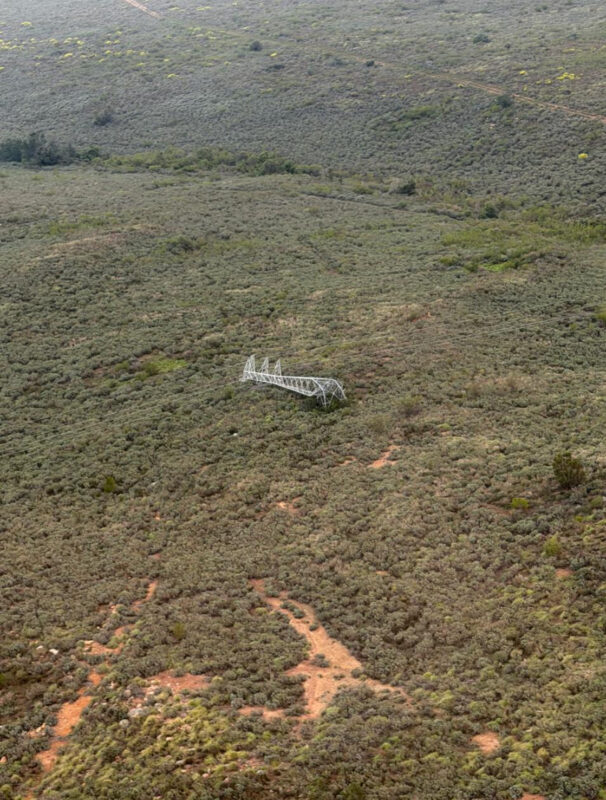
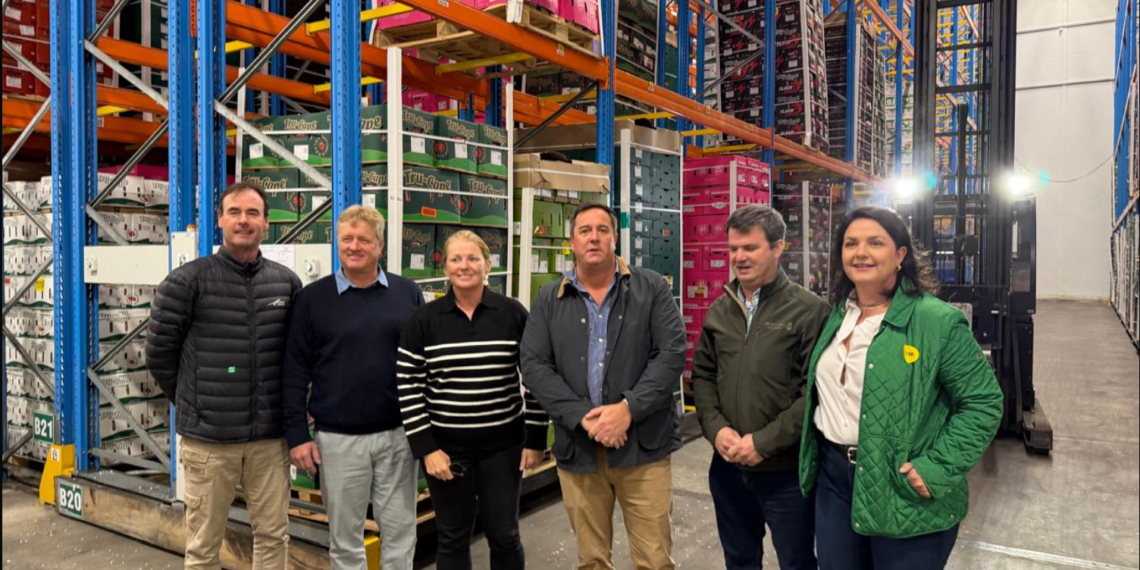
Pieter Graaff, chairman of Tru-Cape Fruit Marketing, who represents Ceres Fruit Growers, Ceres Fruit Processors, and Tru-Cape, accompanied the minister of agriculture, John Steenhuisen, on an aerial assessment of the Witzenberg and Breede River Valley regions. Graaff warned of the severe long-term economic consequences.
“The storm’s impact has been catastrophic. As rivers swelled, roads, homes and lives were swept away. The damage to infrastructure will take years to repair and cost billions of rand. This disaster has set our province back significantly, but with strong leadership, we will prevail,” Graaff said.
Related stories
- Citrus farmers count losses as floods drown export hopes
- State of disaster: Floods and storms push farming into crisis mode
- Farmers battle floods, snow and damaged infrastructure
- Shifting seasons ahead: Brace for more extreme weather
The power outage directly threatens jobs and export revenues.
“There is more than 300 000 tonnes of freshly harvested export fruit currently in cold storage that require electricity to maintain market quality,” Graaff explained. “There is insufficient generator capacity to keep these cold stores operational, while diesel costs are placing enormous financial pressure on businesses. If the fruit deteriorates, it cannot be packed, which could result in thousands of job losses and major export revenue losses.”
Furthermore, Ceres Fruit Processors faces mounting pressure, as the facility still needs to process more than 100 000 tonnes of apples and pears into concentrated fruit juice while operating on costly generator power. Graaff noted that waiting a month for repairs “will cost the industry tens of millions of rand”.
Infrastructure damage
Francois Malan, managing director at Ceres Fruit Growers, echoed these concerns, stating that virtually every farming operation in the region suffered damage.
“Everyone in our area has experienced damage to some extent, whether it’s orchards being washed away, infrastructure destroyed, erosion damage, or crop losses,” said Malan. “However, restoring electricity to the town and surrounding farms is now critical, as millions of rands are being spent daily on diesel to keep packhouses, farms, and communities functioning. Electricity is currently our biggest crisis.”
In the Elgin, Grabouw, Villiersdorp, and Vyeboom (EGVV) regions, growers also faced crop losses, though some elements of the storm brought relief. Attie van Zyl, managing director at Two-a-Day, indicated that wind damage was contained.
“We still have some apples on the trees, mostly Sundowners, and approximately one-third of the fruit that remained on the trees was blown off by the wind and will now be diverted for juice. Fortunately, this represents only about 2.5% of our total crop,” Van Zyl said.
“We are grateful for the rain and for the significant rise in the level of the Theewaterskloof Dam, which increased from approximately 49% to 71.5%.”
However, Van Zyl stressed the urgent need for infrastructure repairs in the EGVV region, particularly the R43 route between Villiersdorp and Worcester, which is a vital logistical artery. “Restoring road access as quickly as possible is essential to ensure the continued movement of produce and to limit further economic losses for growers in the region,” he said.
Government mobilises recovery efforts
To evaluate the situation, the WCDoA has deployed its digital Disaster Risk Reduction (DRR) Damage Assessment App to collect real-time data from affected areas despite ongoing power and connectivity challenges. On-site verification visits will prioritise high-value agricultural zones as conditions stabilise.
On Monday afternoon, 18 May, the Western Cape minister of agriculture, economic development and tourism, Dr Ivan Meyer, met with the agricultural sector and the Western Cape department of infrastructure to prioritise critical regions.
“In several affected areas, contractors have already been appointed to begin repairing critical road infrastructure,” Meyer said. “Mopping-up operations, including the clearing of roads and ongoing humanitarian support, will continue as part of the coordinated provincial response.”
The Western Cape government will meet on Wednesday, 20 May, to consider classifying the event as a provincial disaster. This step will allow the province to approach the National Disaster Management Centre for a formal declaration to unlock national recovery resources.
“The scale of this event presents a complex and evolving challenge for the agricultural sector,” Meyer stated. “Our immediate priority is to ensure accurate damage assessment and to support farmers through a coordinated, data-driven recovery process.”
“I want to thank the many farmers, organised agriculture, thousands of volunteers, and law enforcement agencies for their support during this recent disaster in the Western Cape,” Meyer concluded. “The WCDoA remains committed to working closely with farmers, industry bodies and government partners to mitigate the impacts of the disaster and to support the recovery of affected agricultural communities.”
Finding solutions key to farmers’ survival
Following his oversight visit to the Ceres region alongside Hortgro’s general manager of trade and markets, Jacques du Preez, agriculture minister John Steenhuisen committed to engaging with provincial and national counterparts to escalate the sector’s grievances and find rapid solutions.
Steenhuisen, praising the resilience of the local farming communities, gave a firm guarantee to the industry.
“Help is on the way,” Steenhuisen promised, underscoring that the electricity grid must be fully operational as soon as possible. “Moving forward, it is critical that government remains nimble and adaptable in the face of an increasingly volatile climate, and that all future investment in infrastructure and development is undertaken in a sustainable and resilient manner to protect local economies and the livelihoods they support.”
Industry bodies welcomed the direct ministerial engagement, citing it as essential for securing the urgent interventions and long-term recovery support required to safeguard South Africa’s agricultural export economy.
READ NEXT: Why SA should embrace landrace seeds during global uncertainty