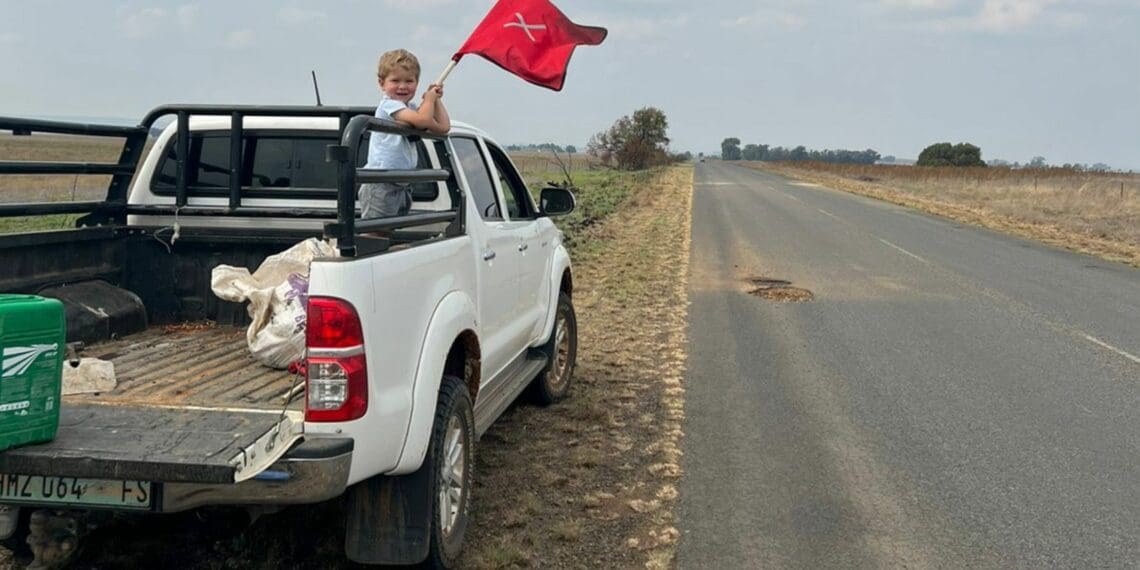
Agriculture, land reform and rural development minister, Thoko Didiza, has called on agricultural role players in the Free State to form closer relations for the sake of unearthing opportunities and finding solutions to challenges that hamper agricultural growth in the province. The state of the province’s rural roads is a No 1 concern.
“Dialogues must happen at a local level because the dynamics that pertain to the Free State, don’t pertain to other provinces. The Free State must have a space for various stakeholders to engage and find solutions and opportunities as a province,” Didiza said.
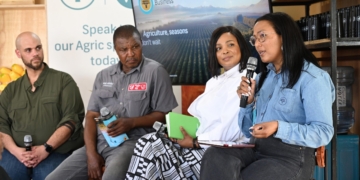
Didiza was addressing agricultural unions, commodity groups, and other agricultural formations during a recent stakeholder engagement meeting in the province.
The meeting, specifically called to highlight the challenges of bad rural roads in farming communities, was hosted by the MEC for agriculture and rural development, Saki Mokoena, and the MEC for community safety, roads and transport, MaQueen Letsona-Mathae.
Tight budgets and tedious processes
In the meeting, Dr Jack Armour, commercial manager for the Free State Agriculture said poor management of an already strained government purse has led to unnecessary delays in fixing critical road infrastructure.
Armour also pointed to a lack of labour on ground level. “There are not enough people on ground level. Roads wash away because the roads become the river. There are no people on ground level to divert water away from the roads.”

Furthermore, as noble as the Expanded Public Works Programme (EPWP) may be, it is not producing the required results, Armour said.
“Yes we need to get young engineers into the system but they are not delivering quality service in building the roads. Those are social objectives, but they are not achieving the results that we need. Perhaps they are political objectives for short-term solutions, but they are not long-term sustainable solutions.”
Farmers forced to fix roads themselves
For the past year or so, farmers in the Free State have had to fix roads themselves. Money that could have been used to build their businesses, is instead used to rebuild roads. “Farmers cannot continue fixing roads. They are running out of money,” Armour said.
Another problem is the amount of time it takes to get potholes fixed in the province fixed. “Once the province gets the budget for roads, the projects are drawn up with that limited budget. Then it takes another six months for the whole tender process.”
“Small projects of R5 million have to go out on tender for six months. On the R30 road, 25 people have died. It’s taken the department two years to fix that road, that’s not good enough,” he added.
The wheels are turning
Nakana Masoka represented the African Farmers Association of South Africa (Afasa) in the province, echoing Armour’s sentiments. Masola said critical roads must be fixed to ensure easy mobility of people and agricultural goods.

“At the moment, the challenge is that from the side of government, there is still not nice coordination when we repair these roads. To the extent that the farmers ended up driving that programme themselves,” he said.
The health of rural and farming communities is also at stake as ambulances struggle to reach main district roads in the province, Masoka said.
During the meeting role players agreed that addressing road and rail issues would not only reduce the cost of production but add value to their products. Furthermore, farmers can produce more, and the price tag for consumers is reduced.
Letsona-Mathae acknowledged the impact of dilapidated roads on the agricultural sector, health services and the economy. She noted several issues raised by stakeholders and said her department would look into them.
Responding to claims of poor management of resources and long tender processes, Letsona said she was fixing her department. “The wheels are changing; it is not going to happen anymore,” she said.
Look to KZN for a possible solution
The meeting created a platform for possible solutions to be tabled. Didiza encouraged role players to explore how KwaZulu-Natal’s Zibambele Road Maintenance Contract System, the province’s rural roads strategy, addressed dilapidated roads.
The Zibambele Road Maintenance Contract System is a poverty alleviation programme creating sustainable jobs for poor rural families while they maintain rural roads.
In order to break poverty cycles in the medium to long term, the department employs a household rather than an individual. This ensures that a household does not rely on one person for the continuity of the contract.
Roads are built where people live and therefore their construction and maintenance creates work opportunities for those who are least mobile.
“What that did, you never had to wait for a government official. Those roads, the families maintained. It addressed the issues of poverty, unemployment, and skills.”
“People did not need to be supervised because they understood how important the roads are to them,” Didiza said.
READ NEXT: Grab indaba tickets before they’re gone!
Sign up for Mzansi Today: Your daily take on the news and happenings from the agriculture value chain.