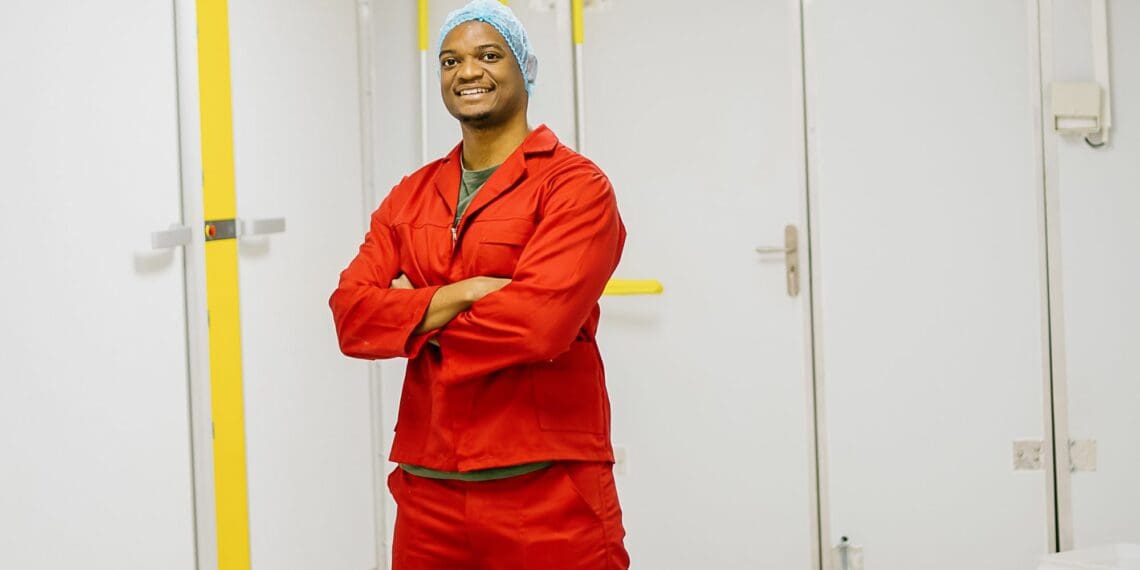
Chicken production in Limpopo got a serious boost with the opening of the Northroost Hatchery in Makhado. A modern, new facility that can produce 208 000 quality day-old-chicks per week, Northroost is a joint venture between local entrepreneur Clive Tigere of KC Hatchery, Country Bird Holdings (CBH) and Bushvalley Chicken.
“This is a game-changer for broiler farmers in Limpopo who have never before had access to such consistent volumes of high-quality day-old chicks,” says Tigere. “The local economy will benefit; more jobs can be created, and the informal market can grow.”
CBH chief executive Brendon de Boer explains that CBH supplies the fertilised Arbor Acre eggs, Tigere oversees the hatching process, and Bushvalley takes a significant percentage of the day-old chicks.
He adds that the facility was built and kitted out with an investment of R56 million. “Clive qualified for an IDC grant, and we had started the application process over year ago, but government funding always take time and we didn’t want to delay. So, between CBH and Bushvalley we decided to find the bridge financing so that we could get going with construction.”
Tigere’s grant eventually came through earlier this month.
Northroost’s first batch of fertilised eggs were set on 24 August and hatched on 14 September, setting in motion a cycle in which two batches a week are hatched, several days apart. So far, Tigere has maintained an excellent hatch ratio of over 90%, and by last week the tally stood on over a million day-old-chicks that have been distributed into the broiler market of Limpopo.

The joint venture was the happy result of a meeting five years ago when Tigere had approached the South African Poultry Association for help with a research project. Tigere had given up a corporate job at McKinsey’s to focus on his fledgling poultry business back home in Makhado.
He had noted the high incidence of dumped chicken available in Limpopo, and the negative effect it had been having on the informal poultry industry, with local farmers not being able to compete with the dumped imports that were flooding the market. He was introduced to the CEO of CBH who, in turn, contacted his colleagues at Tzaneen-based Bushvalley to introduce them to the young entrepreneur in their hood.
A farmer makes a plan…
Finding enough fertilised eggs of reliable quality was a constant battle for Tigere, and when CBH offered to supply as many as he needed, he jumped at the chance. He was not deterred by the fact that he had to collect the eggs in Lichtenburg in North West, and made the 16-hour round trip from Machado every week.
“This steady supply of high-quality eggs completely changed our business,” says Tigere.
“Having better eggs meant a more predictable, higher hatch rate, and now KC Hatchery could commit to clients with a steady supply of chicks that allowed them to have a business all year round.”
By 2020, KC Hatchery was selling around 19 000 day-old chicks a week, and Tigere had started discussing a more formal arrangement with CBH and Bushvalley. De Boer had been looking around for opportunities to further the company’s transformation agenda in line with the poultry masterplan, and KC Hatchery was ticking all the boxes. The joint venture was eventually formalised.
“To transform the poultry industry as the master plan has called for, we believe that more projects such as this one is needed, which came together because there was collaboration between government, integrated producers and local entrepreneurial talent,” says De Boer.
“There is a challenge in finding those solid projects with real potential in outlying areas, but they are out there, and working with the IDC to identify them is a way to open new markets and grow the industry. I hope we can find more solid projects such as Northroost, all along the poultry value chain from hatcheries to processing, where local businesspeople with potential can be upskilled and supported.”

Global standards
The new hatchery was constructed with expansion in mind, and the infrastructure will easily be adapted in future to double its current capacity. State-of-the-art hatchery equipment was imported, water reservoirs were built, and generators installed to keep the systems going in the event of power outages.
“Everything in the facility speaks of quality, and global standards are adhered to,” says Tigere, who has been working round the clock since Northroost came online, to ensure he has buyers for every one of the approximately 100 000 chicks that are hatched twice a week.
“It has been scary at times, especially when a regular client suddenly cuts their order by half, and you wonder where to with the extra 10 000 chicks! But we’re finding our groove with these new, bigger volumes, and fortunately Bushvalley has the capacity to take extra chicks if we have a crisis!”
For Tzaneen-based Bushvalley, the proximity to Northroost adds a factor of convenience and enables them to provide daily administrative and other support to Tigere.
CEO Ian Preece says, “Northroost ticks all the boxes for us – it is a good business opportunity, it allows us to contribute to industry transformation, and it fills a real gap for poultry producers of all sizes in Limpopo. Even as an integrated producer with more resources we benefit from having a consistent supply of high-quality day-old chicks on our doorstep.”
For Tigere and his local farmer clients, Northroost represents a bright new future. “Farmers from Limpopo can now raise high-quality chicks efficiently, without the high transport costs that are generally incurred when bringing chicks in from hundreds of kilometres away,” he says. “As their costs go down, they can become more competitive, grow their businesses, and create more jobs, and we will see this positive response circling further and further.
“The informal poultry industry tends to fly under the radar, but it represents so much opportunity for growth and wealth creation in many areas of the country where there are few other job opportunities. I hope that our example can serve as a model that government could apply to make this happen for other entrepreneurs too, so that transformation can happen organically,” says Tigere.
ALSO READ: Advanced chicken house gives KZN poultry farmers wings
Sign up for Mzansi Today: Your daily take on the news and happenings from the agriculture value chain.