As a farmer you always need to think about the future, but are you future-focused? What qualities do you need to cultivate in order to farm thinking ahead?
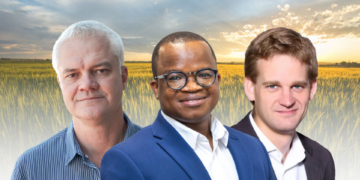
“I think the most important future characteristic of an agriculturist – especially those who can address climate change, address poverty and create a better future for us – is how they understand how the health of the ecosystem is tied up with the health of their own enterprise…the health of their own workers and…the health of their own society.” Speaking is Dr Naude Malan, convener of the Izindaba Zokudla farmers’ lab.
He says all these things are interdependent. And it is in this interdependency where true value is created. The interconnectedness with agriculture at its centre, affects a number of other things such as how we use and develop technology, or even how we design our society.
“If agriculture can combine and converge all these sources of value, and create great value through the combination of all these activities, then we will see a sustainable future emerging,” says Malan.
In short, someone who can combine diverse things into one stream of value creation that is beneficial to society, the planet, the farm itself, the workers and the people who eat the food, is a great agriculturist ready to farm for the future.
These are the characteristics that a future-focused farmer should have and focus on.
1. Understand the importance of partnerships
Khakhu Mutheiwana, who runs the Vhaluvhu Farm near Soekmekaar in Limpopo, credits the partnerships she has made in the agriculture sector for the success of her farm.
One such partnership is with McCain. Mutheiwana established the partnership in 2018 – when McCain subsidised her labour and land preparation costs in the financial year.

“McCain’s intervention enabled my farm’s continuity as we strived to become self-sustainable,” she says.
She also says partnerships such as these will help the industry stay afloat and continue to contribute positively to the country.
2. Be kind to the environment
Over the last few years, there has been a greater public awareness of the harmful impacts of industrial agriculture on the environment. Future-focused farmers consider the environment that sustains them and looks after it in turn.
“Agricultural systems need to work together with the environment. Utilise all components, especially waste,” says Malan.
A growing movement of producers are using more sustainable farming systems such as permaculture and other traditional farming practices. Permaculture is seen as the farming method that connects farmers more closely to the environment and their community.
“Permaculture principles are thinking tools that enable the farmer to creatively design a food production system that is robust, resilient, self-sustaining and ecologically sustainable,” says Delwyn Pillay, full-time volunteer and activist for Greenpeace Africa, and an ecologist at heart.
“Use the resources that nature gives you, appreciate them and do not abuse the natural systems that provide those resources,” says Pillay.
3. Fast-track empowerment
When commercial farmers in the Harry Gwala district of KwaZulu-Natal noticed that farm management students from the local college were forced to go from door to door to find internships to complete their qualifications, they made a plan. They voluntarily pooled their resources to assist local small-scale farmers and communities with an in-service training programme that is enabling farm management students to finish their qualifications
The programme, Harry Gwala Agri, aims to transfer critical skills from established farmers to aspiring farmers – a story of empowerment in action.

4. Embrace technology
Technology has come to the fore in agriculture. The 30-year-old vegetable farmer Nerudo Mregi from Springs, east of Johannesburg, uses technology and the internet of things to advance operations on his farm.
“I’m from a technology background and I got really drawn into trying to figure out better methods of farming and better methods of growing vegetables organically,” Mregi says.
He started using the internet of things (IoT, the network of physical objects which are connected and exchange data through the internet) on their farm to tackle their farming challenges.
5. Control your own markets
Through decades of hard work, the Senekal family has cracked both local and global markets. Their farm, Mkuze Estates, produces cotton, sugar beans, citrus, macadamias, cattle, game and vegetables.
It is not an easy feat getting into local and global markets in the cotton industry, Dreyer Senekal says. “It’s a big challenge and you have to do your homework. You can’t just send your cotton overseas and hope you [will] get paid for it. You have to go to reputable companies. You have to search for them. You have to send them samples.”
He adds that it often takes many months or even years to strike a deal and that it once took him longer than two years to get a reputable buyer, but that the wait was worthwhile.
6. Use innovative practices
Farming nowadays can be a highly technological, scientific and complex financial venture with innovation as a key factor for success. But it doesn’t have to be high-tech innovation to be effective, as Prudence Mokwena proves.
When Mokwena started her chicken farm, her biggest challenge was market access. She used WhatsApp, a platform with which everyone is familiar, in an innovative way to grow her market and sell her chickens.
“I used WhatsApp to get customers. I even came up with a creative, cost-effective marketing technique with a high return on investment to add to my current marketing strategy,” she says.

7. Care for the community
“Your product sits in a whole network of relationships: from the way the product is related to the soil to how it is related to the health of the community,” says Malan.
Agri opportunities can provide economic benefits, benefits to people and conservation of our environment. A vegetable garden started on Middelpos farm near Malmesbury allows children and their mothers to grow vegetables to end hunger – not only for themselves, but for the hundreds of other families who are reliant on them.
The garden does not only benefit those that work on it, but their families and the wider community as well.
8. Join professional associations
Access to knowledge is vital for success in the agriculture industry. In most agriculture ventures, joining a professional association will help the farmer connect with other farmers, learn from those in the industry and find access to resources.
Beekeeper Mmabatho Portia Morudi advises future beekeepers to join beekeeping societies and associations. Joining a beekeeping society near you will be helpful in finding out more about best practices, tools and training, she says.
Morudi advises that, before heading into any new farming venture, it is important to learn from others who have already walked the road on which you are about to embark.
9. Prioritise sustainability
Sustainability is key in any farming endeavour, and especially for future-focused farmers. Sustainability in an environmental, economic and social sense is necessary to create a future where everybody can thrive. The SEED foundation practices sustainability in all these sectors.
Based at Rocklands Primary School in Mitchell’s Plain in the Western Cape, SEED aims to uplift communities on the Cape Flats by educating people on how to localise their food systems, grow micro economies and give unemployed youth a chance to thrive.
The SEED programmes are essentially permaculture programmes that teach resilience and sustainability to their students. They are not just taught about permaculture design principles, but also the ethical principles that underscore the concept.

10. Play the long game
In agriculture you always have to think about the future and plan for it. Playing the long game is important for future-focused farmers in two ways: remembering that success does not come overnight and striving to leave a sustained legacy.
Bennedicter Mhlongo, cash crop farmer who was born and raised in Bushbuckridge, wants to leave a legacy for his children.
“My main goal is to create a legacy for my children. That’s very important because what we are doing today will influence their future,” he says. “Our children will suffer our consequences in the future.”
Despite the trials and setbacks that Mhlongo endured on his road to becoming a successful farmer, he prevailed because he knew he was following his passion and playing the long game.
ALSO READ: The only guide that beginner farmers will ever need
Sign up for Farmer’s Inside Track: Join our exclusive platform for new entrants into farming and agri-business, with newsletters and and podcasts.