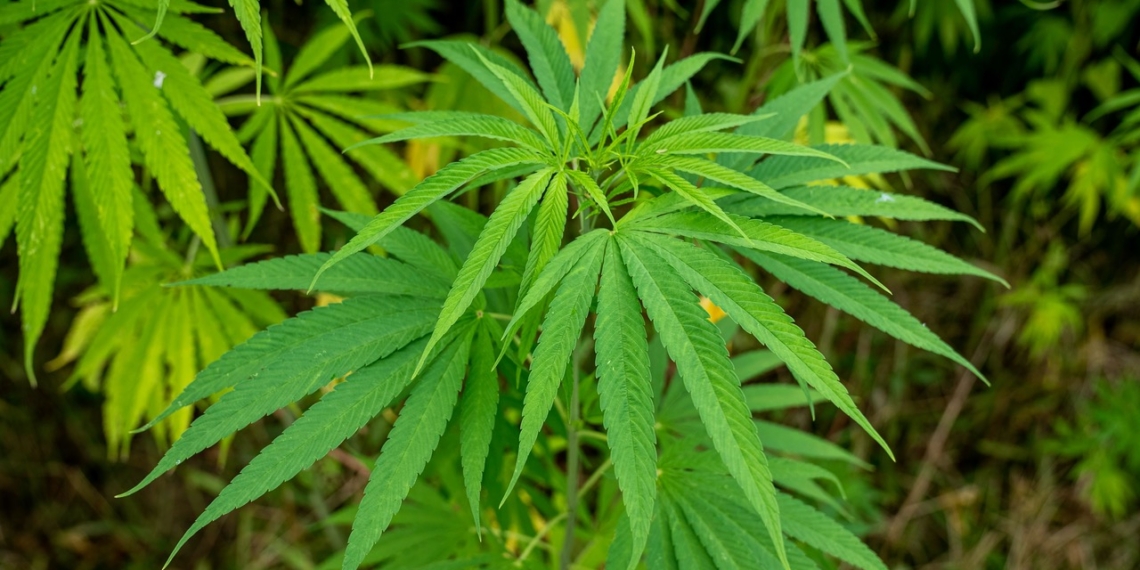
In South Africa, it’s been legal for several years for people to grow hemp (a type of Cannabis sativa with very low levels of the psychoactive compound THC) for personal use following changes to the law. There’s also been a growing interest in its medicinal and industrial potential for clothing, insulation and paper production. Many see it as a “green gold” opportunity for small-scale farmers.
However, hemp needs water to grow, and South Africa has limited water resources. Planting more hemp could potentially reduce the water available in already dry areas.
We are part of a team of researchers from the University of KwaZulu-Natal and Rhodes University who, along with recent master’s graduate Gary Denton, used drones and ground sensors to map the water use of hemp in the KwaZulu-Natal Midlands. Our findings provide South Africa’s first measurable evidence of the impact of hemp on water resources.
Knowing the water use of a crop is critical given South Africa’s water constraints. The National Water Act has the power to regulate crops if they’re known to noticeably reduce the amount of water reaching rivers and dams, and has used this power in the commercial forestry sector. Without reliable information on water use, policymakers can’t judge how hemp affects water supplies or make informed decisions about how it should be managed.
Our study provides a baseline for how much water hemp uses. This information can help South African regulators assess the crop’s impact on water resources.
Using drones and sensors to measure hemp’s thirst
When hemp grows, the plants draw water from the soil and release water vapour through their leaves (transpiration). To measure how much water hemp uses, we set up a tower in the middle of the field with sensors that continuously measured the water vapour released by hemp and the wind speed.
This allowed us to calculate how much water the crop was using throughout the day without disturbing the plants. Although other studies have estimated hemp’s water use using satellite images or by measuring the movement of water inside plants, this is the first study to use this highly accurate method on hemp.
We then flew drones, equipped with thermal and infrared cameras, over the field.
Healthy hemp plants that have enough water have cooler leaves because they release more water vapour. Plants that are short of water have warmer leaves because they release less. When plants transpire, they not only cool their leaves, but also grow. By measuring leaf temperature with thermal and infrared cameras on the drone, we could estimate how much water the crop was using.
We then used a computer model, called QWaterModel, to turn the drone images into maps showing water use.
We carried out the study on a commercial farm near Pietermaritzburg, where the tops of the plants were removed to encourage flowering. Male plants were removed to prevent them from pollinating the females. Pollination reduces the quantity and quality of the medicinal buds but does not affect the hemp plant’s water use.
Related stories
- Why hemp could be the next big thing for local producers
- Why KwaZulu-Natal farmers are rejecting hemp
- SA hemp industry calls for urgent policy reform to unlock jobs
Our research found that the hemp crop used the equivalent of 377 mm of water over its four-month growing season. On average, the area of land occupied by each plant used about 28 litres of water a day, although this also included water used by nearby weeds and loss through evaporation from the soil.
Given that a young gum tree (eucalyptus) (which is known for using a lot of water) uses 30-50 litres a day, hemp is comparable to other large, thirsty plants.
The research team looked at more than just one data system. They also kept track of:
- temperature, wind and sunlight
- rain: 452 mm of rain fell during the season
- soil moisture: how much water was held in the soil within the root zone
- irrigation: how much extra water they added using the drip irrigation system.
These measurements helped us understand what was influencing the crop’s water use, and will allow us to compare results from sites with different weather conditions in future studies.
What we found
The study made some key findings that are important for the future management of the crop:
- Different parts of the field used different amounts of water because the land shape affects how deep the soil is, how much water the soil can store, and how well plants can grow. Drone maps can help farmers identify areas where plants are under water stress and irrigate those places more effectively.
- Much of the water was used up by weeds growing between the rows rather than by the hemp plants themselves.
- The QWaterModel was useful for showing where water was being used, but it estimated higher overall water use than was measured. This was probably because of water that was lost from bare soil and the weeds.
What needs to happen next
Our study is the first that measures the water use of what could become a very widely planted crop. Our understanding of the amount of water used by hemp in KwaZulu-Natal allows us to calculate how much water it is likely to use in other parts of South Africa too, so that improved water management plans can be put in place.
Setting up and expanding hemp plantations in areas that already have scarce water can only be done based on sound scientific knowledge. We see our research as a vital first step, and we urge hemp growers and policymakers to deepen their understanding of how planting hemp directly affects water supplies. Our study also highlights the importance of minimising weed growth between the rows of hemp plants.
Our research used advanced drone technology, specialised cameras and expensive ground sensors. It is going to be difficult for small-scale or subsistence farmers to afford this. But it does provide a view of the future of precision agriculture (a technology-based farming approach that uses GPS, sensors and data to give crops exactly what they need in different parts of a field).
As this technology becomes cheaper and the models improve, drone-based precision agriculture could become the norm for farming in a changing climate.
This project was funded by the Water Research Commission.
- This article was first published by The Conversation. It was written by Trevor Hill, full professor and head of research and higher degrees in the geography department, University of KwaZulu-Natal (UKZN); Alistair Clulow, professor in agrometeorology, UKZN; Anthony Palmer, honorary professor at the Institute for Water Research, Rhodes University; Richard Kunz, research fellow in the Centre for Water Resources Research, UKZN; Shaeden Gokool, researcher in hydrology at the Centre for Water Resources Research (CWRR), UKZN; and Sukhmani Mantel, associate professor at the ARUA Water Centre of Excellence Academic Manager, Institute for Water Research, Rhodes University.
READ NEXT: Langa urban garden feeds crèche, community to drive food justice