In South Africa’s agricultural landscape, rising input costs and persistent water insecurity remain major barriers to commercial viability, particularly for emerging and resource-constrained producers.
Addressing these challenges requires looking beyond traditional resource streams toward innovative circular economy solutions.
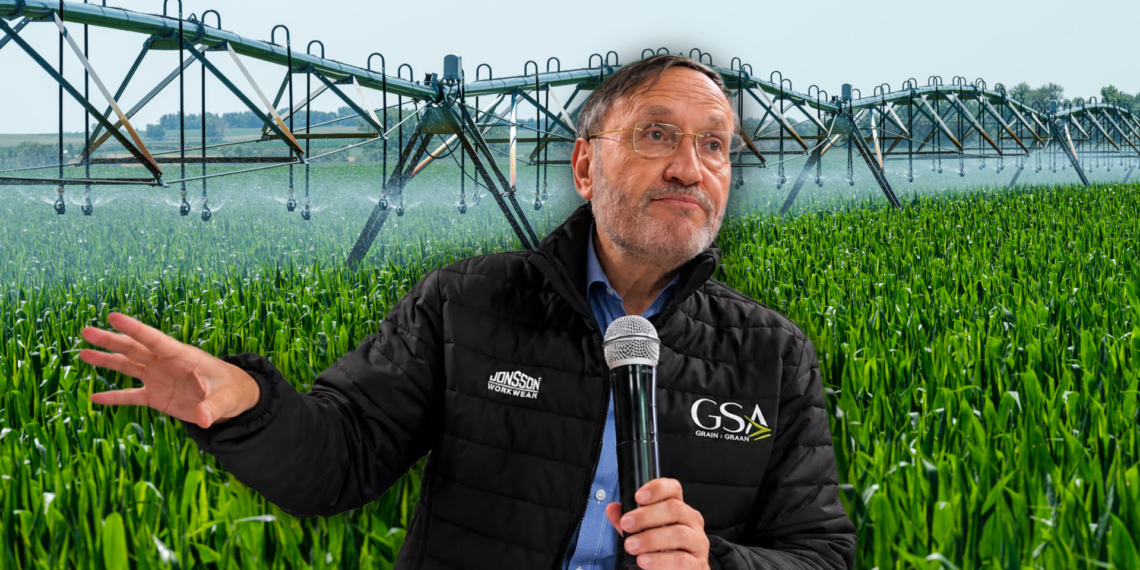
The deputy minister of water and sanitation, Dr Jack Bloom, who was appointed to his portfolio just over two months ago, highlighted the urgent need for a fundamental shift in how the country views municipal waste.
Rather than treating sanitation as an ongoing municipal cost, Bloom advocates for a functional sanitation economy that safely converts wastewater and faecal sludge into high-value agricultural inputs, including organic fertilisers and irrigation water.
Related stories
- Leaders tackle finance and farmer support at Nampo Cape
- RSVP now: Emerging farmers’ programme at Nampo Cape
- New-era farmers get dedicated programme at Nampo Cape
- Plan your Nampo Cape around these lunchtime conversations
Lisakanya Venna: What system do we currently have to hold municipalities accountable for failing infrastructure and poor service performance?
Dr Jack Bloom: There are amendments currently in parliament to hold officials personally accountable. At the moment, we can issue fines and similar measures, but until we get people personally accountable, we won’t truly hold their feet to the fire. It is certainly something we have to do, because municipal performance is currently the weak link in the chain.
South Africa is currently piloting non-sewered sanitation waste treatment. What is the timeline for establishing the country’s first full-scale faecal sludge treatment plant?
We are hoping that public-private partnerships will accelerate this process. Across Africa, in places like Kenya, they already have dedicated sludge treatment plants running, so it is quite strange why we are falling behind domestically. We want to encourage these projects through active partnerships.
While there are already sludge treatment projects underway in the private sector, this needs to expand dramatically. The Water Partnerships Office can drive this forward, and as we identify willing partners, I expect these projects to take off rapidly.
Can safely treated sanitation waste genuinely become a reliable, low-cost source of fertiliser for emerging farmers?
Absolutely, we already have pilot projects demonstrating that E. coli levels in properly treated products are completely undetectable and well within safe operational limits. We need to scale this approach because, quite frankly, South Africa currently imports the vast majority of its fertiliser.
When global prices spike or geopolitical conflicts arise elsewhere, our farmers are exposed. We need to become more self-sufficient, and there is real economic value locked in this waste. According to all scientific testing, these recovered products are safe and highly effective for agricultural use.
Can treated wastewater specifically be leveraged as a bigger source of irrigation water for farmers, especially in water-stressed areas?
The potential is significant, particularly because treated wastewater offers a consistent and reliable water supply near peri-urban areas and small towns. Our pilot testing confirms that when processing meets strict scientific standards, the treated water meets safe limits for agricultural application.
Utilising this resource locally addresses two major constraints for emerging producers simultaneously: reducing input costs for soil nutrients and securing a steady supply of irrigation water in areas where traditional water allocations are constrained.
How can emerging farmers benefit from the sanitation economy beyond simply using the recovered products?
This is precisely where we are looking for new partnerships and pilot projects. Many of our small towns are suffering economically as people migrate to larger metropolitan centres for growth. By decentralising sanitation treatment closer to where waste is generated and where agricultural inputs are needed, we can expand the rural economy and create real local jobs.
Farmers and local cooperatives can participate directly across the value chain, from collection and treatment to composting, biogas generation, and distribution.
I encourage stakeholders to reach out directly so we can identify pilot locations and get these partnerships moving.
READ NEXT: Chilli farming: Why high-value crops are SA’s missed opportunity