Worried about population growth and the pressures of feeding a planet hungry for meat? Don’t have a cow – cultivate one, rather. Meanwhile, venison might help us buck the trend.
If meat is murder, as a certain 80s rock band would have us believe, then there’s an awful lot of killing going down – and it’s only likely to get worse.
Consider that the global human population is expected to top 9.8 billion by 2050 (from the current eight billion). All those extra mouths will need feeding, and most want meat.
Ecological consequences
But it’s not necessarily the growth of industrial-scale blood-letting that should trouble us. Intensive livestock production can have tremendous ecological consequences too.
We know that the burps and farts of cows – and the discharges of billions of ruminants, poultry and pigs – produce an estimated 15% of global greenhouse gas emissions each year. That is more emissions than all the transport in the world put together.
We also know that biodiversity is one of the best ways of mitigating climate change. Yet, unsustainable farming practices continue to devour great swathes of natural space where wild animals might otherwise thrive. Apart from pastures, feed must be produced.
At least 40% of all maize planted in South Africa goes to cattle feedlots, and there will be a massive demand for more arable land to this end, especially with Africa’s population expected to double – also by 2050.
ALSO READ: Food that never mooed – the cultivated meat revolution
What’s to be done?
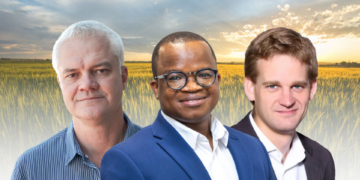
Well, we might start by growing meat, says Dr Paul Bartels, a pioneer in the field of cultivated meat and founder of WildBio, believed to be Africa’s first cultivated game meat company.
We might also create a global demand for wild meat from Africa’s savannas, says Wiseman Ndlovu, of the African Wildlife Economy Institute at Stellenbosch University.
Tipping points
Bartels and Ndlovu were among the speakers at a 27 July online seminar hosted by Oppenheimer Generations Research and Conservation. The webinar, the 15th in the “Tipping Points” series, explored ways in which game meat, wildlife economies and cultured meat might coexist without compromising the environment.
Also on the panel of speakers was Lactitia Tshitwamulomoni, director of the Department of Forestry, Fisheries and the Environment’s wildlife economy programme.
Dr Francis (Frank) Vorhies, a conservation economist, co-founder, and director of the African Wildlife Economy Institute, facilitated the discussion.

Magic in the lab
Bartels, a veterinarian with an MSc in Zoology, together with the Tshwane University of Technology and the University of KwaZulu-Natal, are credited with creating the first lab-grown hybrid chicken nugget in Africa. He described how cell cultures were collected from different sources to stock cell banks. The banks supplied a cell production process to feed the “growing cultivated meat industry”.
“Think of it like a brewery for meat where tiny cells are taken from a live animal (for example, a chicken, a cow or a springbok) and then grown or brewed in a laboratory,” he says.
Bartels’ vision certainly sends the imagination racing. Maybe a millennium from now, people living on Mars will be eating every kind of cut imaginable, but with nary a cow, sheep, pig or chicken in sight – nor crops or pastures to feed them.
Meanwhile, back on planet Earth in the present time, Ndlovu, a researcher and writer with a keen interest in supporting agriculture and sustainable businesses, believes we should be encouraging the consumption of wild meat as a way to rewild and restore landscapes.
Wild alternatives
Wild meat, he says, has the potential to help balance the demands for protein from a growing population, with the need to protect and maintain our biodiversity.
Rather than preventing the harvesting of wild meat as we are often doing now, we should be “exploring ways in which we can coexist with nature”. But this will require a re-look at conservation policies, to “see where balance can be found”.
“Current practices in the conservation sector are mainly focusing on protection and stopping the use of wild meat species,” he says.
“Let’s reintroduce wild meat species and also consume and benefit from them by not removing them or stopping the use of these animals.”
Ndlovu says existing conservation policies put hurdles in the path of the harvesting and consumption of wild meat. This created hassles for communities and conservation areas.
“We have seen people jumping fences, coming into the parks or the conserved areas and putting snares… poisoning animals in order to get the protein that is provided by the wild meat species.”
LISTEN TO: Podcast: Why cultivated meat is gaining traction
Change broker
Tshitwamulomoni, who has 15 years of experience in conservation and developing sustainable policies and awareness, says the government wants to change.
She told the webinar that the department of forestry, fisheries and the environment is promoting the growth of the game meat industry and wildlife ranching through its national game meat strategy.
The strategy, she says, enabled the creation of a “formalised and transformed game meat industry”. The aim was to provide environmentally sound sources of food while supporting economic growth and rural development.
Finding a balance
But balancing the views of people from different backgrounds and interests was tricky, says Tshitwamulomoni.
For example, the hunting lobby promotes hunting as the only viable means of financing sustainable conservation in Africa. It faces strong opposition from growing numbers of people who have moral objections to hunting.
At the same time, we need to recognise that hunting and harvesting wildlife for food is deeply rooted in ancestral and modern African culture. But current conservation policies criminalise people who hunt or harvest wildlife for game meat in areas where their forefathers had done so for generations before national parks were created. And they are excluded from conservation decision-making.
It’s all deeply complex and speaks to the need for policy changes based on African realities, not imposed conservation models, says Tshitwamulomoni.
READ NEXT: First-of-its-kind: Growing meat without animals
Science non-fiction
Back to the future and the cultivation of meat in laboratories…
The phenomenon is still relatively new and, to date, only Singapore and the United States have passed regulations for its production and sale. South Africa has a way to go in developing a market for safe, high-quality cultivated animal protein.
In other words, don’t expect to see lab-grown fillet on the menu at your local steakhouse anytime soon.
But the potential is certainly there, says Bartels, to provide consumers with a multitude of tasty alternatives, while easing the strain on the environment.
“Who’s to say, maybe in 200 or 250 years, there might not be (mass) slaughtering of animals to feed people,” says Bartels.
This story was written by Maxcine Kater and first published in Daily Maverick. Kater is a marine biologist and environmental officer at the department of forestry, fisheries and the Environment. Additional reporting by Fred Kockott, the founding director of Roving Reporters. This story was produced with support from Roving Reporters’ New Narratives project, a journalism training initiative developed in partnership with science communication specialists, Jive Media Africa.
ALSO READ: El Niño: 2023 version brings a mix of concern and curiosity
Sign up for Mzansi Today: Your daily take on the news and happenings from the agriculture value chain.