South Africa’s hunger crisis is no longer a distant warning. Millions of poor households are forced to choose between food, electricity, transport and water every month. The country also faces worsening climate shocks, such as floods, heatwaves, drought and growing water scarcity.
Yet one of South Africa’s most overlooked food security solutions may already exist above the heads of millions of poor households. These are the rooftops of what’s known locally as RDP houses (small, 40m², government-subsidised dwellings built under the government’s Reconstruction and Development Programme after the end of apartheid). There are over 3.5 million across South Africa.
For my PhD in development studies, I conducted research in low-income communities of RDP houses and shacks of a smaller or similar size made of sheets of corrugated metal attached to wooden poles. I looked into the connection between water, energy and food to find out if rooftop solar panels and rainwater harvesting tanks in RDP houses could reduce water and electricity costs for each family. I also wanted to find out how these savings could improve food security for low-income households.
Older RDP houses don’t have these systems installed. But policy has recently been shifting to include these features in government housing.
My findings suggest that providing RDP residents with solar power and rainwater harvesting tanks would reduce their monthly costs by over 30% – a considerable saving.
Rooftop rainwater harvesting should be recognised as part of a national anti-poverty and food security strategy.

Government, development finance institutions and the private sector should work together to scale up affordable rooftop rainwater and solar harvesting programmes. This must be part of an integrated national strategy to reduce household costs, strengthen food security and build climate resilience.
Food, water and energy are deeply connected
The combined water, energy and food approach understands that food insecurity is not only about food itself. Food security is deeply connected to access to water, energy and livelihoods. A household that spends less on electricity and water has a greater capacity to buy or grow food.
In many countries, home solar irrigation and rooftop energy systems have significantly reduced energy costs for poor farming households. In India, they’re supporting small farmers to make better profits.
Related stories
- Harnessing the power of passive rainwater harvesting
- Cape Town’s urban farmers turn to hydroponics for hope
- Urban roots: Akhona’s rise from jobless to thriving rooftop farmer
- Fighting hunger starts in the backyard with a single seed
In East Africa, rooftop solar systems and mini-grids have made food supplies more secure for families by improving irrigation, refrigeration and agro-processing capacity for vulnerable farming communities.
Rainwater harvesting has also produced measurable livelihood improvements in parts of sub-Saharan Africa. It’s led to better harvests, more variety in the crops grown, and stronger livelihoods for low-income communities.
In Nairobi, harvested roof water substantially increased household food production. Just one rainwater tank meant that crops grown could increase from 40kg to 96kg per year.
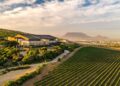
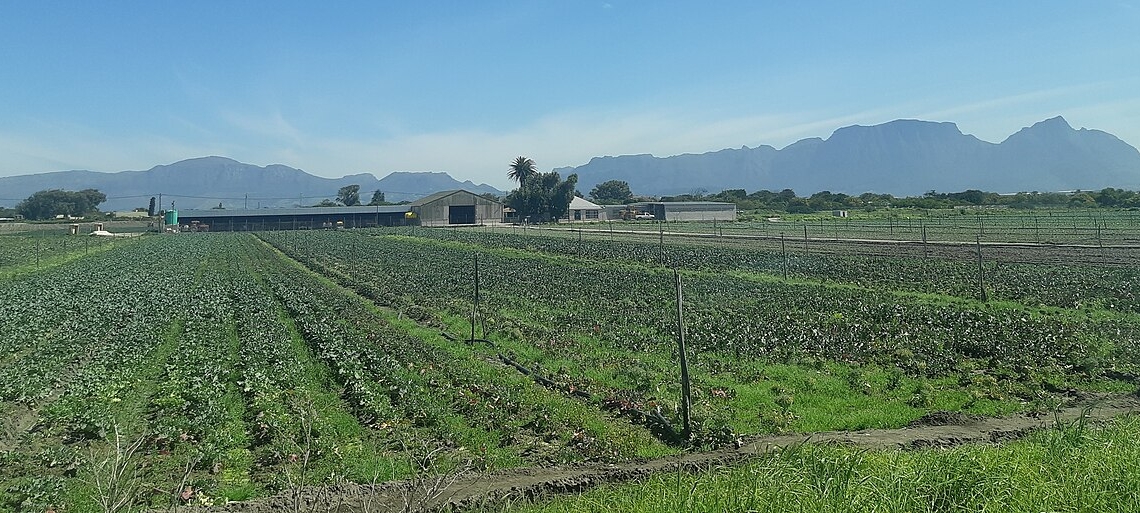
In South Africa, I studied the Philippi Horticultural Area on the south-eastern edge of Cape Town. This is a fertile area of about 38 farms, made up of a mix of large commercial growers, family-run farms, small-scale farmers and emerging farmers.
Cape Town’s Philippi Horticultural Area. Photo: Discott/Wikimedia Commons
The area sits above the Cape Flats Aquifer and is one of Cape Town’s most important farming regions. It produces a large share of the city’s fresh vegetables and contributes hundreds of millions of rand to the economy. Farmers depend on electricity for irrigation, storage and production, while most irrigation water comes from the aquifer.

However, rapid urban growth is putting pressure on groundwater quality, with leaking sewers and inadequate sanitation increasing the risk of pollution into the aquifer. The area is also surrounded by low-income communities.
The average household incomes in Cape Town informal settlements are approximately R3 500 per month (about US$211). This is a level which, when adjusted for household size, places many residents close to the poverty line of R1 140 per person per month (about US$69). The residents in the horticultural area are therefore dependent on affordable food systems.
Using a standard 50m² RDP roof and Cape Town rainfall averages as a modelling scenario, my research estimated that poor households could harvest approximately 25 000 litres of rainwater annually. This is enough to supply about 64% of average monthly household water needs.
Depending on municipal tariffs, my study found that rainwater harvesting could save poor households between R84 and R861 per month.
When combined with rooftop solar energy harvesting, total monthly savings could reach about R395 for households surviving on around R1 268 per month. In other words, families living in RDP houses could save about 25% of their income if they had home solar systems and rainwater tanks.
As household incomes rise, people generally spend more on food, often buying more meat and fish. Spending on fruit and vegetables also tends to increase.
My research found that these savings were likely to mean that families could afford an increase in food consumption of about 22%. Money previously spent on water and electricity could instead be redirected towards food purchases. It could also be used to set up household food gardens and for school nutrition and small-scale livelihood activities.
What needs to happen next?
South Africa already has more than three million RDP houses. A phased rollout of rooftop rainwater tanks and solar systems is financially achievable over time. It would need to be funded by blended public-private investment.
Collaboration is needed between national government, municipalities, development finance institutions, NGOs, universities and private renewable-energy companies.
A major project like this would not only reduce household expenses for low-income families. It would create jobs in manufacturing, plumbing, solar installation, maintenance, water infrastructure and urban agriculture.
To make this happen, government departments need to work together. Water, energy and food are usually planned and managed by different government departments that don’t always work closely together. A water-energy-food approach brings these areas together. In this way, policymakers can see how they are connected. This will help them design solutions that tackle several household challenges at the same time.
- The Conversation first published this article. The views and opinions expressed in this article are those of the author and do not necessarily reflect the views or positions of Food For Mzansi.
READ NEXT: NWU scientists validate power of Mzansi’s indigenous cancer bush