There are many different types of tea grown all over the world: black, green, white and oolong tea, among many others. Honeybush and rooibos fall into a group called red teas. These two teas are part of the fynbos vegetation type and are endemic to the Western Cape of South Africa.
Although these shrubby bushes don’t look very exciting, they produce delicious, healthy teas. Known for their antioxidant properties, honeybush and rooibos are caffeine-free teas grown in South Africa that are enjoyed all over the world.
Mike and Jill Mouat, the owners of Bitou Honeybush, produce honeybush in Plettenberg Bay, a small coastal town in the Garden Route of the Western Cape.
“Honeybush is indigenous to the area and not grown anywhere else,” the Mouats say.
They explain that honeybush was originally a wild harvested crop, but due to extensive fires, ongoing drought conditions and unsustainable harvesting practices, wild harvested crops were no longer able to meet market demands. Honeybush is now cultivated as a crop to ensure quality and sustainable quantity to the market.

Jacques Burger has been farming with rooibos and citrus on Elandsfontein farm in Citrusdal since 2016. According to him, farming with rooibos tea is not that difficult, although it comes with its challenges.
“We first rented the farm for 12 years before we made the decision to buy,” he says. “And we have not looked back ever since.”
Growing tea crops
“It is not difficult to farm with rooibos,” says Burger. “A farmer just has to put in a lot of energy into rooibos.”
He says that rooibos requires a lot of land space to farm, and that it is a very labour-intensive crop. But other than that, it is relatively easy to grow and does not need fertilisers.
“We do not give fertilisation on rooibos,” Burger says. “It’s amazing and it grows absolutely naturally. No irrigation is necessary; just rain.”

Honeybush also does not require fertiliser, but it does require more water.
“To cultivate honeybush and produce a high yield, you need to have high rainfall, or you have to irrigate, which is costly,” say the Mouats.
If you want to practice organic growing methods, honeybush farming can be reasonably labour-intensive. This is because you will have to rid your lands of any invasive growth or bugs by hand to maintain healthy plants.
Soil and climate type
Whernit Dirks, a rooibos farmer in Piketberg, Western Cape bought his farm in 2013. For a long time he struggled to make crops thrive in the sandy soil on his farm. Then he tried planting rooibos in 2018, and it was the perfect crop for the soil type.
Dirks explains that rooibos works well in his area thanks to the deep, sandy soils.

“You can see when you take the bushes out of the field, the roots of the bushes grow very deep,” he says. “The tea is doing very well because the roots can go deep, deep into the soil.”
“That’s what rooibos is looking for,” he says. “Deep, sandy soil and good rains after it is planted.”
As for climate, rooibos and honeybush are endemic to the Western Cape’s hot, dry summers and winter rainfall. This is the best climate in which to grow them.
“Rooibos adapts well in dry, hot summers with a good winter rainfall of between 300-600mm per year,” says Burger.
Harvesting the tea
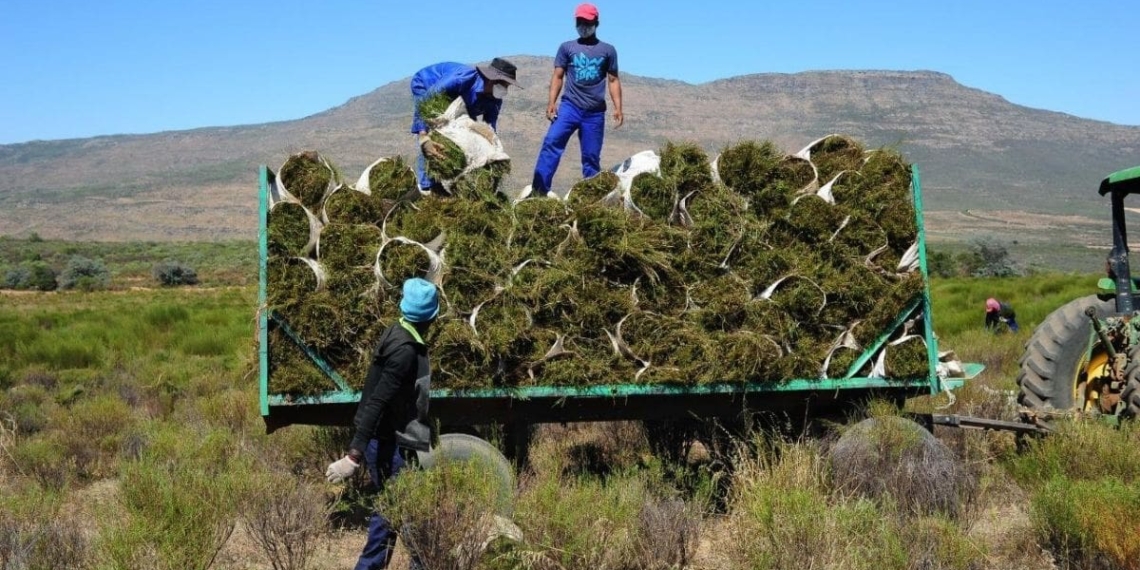
“Rooibos is harvested by hand with a sickle,” says Burger.
The plants are harvested from January until March every year. In June and July new rooibos plants are planted.

After harvest, cuttings of the crop are bruised and then left in heaps to ferment. During this process the tea changes from green to red-brown and develops its distinctive sweet rooibos aroma. After fermentation, the cuttings are spread out to be sun-dried.
The first year after rooibos is planted, the first harvest will give you green rooibos tea, explains Burger.
Green rooibos is harvested, cut and then dried immediately without fermentation. This results in a green rooibos tea with a lighter colour than traditional rooibos or red tea. In the following years the crop will be harvested and produce normal rooibos tea.
Honeybush is also harvested by hand, but at different times.
The Mouats harvest their honeybush all year round except for the extremely hot months of December, January and February.
Local and export markets for tea
Honeybush tea is a beverage that is gaining traction domestically and internationally, according to the Mouats.
“It is increasingly consumed for its many health benefits, as it has no caffeine, is low in tannins, has a naturally sweet flavour and has an extremely high anti-oxidant content,” they explain. This makes the tea very suitable for export markets, especially with the rapid growth of the healthy eating market.

According to information from the department of agriculture, production of honeybush tea in South Africa averaged around 400 tonnes per year in 2016. The bulk of it is usually exported to Germany, the Netherlands, the UK and the USA.
Rooibos is known worldwide and can be exported. The local market for rooibos, however, fluctuates and is not always good for farmers.
“What makes rooibos difficult is that the price that farmers get is not stable at all,” says Burger. “And this makes financial planning difficult. Be prepared to go through some very bad years if the price you get for rooibos is less than your input cost,” he says.
Dirks says that rooibos is not a particularly high-income crop.
“In the future I want to go into processing with rooibos,” he says. “That’s the way to go.”
Tips for farmers
Burger says that you need a passion for rooibos and a lot of energy if you want to farm with this crop.
He also warns that high winds can blow away newly planted rooibos crops or ruin their new growth, and you must be prepared to replant everything.
“Strong winds sometimes blows the sand against the plant and these sandblasts then kill the plant,” warns Burger. “This we have no control over.”
Dirks recommends starting your farming business with a partner that has experience in rooibos farming, and that has facilities that you can share.
“Find yourself a good partner if you can’t do it on your own,” he says. But he emphasises that mutual trust is necessary between you and your business partner for the partnership to work.
“Continue doing good, my fellow farmers, and we will succeed,” says Dirks.
ALSO READ: Rooibos: It’s harvest time, and we have a front-row seat