Growing up in Alexandria, Mpumalanga, Khethiwe Mhlanga learned the ropes by helping her grandmother grow food and look after livestock. That foundation completely shifted her perspective and would later set her on her entrepreneurial journey.
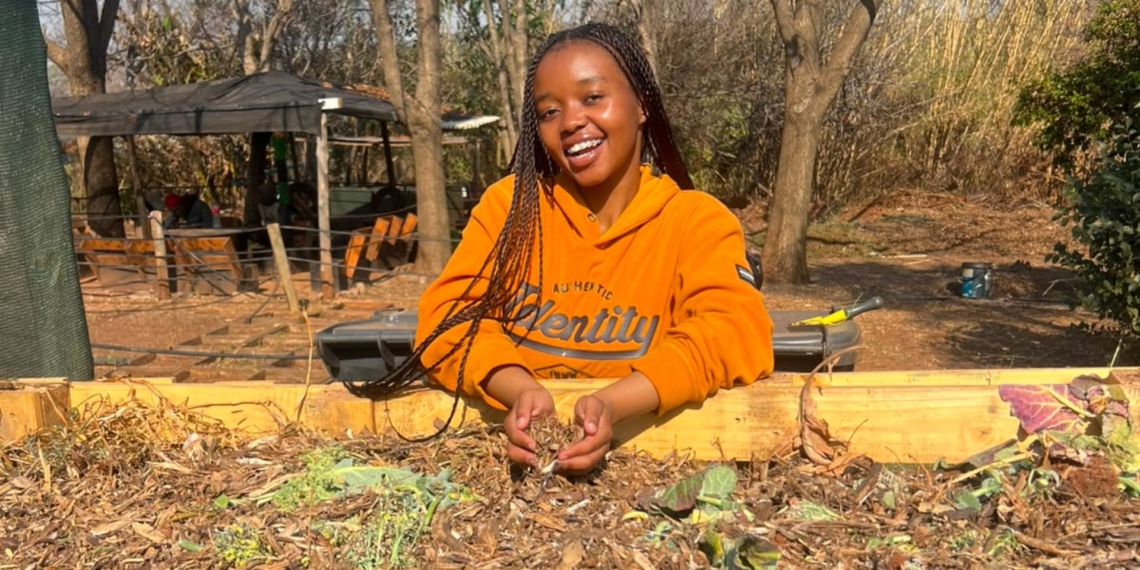
Big screens and an acting career originally called her name, but creating with her own hands pulled harder. Today, she runs Johannesburg-based Joseph’s Storehouse Collective, turning organic waste into compost.
Before venturing into composting and agripreneurship, Mhlanga was already working in food systems, particularly around food access and nutrition.
She recalls helping her grandmother, Leita Mhlanga, who grew grapes, mangoes, spinach and sweet potatoes, while also keeping chickens and pigs. Being around her grandmother’s farming activities from a young age made Mhlanga curious about where food comes from and what it takes to produce it well.
“The curiosity around food didn’t just stop at how food grows, but at what makes food grow well and abundantly too.”

That interest in food also influenced her desire to give back and help where she could. When she started at Wits University, she joined Sizananai Legacy, where she supported students and addressed food insecurity on campus.
“I was inspired by the organisation’s genuine care and belief in supporting students practically and consistently, and I wanted to be part of a space that actively contributes to reducing hunger and promoting dignity within the student community.”
Related stories
- ‘Worm Mom’ turns waste into compost gold
- SA farmers resist switching to biological fertilisers – this is why
- How to make compost with kitchen scraps
- Composting entrepreneur on mission to feed the soil
Finding solutions to organic waste
Alongside her community work, Mhlanga is pursuing a degree in psychology and international relations at Wits University. She says her studies have added another perspective to what she learnt through her upbringing and involvement in the community.
“Psychology has given me insight into human behaviour, motivation and how individuals respond to challenges, while international relations has expanded my understanding of global systems, leadership and development dynamics.”
Studying the two fields has shaped how she approaches problems, encouraging her to consider people, their circumstances and practical solutions.
This thinking eventually led Mhlanga to look at another part of the food system: what happens to organic waste. In 2026, she started Joseph’s Storehouse Collective, an organic waste composting agribusiness based in De Wetshof, Johannesburg.

A business built on sustainability
Mhlanga tells Food For Mzansi that the core mission of Joseph’s Storehouse Collective is to turn organic waste into compost, helping to address soil degradation while promoting sustainable farming practices.
“At its heart, the organisation also seeks to empower young people by equipping them with practical skills in compost production and sustainable food growing.”
The longer-term goal, she explains, is to create a ripple effect where communities can produce more of their own food, restore degraded soils and build local food systems that are more resilient and self-sustaining.
Although Mhlanga founded the organisation, she says building it is not a one-person job. She works alongside Yvette Tinotenda Molai, who serves as the business developer, while Thabang Makoloi is the agricultural adviser and customer development lead.
“Together, we oversee the strategic direction, partnerships and day-to-day execution of the Collective, ensuring that our work remains aligned with our mission of promoting sustainable agriculture and empowering communities.”
How the compost is made
Mhlanga explains that the compost is made from organic waste collected from supermarkets and other approved partners. The waste is carefully sorted, with only plant-based organic material accepted for processing.
“We strictly exclude any contaminants such as meat, bones, glass, plastic or chemically treated waste.”
The participating supermarkets store the waste in marked bins, which are collected regularly and taken for processing.

“Unlike synthetic fertilisers, this organic compost improves long-term soil health rather than depleting it.”
She says the compost also helps improve water retention and the activity of beneficial microorganisms. It can also reduce reliance on chemical inputs, depending on the needs of the soil and crops being grown.
As a new business, Joseph’s Storehouse Collective is still building its market and does not yet have formal commercial supply agreements. For now, the business serves community-based clients in Johannesburg while working towards reaching a wider customer base.
The company is particularly interested in getting its compost into retail spaces, including supermarkets and other outlets where consumers can access organic farming inputs.
“Retail placement is important for us because it builds trust, increases accessibility and places the product in environments where customers already value quality, health and sustainability.”
Lessons from the business
- Start with a real problem, not just an idea.
- Build systems, not just hustle.
- Partner strategically, not emotionally.
- Understand your market before scaling.
- Stay consistent, even when results are slow.
ALSO READ: ‘Worm Mom’ turns waste into compost gold