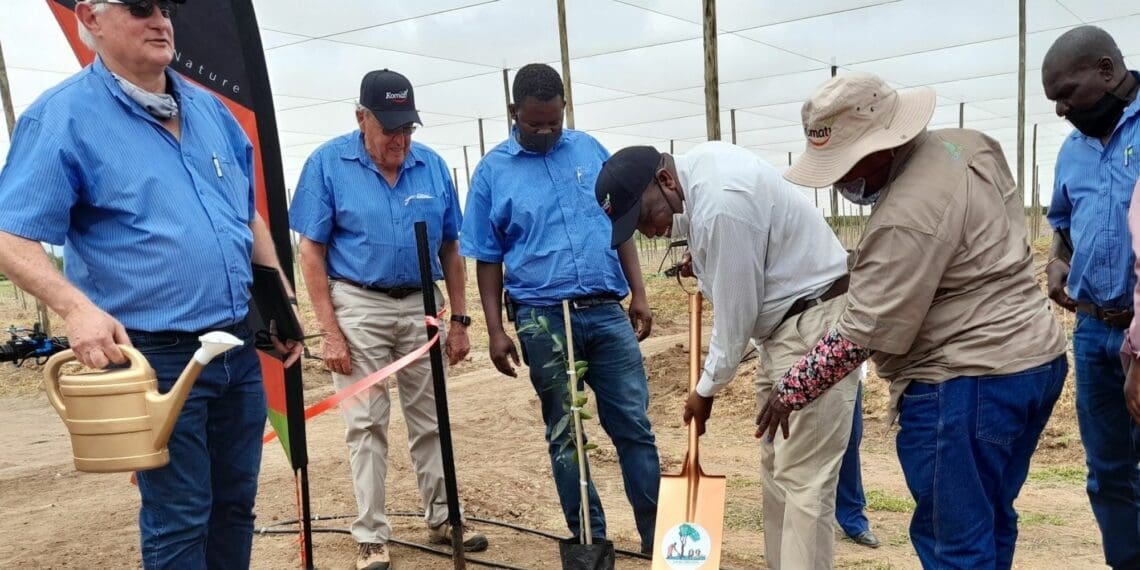
Partnerships have the greatest potential to propel the success of land reform and enable the creation of viable commercial agricultural and tourism related companies if such partnerships are facilitated in a mutually beneficial manner.
This is the view of Vumelana Advisory Fund chief executive Peter Setou. Vumelana is a nonprofit organisation that facilitates partnerships between land reform beneficiaries and investors to enable the success in land reform efforts.
Since 2012, the fund has facilitated partnerships between land reform beneficiaries and private investors through its Community Private Partnership (CPP) model. CPPs are established between communities that acquire access to land under the land reform programme and private parties.
Typically, the communities bring their land and labour and the private partner brings capital, access to markets and skills to the partnership. The intention is for private investors to share their skills and enable communities to get to a point where they can independently run their land successfully, with the skills they acquire from the investor.

Creating profitable black farmers
Many partnership models exist, explains Setou.
In 2013, the partnership-driven model for land reform, known as the Karaan Plan, was introduced into the national debate via the National Development Plan (NDP) by the late Professor Mohammad Karaan, the then acting vice-principal of Stellenbosch University and a former dean of the faculty of agricultural sciences.
The plan was aimed at creating a pool of profitable black farmers.
While the plan was initially met with scepticism, following broad engagements in March 2013 between Agri SA and the National Planning Commission, an agreement on an interpretation and implementation plan for the model was outlined in the NDP.
Whilst there is broader consensus that a partnership-driven model for land reform should be promoted, the scale at which it is currently being implemented is limited and there is a need to accelerate this in order to ensure wider and more visible impact.
Setou says, “The biggest challenge in the failure of some of the land reform partnerships is trust and a lack of funding, as seen in some of the partnerships. While funding has been a responsibility that has primarily been performed by government, the government cannot do it alone.
“The private sector, investor community and other non-government entities have an important role to play in enabling the success of the land reform programme if the right environment is created for their participation in land reform.”
He believes there is room to drive successful and mutually beneficial partnerships for land reform between land reform beneficiary communities and private investors.
“If we can focus on these efforts, by 2030 we can reach some key milestones. However, these endeavours should be scaled up and not facilitated by only a few. It’s time that the government fully supports these interventions to land reform to encourage more participation from the private sector.”
Attracting great investment
According to Vumelana, over the last decade there have been several successful land reform collaborations. Since 2012, it has facilitated 23 partnerships between land reform beneficiary communities and private investors.
Approximately 70 000 hectares of land have been put to productive use as a result of these deals, benefiting around 20 000 beneficiary households. There are further projects which are being supported which once concluded, would attract in excess of R1 billion in investments.
To date, Vumelana has received over 300 requests for its CPPs, requesting assistance in the identification of suitable partnerships, according to Setou.
He adds that partnership-driven models have proved to be effective, especially with communal property institutions (CPIs) and land-owning Trusts. Examples of such partnerships facilitated by Vumelana include the Moletele CPA in Limpopo.
The partnership between Ebenhaeser CPA and the Stellar Group is another success. This is one of the largest land claims in South Africa, encompassing 18 283 hectares of property near Vredendal in the Western Cape.
Through its partnership with the Stellar Group, the Ebenhaeser CPA has secured a deal to export pumpkins to the Dutch market and has also been able to produce cash crops, which include tomatoes and beans, for the local market.
“Private companies such as the Sanlam Foundation, which is ploughing about R5 million into Vumelana’s work, continue to enable efforts to drive the success of land reform. More such efforts from the private sector are necessary to shoulder the funding burden among land reform beneficiary communities,” says Setou.
“If the last decade’s triumphs and failures in land reform partnerships have taught all those involved anything, it is the complexity of creating successful partnership projects. However, over the years, we have learnt that it is possible to create mutually beneficial partnerships in land reform.”
ALSO READ: Communal property associations ‘often dysfunctional’
Sign up for Mzansi Today: Your daily take on the news and happenings from the agriculture value chain.