Wednesday, July 22, 2026
SUBSCRIBE
22 GLOBAL MEDIA AWARDS
Food For Mzansi
  • News
  • Changemakers
  • Lifestyle
  • Farmer’s Inside Track
  • Food for Thought
No Result
View All Result
  • News
  • Changemakers
  • Lifestyle
  • Farmer’s Inside Track
  • Food for Thought
No Result
View All Result
Food For Mzansi
No Result
View All Result
in Editors Choice, News

Land reform: Look closer at subdivisions, farm sizes

by Staff Reporter
7th April 2021
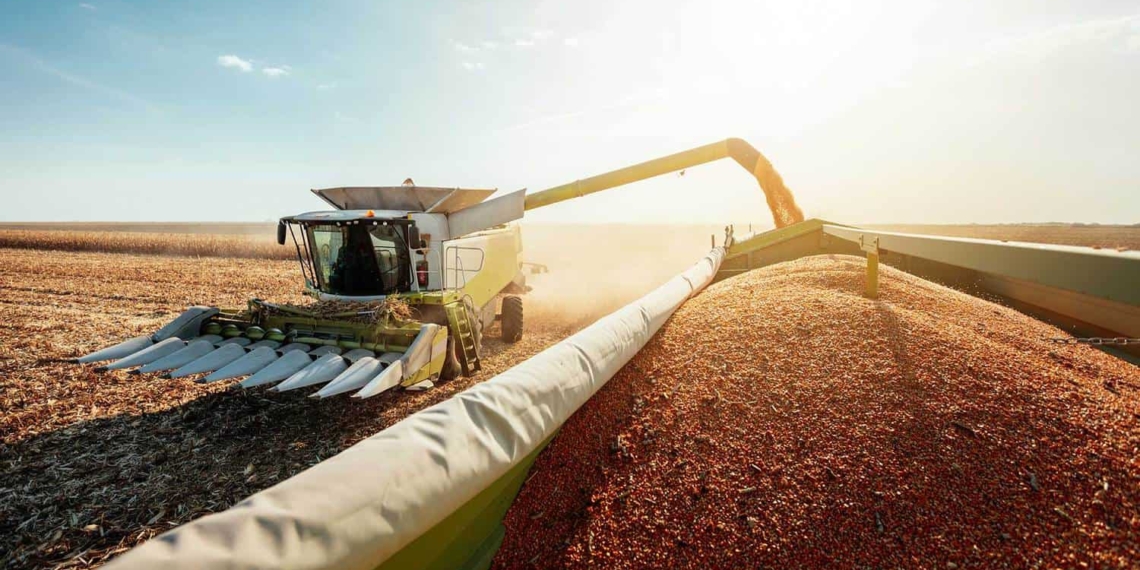
To become commercially sustainable, farmers need to have the end in mind first. Photo: Supplied/Food For Mzansi

To become commercially sustainable, farmers need to have the end in mind first. Photo: Supplied/Food For Mzansi

Share on FacebookShare on TwitterShare on WhatsApp

The process of land reform and redistribution can be made more successful if more attention is given to providing benefiting new era farmers with land that are of an adequate and manageable size.

This means that current legislation with regards to the subdivision of agricultural land into economic units needs to be revised.

This is according to Dr Siphe Zantsi, who received his PhD in agricultural economics on the topic from Stellenbosch University last month.

Land reform: Siphe Zantsi received his PhD in agricultural economics from Stellenbosch University. Photo: Supplied/Food For Mzansi
Siphe Zantsi received his PhD in agricultural economics from Stellenbosch University. Photo: Supplied/Food For Mzansi

As part of his PhD work, supervised by well-known agricultural economist prof. Nick Vink, Zantsi developed a new method called agent-based modelling (ABM) to find better solutions for implementing land reform.

His studies formed part of a joint project between the university’s department of agricultural economics and the socio-economic research group of Agroscope, the Swiss Confederation’s centre of excellence for agricultural research.

Through his research, Zantsi identified five main reasons why land redistribution in South Africa has failed in the past. 

These include:

  • inadequate support services to new entrants into farming;
  • poor beneficiary selection;
  • the handing over of commercial farms that are too large for new entrants to manage;
  • lack of farming skills among the beneficiaries; and
  • the reluctance of the state to provide beneficiaries with freehold titles.

ALSO READ: Land reform ‘forms nucleus of human rights in SA’

Improving beneficiary selection

Zantsi’s studies took particular note of finding solutions to improve beneficiary selection and solving the issue of the size of commercial farms. These issues must be solved, as they were already raised by President Cyril Ramaphosa’s panel on land reform and agriculture in 2019.

Regarding beneficiary selection, the study developed a farm advertisement template that should be placed in the media as part of standard operating procedures. This will reduce the opportunities for elite capture and the chances of the selection of ill-suited beneficiaries.

“If implemented, this method will promote transparency and accountability while capturing beneficiary aspirations,” says Zantsi.

“This will also address the lack of human capacity in the department of agriculture, land reform and rural development and make the work of land reform committees proposed in the National Development Plan easier,” says Vink.

According to Zantsi, current commercial farm sizes are too large for new and inexperienced up-and-coming farmers to effectively manage.

However, the Subdivision of Agricultural Land Act of 1970 is still effective. It prohibits the subdivision of agricultural land into sizes that are not considered to be a viable economic unit.

The handing over of commercial farms that are too large for new entrants to manage was studied in research by Dr Siphe Zantsi. Photo: Supplied/Food For Mzansi.

As part of his research, Zantsi considered what a viable farm size would be for emerging farmers who are benefiting from land redistribution.

He first calculated a viable farm size for different types of emerging farm households by using the income aspiration of emerging farm households as a benchmark. Low, moderate and high aspirant emerging farm households were included in his study.

Subdividing optimally among new era farmers

For all the three types of emerging farm households, he found that farms smaller than current commercial farms would be of value for high-value enterprises such as orchard farms.

Farm sizes will have to be larger than this for field crops and extensive livestock farms, but still smaller than current commercial farms, except in the case of farmers with high-income aspirations, where current commercial farms meet their needs.

The farm sizes were used as subdivision factors to explore how commercial farms intended for redistribution can be subdivided optimally among emerging farmers. These subdivision factors were applied to the agent-based model that Zantsi developed to model South African land redistribution.

The results show that it would be possible to subdivide land redistribution farms in a manner that satisfies the aspirations of emerging farmers, in terms of viable farm size and farm enterprise. “These findings provide practical help in the development of farm subdivision policies,” says Zantsi.

ALSO READ: ‘Govt hell-bent on evicting black farmers’ – AFASA
Staff Reporter

Researched and written by our team of writers and editors.

Tags: Agricultural EconomicsAgricultural landAgroscopeCyril RamaphosaLand redistributionLand reformStellenbosch University
Harnessing the power of passive rainwater harvesting
News

Deadline looms: Register water use by 23 July or risk penalties

by Lisakanya Venna
20th July 2026

South African water users have until 23 July 2026 to declare their usage to the DWS. Whether you’ve bought new...

Read moreDetails
This week’s agri events: 20 – 24 July

This week’s agri events: 20 – 24 July

20th July 2026

Climate change: SA’s food processors are feeling the heat

19th July 2026
The Forest of Renewal at Rustlers Valley celebrates the intertwined legacies of Frik Grobbelaar, Anton Chaka and Riky Rick, inviting South Africans to restore the land while cultivating hope, belonging and community. Illustration: ChatGPT

Rustlers Valley offers a blueprint for South Africa’s renewal

18th July 2026
Grain SA appoints Mabuza to lead farmer development

Rising stars: 2026 PGP finalists redefining SA grain farming

18th July 2026

Treat food processing as essential national infrastructure – Khoury

Tech and solar upgrades drive growth at Ceres Fruit Growers

Grain SA defends farmers against blame for rising food prices

Mother’s legacy, neighbour’s grace: Venessa Simelane’s farm story

How this KZN agricultural advisor is bringing tech to rural fields

Join Food For Mzansi's WhatsApp channel for the latest updates!

JOIN NOW!
Next Post
bees, beekeeping

This farmer smiles when she hears bees buzzing

THE NEW FACE OF SOUTH AFRICAN AGRICULTURE

With 21 global awards in the first six years of its existence, Food For Mzansi is much more than an agriculture publication. It is a movement, unashamedly saluting the unsung heroes of South African agriculture. We believe in the power of agriculture to promote nation building and social cohesion by telling stories that are often overlooked by broader society.

No one-size-fits-all: Liane’s lessons on leaving the land better

Shoprite hits 300th food garden milestone in Bredasdorp

Tech and solar upgrades drive growth at Ceres Fruit Growers

Smart vineyard irrigation starts below the ground

Treat food processing as essential national infrastructure – Khoury

Farmers urged to embrace uncertainty and build resilience

  • Awards & Global Impact
  • Our Story
  • Contact Us
  • Cookie Policy
  • Privacy Policy
  • Copyright

Contact us
Office: +27 21 879 1824
News: info@foodformzansi.co.za
Advertising: sales@foodformzansi.co.za

Contact us
Office: +27 21 879 1824
News: info@foodformzansi.co.za
Advertising: sales@foodformzansi.co.za

  • Awards & Global Impact
  • Our Story
  • Contact Us
  • Cookie Policy
  • Privacy Policy
  • Copyright

Chat Options

I'm Lerato, your AI assistant!
No Result
View All Result
  • News
  • Changemakers
  • Lifestyle
  • Farmer’s Inside Track
  • Food for Thought

Copyright © 2024 Food for Mzansi

This website uses cookies. By continuing to use this website you are giving consent to cookies being used. Visit our Privacy and Cookie Policy.