Wednesday, July 22, 2026
SUBSCRIBE
22 GLOBAL MEDIA AWARDS
Food For Mzansi
  • News
  • Changemakers
  • Lifestyle
  • Farmer’s Inside Track
  • Food for Thought
No Result
View All Result
  • News
  • Changemakers
  • Lifestyle
  • Farmer’s Inside Track
  • Food for Thought
No Result
View All Result
Food For Mzansi
No Result
View All Result
in News

Money’s tight, but 46% still eat meat. Every. Single. Day!

by Noluthando Ngcakani
28th May 2021
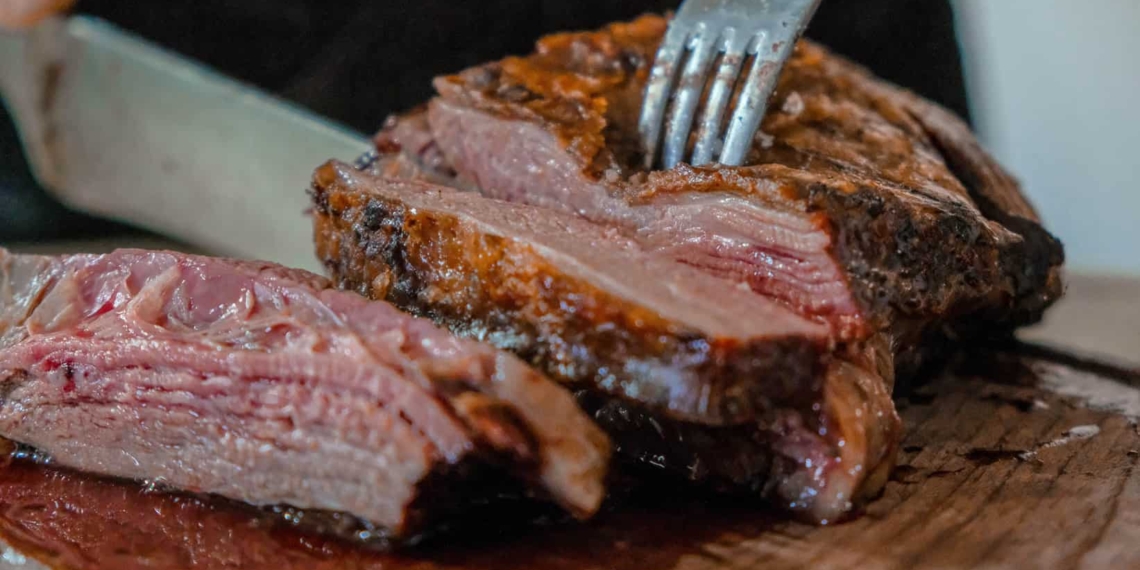
Meat now dominates the plates of many South Africans according to Knorr. Photo: Supplied/ Food For Mzansi

Meat now dominates the plates of many South Africans according to Knorr. Photo: Supplied/ Food For Mzansi

Share on FacebookShare on TwitterShare on WhatsApp

South Africans love their meat. Fact. According to Knorr’s Plate of the Nation study, 90% of South Africans are now full-blown carnivores, rising from 84% in 2020. And while food prices may be rising, 46% still eat meat on a daily basis, showing a decline in people substituting beans for meat.

Knorr released these and others findings from its latest research on the eating habits of Mzansi. The study was compiled by market measurement firm NielsenIQ.

Plate of the Nation: Vuyo Henda is marketing director for Unilever South Africa. Photo: Facebook
Vuyo Henda is marketing director for Unilever South Africa. Photo: Facebook

The annual Plate of the Nation study is a Knorr-led initiative to help South Africans move towards a better food future.

The food giant provides rare insights in what the nation is eating and how it impacts the country’s health.

Unilever South Africa marketing director Vuyo Henda says, “We want people to know that they can make an impact by simply changing what they eat, and it starts with what’s on their plate.

“Food businesses have a huge responsibility to educate the masses about eating better for a balanced plate.

“We are far from the ideal plate as vegetable composition should be 33% of the plate. We are at 14%. With small changes to our plates, we can collectively move towards reaching the ideal plate composition.”

Pandemic and food choices

Furthermore, the decline in household income due to Covid-19’s effect on businesses has left many consumers in a financial fix. This created an environment where people were eating whatever they could afford, found Knorr.

While healthy foods were more accessible, it was also considered to be more expensive. Changing the way we eat should be done in increments, argues Mpoomy Ledwaba, an influencer and Eativist who believes food can be a force for good.

She says, “When I began my journey to eat better, I abruptly became a vegan, which resulted in my body taking a knock. I know better now, and it’s about making small changes like adding more veg like legumes to my plate that help the body to adapt to eating better.”

ALSO READ: The 5 best alternatives for meat

Necessity trumps luxury

In a media release, Knorr also explains that its Plate of the Nation study provides a view on the improvement of people’s accessibility, attitude, and behaviour towards food.

Plate of the Nation: Influencer and Eativist, Mpoomy Ledwaba. Photo: Instagram
Influencer and Eativist, Mpoomy Ledwaba. Photo: Instagram

According to the NielsenIQ report, with the ongoing declines in household income, and being financially worse off due to Covid-19, South African consumers’ current ability to spend is much lower (66%) than the global average (48%). As such, people consider healthy food to be accessible, but rather expensive.

The study found that more South Africans were also giving up luxuries to focus on buying necessities during amid the pandemic.

The study also found that:

  • South Africans eat an average of two meals per day and there was a general decline in breakfast consumption;
  • in South Africa, there is decrease in meal occasions. On weekdays, only 64% eat breakfast, 71% have lunch and 83% have dinner. On weekends, 49% have breakfast, 59% have lunch and only 66% have dinner;
  • at 46%, breakfast remains the most carbohydrate heavy meal of the day with the least fruit and vegetables (4%), while lunch (48%) and dinner (68%) have meat as more of a focus; and
  • at 14%, South Africa’s health status of non-communicable food related diseases remains consistent from the previous year. This, while 82% claim they are not suffering from any non-communicable diseases. Wikipedia says non-communicable diseases include Parkinson’s disease, autoimmune diseases, strokes, most heart diseases, most cancers, diabetes, chronic kidney disease, osteoarthritis, osteoporosis, Alzheimer’s disease, cataracts, and others.

WATCH: From the petri dish to your table, cultured meat is coming
Noluthando Ngcakani

With roots in the Northern Cape, this Kimberley Diamond has had a passion for telling human interest stories since she could speak her first words. A foodie by heart, she began her journalistic career as an intern at the SABC where she discovered her love for telling agricultural, community and nature related stories. Not a stranger to a challenge Ngcakani will go above and beyond to tell your truth.

Tags: Knorr
Harnessing the power of passive rainwater harvesting
News

Deadline looms: Register water use by 23 July or risk penalties

by Lisakanya Venna
20th July 2026

South African water users have until 23 July 2026 to declare their usage to the DWS. Whether you’ve bought new...

Read moreDetails
This week’s agri events: 20 – 24 July

This week’s agri events: 20 – 24 July

20th July 2026

Climate change: SA’s food processors are feeling the heat

19th July 2026
The Forest of Renewal at Rustlers Valley celebrates the intertwined legacies of Frik Grobbelaar, Anton Chaka and Riky Rick, inviting South Africans to restore the land while cultivating hope, belonging and community. Illustration: ChatGPT

Rustlers Valley offers a blueprint for South Africa’s renewal

18th July 2026
Grain SA appoints Mabuza to lead farmer development

Rising stars: 2026 PGP finalists redefining SA grain farming

18th July 2026

Rising stars: 2026 PGP finalists redefining SA grain farming

This week’s agri events: 20 – 24 July

SA poultry industry calls for urgent bird flu vaccine rollout

Mother’s legacy, neighbour’s grace: Venessa Simelane’s farm story

How this KZN agricultural advisor is bringing tech to rural fields

Join Food For Mzansi's WhatsApp channel for the latest updates!

JOIN NOW!
Next Post
In the wake of the ongoing tobacco wars, SATTA warns that many tobacco farmers have already been forced to shut down due to the illicit cigarette trade. Photo: Supplied/Food For Mzansi

‘Govt. waging tobacco war against us’ – SATTA

THE NEW FACE OF SOUTH AFRICAN AGRICULTURE

With 21 global awards in the first six years of its existence, Food For Mzansi is much more than an agriculture publication. It is a movement, unashamedly saluting the unsung heroes of South African agriculture. We believe in the power of agriculture to promote nation building and social cohesion by telling stories that are often overlooked by broader society.

No one-size-fits-all: Liane’s lessons on leaving the land better

Shoprite hits 300th food garden milestone in Bredasdorp

Tech and solar upgrades drive growth at Ceres Fruit Growers

Smart vineyard irrigation starts below the ground

Treat food processing as essential national infrastructure – Khoury

Farmers urged to embrace uncertainty and build resilience

  • Awards & Global Impact
  • Our Story
  • Contact Us
  • Cookie Policy
  • Privacy Policy
  • Copyright

Contact us
Office: +27 21 879 1824
News: info@foodformzansi.co.za
Advertising: sales@foodformzansi.co.za

Contact us
Office: +27 21 879 1824
News: info@foodformzansi.co.za
Advertising: sales@foodformzansi.co.za

  • Awards & Global Impact
  • Our Story
  • Contact Us
  • Cookie Policy
  • Privacy Policy
  • Copyright

Chat Options

I'm Lerato, your AI assistant!
No Result
View All Result
  • News
  • Changemakers
  • Lifestyle
  • Farmer’s Inside Track
  • Food for Thought

Copyright © 2024 Food for Mzansi

This website uses cookies. By continuing to use this website you are giving consent to cookies being used. Visit our Privacy and Cookie Policy.