Thursday, October 22, 2026
SUBSCRIBE
22 GLOBAL MEDIA AWARDS
Food For Mzansi
  • News
  • Changemakers
  • Lifestyle
  • Farmer’s Inside Track
  • Food for Thought
No Result
View All Result
  • News
  • Changemakers
  • Lifestyle
  • Farmer’s Inside Track
  • Food for Thought
No Result
View All Result
Food For Mzansi
No Result
View All Result
in International News

New guidelines to elevate Africa’s youth in agri

Youth in Africa are amongst the extremely poor and those who are employed, work in low-quality jobs. That is why the FAO of the United Nations and African Union Commission released guidelines to fast-track investment programmes

by Lucinda Dordley
21st April 2022
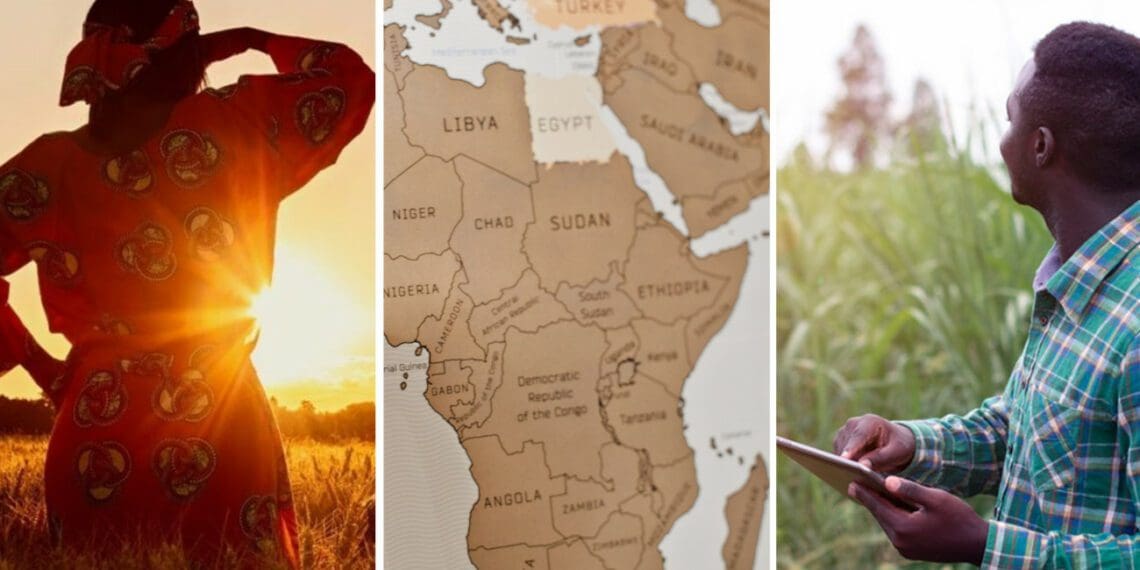
The Investment Guidelines for Youth in Agrifood Systems in Africa aim to accelerate investments in and by young people in food production. Photo: Supplied/FAO

The Investment Guidelines for Youth in Agrifood Systems in Africa aim to accelerate investments in and by young people in food production. Photo: Supplied/FAO

Share on FacebookShare on TwitterShare on WhatsApp

New guidelines for scaling up investments for and with youth in agrifood systems in Africa have been released by the Food and Agriculture Organization of the United Nations (FAO) and the African Union Commission (AUC).

This was announced during the 32nd FAO Regional Conference for Africa in Malabo, Equatorial Guinea.

Throughout all phases of the investment programme cycle, the Investment Guidelines for Youth in Agrifood Systems in Africa gives practical “how to” guidelines for developing youth-focused and youth-sensitive investment programmes that regard youth as participants in rural development.

Governments, financial and technical partners, the commercial sector, civil society, and young women and men themselves are all encouraged to use the recommendations when creating and implementing agrifood investment programmes.

“These guidelines are timely, and we need you to take ownership. We need localised ownership,” FAO director-general Qu Dongyu said at the launch.

FAO director-general Qu Dongyu speaking at the 32nd FAO Regional Conference for Africa in Malabo, Equatorial Guinea. Photo: Supplied/FAO

Unemployed and extremely poor

Africa as a region has the highest percentage of youth in the world, estimated at 420 million people between the ages of 15 and 35. This is an enormous resource for future prosperity, but the challenges these young people face are many.

According to Dongyu, young people are twice as likely as adults to be unemployed.

“The majority of working youth are poor and employed in vulnerable, low-quality jobs in the informal sector. In 2019, almost two-thirds (63%) of young workers lived in poverty in Africa compared to half (51%) of adults. Youth are also overrepresented among the extremely poor.

“On top of this, young women, especially in rural areas, face gender-biased social norms, laws and practices that limit their involvement in gainful work and seizing development opportunities,” Dongyu said.

Read the full story on Food For Afrika.com

ALSO READ: Women join forces to break gender biases in Africa

Sign up for Mzansi Today: Your daily take on the news and happenings from the agriculture value chain.

Lucinda Dordley

Words and people: these have been Lucinda's only two passions from a very young age. As soon as she found out that journalism was the perfect marriage of the two, she knew it was what she had to be. She has worked in many spheres within journalism, including crime and human interest news, lifestyle, and tech for publications such as The Cape Argus, Fairlady Magazine, Cape Town Etc, Getaway Magazine and Popular Mechanics. In her spare time, she can be found with a book in hand or chatting to someone to find out what their story is.

Tags: AgrifoodFAOUnited Nations
News

CPAs urged to register for free governance support toolkits

by Staff Reporter
21st October 2026

With 82% of registered CPAs facing non-compliance issues, Vumelana Advisory Fund has introduced free support toolkits to improve land management...

Read moreDetails

Potatoes and tomatoes plunge while avocado prices soar

20th October 2026
Becoming bankable: How to get your farm ready for finance

Becoming bankable: How to get your farm ready for finance

20th October 2026

Fixing SA’s agricultural visa system to protect seasonal harvests

20th October 2026
‘Beware the dangers of illegal foot-and-mouth vaccines’

SA and Namibia reevaluate livestock trade after FMD outbreak

20th October 2026

By-laws vs. livelihoods: Barriers facing WC smallholder farmers

Godongwana unveils fuel relief and R10 billion El Niño buffer

FNB puts relationships at the heart of commercial farming

Agda pushes for pathways to commercialise emerging farmers

Stop the rot: Four steps to slash post-harvest losses

Join Food For Mzansi's WhatsApp channel for the latest updates!

JOIN NOW!
Next Post
Russia and Ukraine typically account for nearly 60% of global sunflower oil exports. Photo: Supplied/Food For Mzansi

Global grain and oilseed supply still a major concern

THE NEW FACE OF SOUTH AFRICAN AGRICULTURE

With 21 global awards in the first six years of its existence, Food For Mzansi is much more than an agriculture publication. It is a movement, unashamedly saluting the unsung heroes of South African agriculture. We believe in the power of agriculture to promote nation building and social cohesion by telling stories that are often overlooked by broader society.

Agda pushes for pathways to commercialise emerging farmers

Karoo sheep tallow finds new purpose in Mzansi beauty brand

Why simple farm records beat complex systems

Crowdfunding breathes new life into neglected Limpopo citrus farm

Mogogelo farmers receive packhouse and cold storage facilities

Godongwana unveils fuel relief and R10 billion El Niño buffer

  • Awards & Global Impact
  • Our Story
  • Contact Us
  • Cookie Policy
  • Privacy Policy
  • Copyright

Contact us
Office: +27 21 879 1824
News: info@foodformzansi.co.za
Advertising: sales@foodformzansi.co.za

Contact us
Office: +27 21 879 1824
News: info@foodformzansi.co.za
Advertising: sales@foodformzansi.co.za

  • Awards & Global Impact
  • Our Story
  • Contact Us
  • Cookie Policy
  • Privacy Policy
  • Copyright

Chat Options

About this assistant

This feature generates automated answers summarised from Food For Mzansi articles. By using it, you are interacting with an AI system (provided by Google), not a human. AI can make mistakes. Please refer to the source articles for verification and citation purposes.

Our staff do not check or moderate Lerato’s answers in advance, but may review some later. Our journalists continue to write and edit all the articles Lerato uses as sources.

To estimate unique and returning web users, we store a random browser ID in this browser. WhatsApp users are counted by phone number. The same person using both channels may be counted twice.

I'm Lerato, your AI assistant!
No Result
View All Result
  • News
  • Changemakers
  • Lifestyle
  • Farmer’s Inside Track
  • Food for Thought

Copyright © 2026 Food for Mzansi