With climate variability becoming an increasingly important consideration for South African farmers, making every drop of water count has never been more critical. While prolonged dry spells and water shortages present significant challenges, careful planning, healthy soils, and efficient irrigation can help farmers build resilience.
These practical on-farm strategies align with recommendations in GreenCape’s Greening Your Farm: Water Focus guide, which notes that improving water resilience begins with understanding how water is used on the farm before investing in new infrastructure or water sources. The guide encourages farmers to first improve efficiency, optimise existing resources, and adopt better management practices before expanding supply.
Commercial farmer and agriculturalist Lesego Mohube, who farms near Heidelberg and Nigel in Gauteng, shares practical strategies that both small-scale and commercial producers can adopt to improve water efficiency and prepare for drier conditions.
Understanding your biggest water challenges
According to Mohube, water scarcity is only one part of the problem facing local agricultural production. “Many emerging farmers depend on seasonal rainfall because they lack boreholes or adequate storage infrastructure, while others lack irrigation systems or the training needed to operate and maintain them effectively,” she says.
She notes that competition for shared water resources, particularly in communal farming areas, adds further pressure, while many producers overlook an equally important issue: water quality.
“Water testing is one of the most affordable tests a farmer can do. It tells you whether salts or toxins are present, and excessive salts can clog drip irrigation systems and reduce efficiency.”
Lesego Mohube, commercial farmer and agriculturalist
Regular maintenance of pumps, filters, storage tanks, and irrigation lines is equally important to prevent costly operational breakdowns during critical growth phases.
Related stories
- SA’s deepening water crisis threatens national food security
- Beyond bumper harvests: Why SA must prepare for super El Niño
- A super El Niño looms: Africa’s five lessons in climate resilience
- Farmers urged to plan smart as El Niño threatens planting season
Staying compliant while protecting natural water resources
Efficient water use should always go hand in hand with responsible environmental management.
GreenCape advises farmers to regularly test irrigation and livestock water to ensure it meets South Africa’s water quality guidelines. Poor-quality water can reduce crop yields, affect livestock health, damage soils, and clog equipment, making routine water testing an essential management habit.
Mohube encourages farmers to remain compliant with South Africa’s National Water Act (Act No. 36 of 1998) by implementing five core practices:
- Legal authorisation: Using water strictly where legally authorised and registered.
- Pollution prevention: Preventing agricultural runoff containing chemical fertilisers, pesticides, and livestock waste from entering natural streams.
- Ecosystem protection: Safeguarding surrounding rivers, wetlands, and dams from degradation.
- Usage tracking: Monitoring, measuring, and recording daily farm water usage.
- Leak prevention: Repairing infrastructure leaks immediately to prevent unnecessary loss.
“Water is becoming an increasingly valuable resource. Even outside of drought periods, farmers should use it carefully because we cannot predict how climate conditions will change,” she says.
Building healthy soils that store more water
One of the most effective ways to improve drought resilience starts below the surface.
“When soil is healthy, it acts like a sponge. It absorbs water and releases it gradually to plant roots.”
Lesego Mohube, commercial farmer and agriculturalist
To maximise soil moisture retention without heavy capital outlay, Mohube recommends five foundational soil health practices:
- Apply organic mulch: Laying mulch over exposed soil significantly reduces surface evaporation.
- Plant cover crops: Establishing cover crops protects soil structure and increases organic matter.
- Rotate crops: Systematic crop rotation improves soil biological health and breaks disease cycles.
- Control weeds aggressively: “Weeds compete directly with primary crops for soil moisture and nutrients. Managing weeds is one of the simplest ways to improve water-use efficiency,” she advises.
- Conduct soil and water tests: Test soil pH regularly and apply agricultural lime according to laboratory recommendations to optimise nutrient and water uptake.
Maximising irrigation efficiency across production systems
Where drip irrigation is available, Mohube considers it one of the best options during dry periods because water is delivered directly to the crop root zone with minimal evaporative loss.
GreenCape notes that improving irrigation efficiency should be a primary focus. The guide recommends tracking water volumes, repairing leaks promptly, and utilising irrigation scheduling tools or monitoring technologies to apply water only when crops require it, rather than adhering to rigid calendar schedules.
For producers without drip infrastructure, efficiency can still be enhanced through simple operational adjustments:
- Strategic timing: Irrigate early in the morning or late in the afternoon when temperatures and wind speeds are lowest.
- Moisture checks: Verify soil moisture depth before turning on irrigation systems.
- Rainwater harvesting: Capture runoff from shed roofs and hard surfaces wherever feasible.
- Crop grouping: Group crops with similar water requirements together to simplify irrigation schedules.
For farms already operating drip irrigation, routine maintenance remains critical: inspect lines regularly, clean pumps and filters, and train workers to detect pressure drops before equipment suffers severe damage.
Letting real-time data guide irrigation decisions
Mohube uses soil moisture monitoring devices to eliminate guesswork when scheduling irrigation applications. Soil surface appearance can be deceptive, as sufficient moisture often remains deeper in the root zone. She advises measuring soil moisture directly to prevent over-watering.
Modern soil moisture devices provide colour-coded readings across multiple soil depths, enabling farmers to make precise decisions. However, even low-cost manual soil probes or augers offer valuable visual data on root-zone moisture conditions.
Preparing farm infrastructure before water becomes scarce
Proactive seasonal planning prevents severe water stress later in the production cycle.
- Water audit: Assess available stored water supplies before planting.
- Supply duration: Calculate how many weeks stored water reserves will last under peak summer heat.
- Crop prioritisation: Direct available water toward high-value or high-margin crops during periods of severe restriction.
- Pressure monitoring: Track pump performance and line pressure continuously, adjusting for field slope.
- Weather adjustment: Adapt scheduling to account for local wind patterns, which cause significant water drift and evaporation during overhead sprinkler irrigation.
Implementing water conservation in livestock operations
Water conservation is just as crucial for livestock producers as it is for crop growers.
“You should know approximately how much water your livestock consume so that you supply enough without unnecessary wastage,” Mohube recommends.
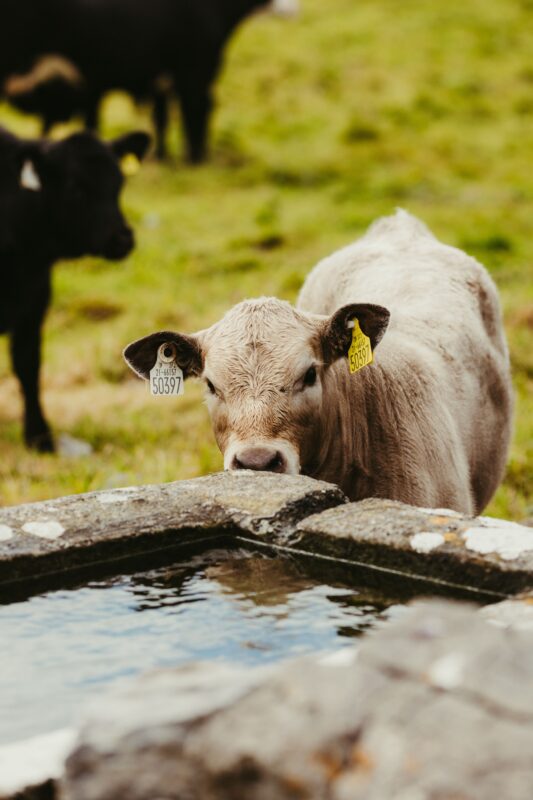
- Trough maintenance: Repair leaking pipes and drinking troughs immediately.
- Sanitation: Clean water troughs regularly to prevent bacterial growth and maintain palatability.
- Source protection: Fence off natural dams and streams to prevent soil erosion and contamination from cattle hooves.
- Heat stress management: Provide adequate shade structures over livestock pens to reduce animal drinking requirements caused by heat stress.
- Consumption tracking: Monitor daily herd water consumption to spot pipe leaks early and ensure animals receive adequate hydration.
Balancing immediate management fixes against long-term investments
Not every farm has the budget for major infrastructure overhauls, but GreenCape stresses that many of the greatest water savings stem from refining day-to-day management rather than making large capital investments.
For farmers seeking immediate, low-cost results, simple operational changes can deliver significant water savings without heavy financial strain:
- Apply organic mulch: Covering soil with straw or crop residues suppresses surface evaporation and keeps root zones cool.
- Control weeds aggressively: Removing unwanted weeds stops them from competing with primary crops for vital soil moisture.
- Optimise watering times: Shifting irrigation schedules strictly to early morning or late afternoon hours curbs evaporation caused by midday heat and wind.
- Share equipment: Emerging farmers can partner with neighbours to share irrigation gear, lowering input costs and improving resource efficiency.
When capital becomes available for higher-impact infrastructure, investments should be targeted strategically to build long-term operational resilience:
- Install precision drip irrigation: Retrofitting fields with drip systems delivers water directly to plant roots with minimal losses.
- Deploy soil moisture sensors: Electronic, multi-depth sensors allow for real-time data tracking to guide precise water application.
- Develop secondary boreholes: Drilling and equipping additional boreholes secures vital groundwater access during dry spells.
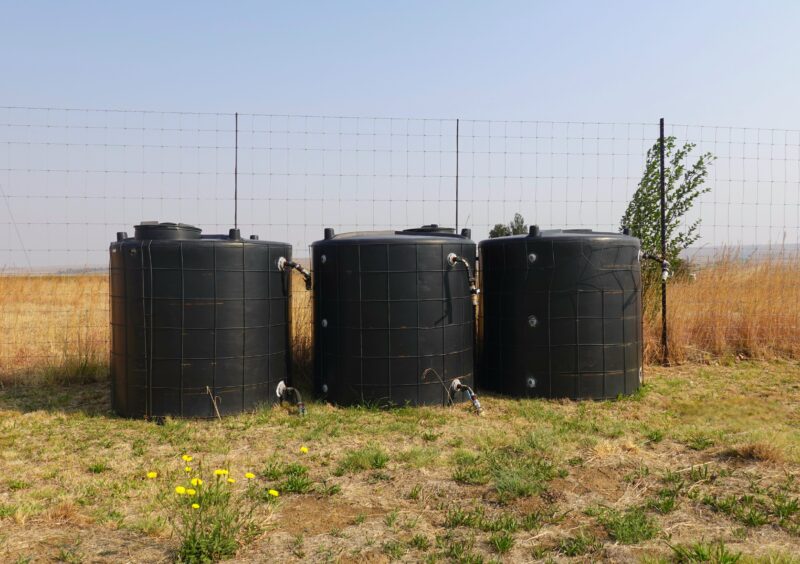
- Expand water storage capacity: Building large-capacity storage tanks connected directly to irrigation lines yields the strongest long-term protection.
“Reliable storage provides security during dry periods and allows farmers to harvest rainfall whenever it is available,” Mohube says.
While expanding water storage builds long-term security, GreenCape reminds producers to first maximise the efficiency of their existing water resources before developing new infrastructure or sinking additional boreholes.
READ NEXT: More than gadgets: How practical agritech boosts your bottom line