With harvesting in summer bringing high temperatures, dry plant matter, and heavy machinery use, unmaintained combine harvesters and operational oversights pose an immediate threat to crops, equipment, and farm livelihoods across South Africa.
To prevent catastrophic field fires, agricultural insurers and scientific research bodies urge farmers to enforce strict midday cleaning routines, maintain vigilance over hot machinery zones, and utilise real-time satellite spatial data to safeguard their land and support post-fire claims.
As crop farmers navigate demanding harvest schedules, the operational pressure on heavy equipment creates severe fire hazards in the field. Unlike general seasonal veld fires, harvest fires are frequently ignited directly by working machinery operating in dry, crop-dense environments.
Debris accumulation and mechanical ignition points
According to Thabo Twalo, chief underwriting officer at Santam, combine harvester fires contribute significantly to agricultural insurance claims during harvesting season. He noted that these incidents are often linked directly to debris build-up and missed intervention points during the day, rather than a total lack of servicing.
Related stories
- Early warning action essential as dry weather increases fire risk
- Joining Fire Protection Associations key to combat veld fires
- Safety first! Prepare your farm for veld fires
- FS farmers struggle after devastating veld fires
To illustrate the scale of potential damage, Twalo highlighted a 2025 claim in which Santam paid out over R7 million following a single harvester fire. Post-incident photographs revealed excessive debris on the machine that ignited late in the afternoon. A midday cleaning with a leaf blower or broom could have significantly reduced the risk or contained the fire before it became a total loss.
From an underwriting perspective, harvesters represent one of the highest fire risks on farms, especially when harvesting oil-rich crops like sunflower, canola, and soya.
“These crops are highly flammable, and when straw and dust accumulate in hot zones on the machine, the ignition risk increases dramatically,” said Twalo.
Mechanical upkeep is equally critical. Skipped servicing can lead to a seized bearing, generating extreme heat that ignites surrounding dust and straw. Small cracks in cast-iron components or early signs of mechanical wear must also be addressed early to prevent secondary damage and downtime.
Furthermore, weather-related hazards require constant monitoring. Lightning damage to operating tractors represents another significant risk factor while equipment is out in the field.
On-the-ground perspectives from producers
Field experiences among producers reflect varying degrees of awareness regarding machinery-induced fires and daily preventative care.
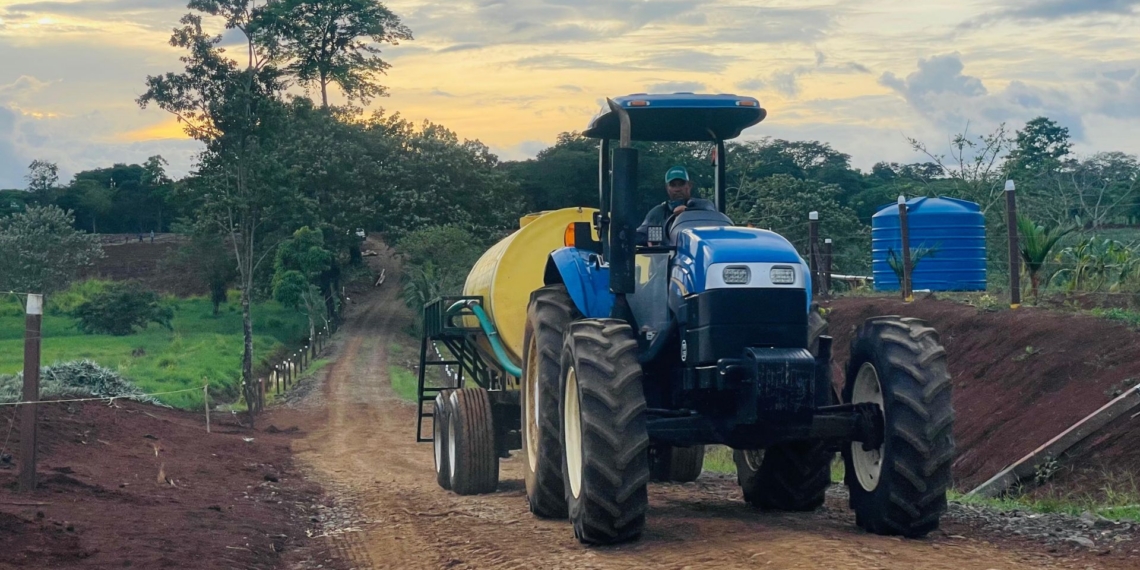
Simemo Nkosi, a crop farmer in Mpumalanga, noted that tractors could spark fires due to bird nests built inside the machine, electrical shorts igniting dry grass, lost bearings, or dry linkages.
“I do proper precautions when it comes to such unforeseen events because I was told to ensure I look after or service the tractor and check it regularly, especially when it is not inside the shed,” Nkosi said.
While Nkosi maintained firebreaks around high-risk zones, he added that most fires in his area are suspected to stem from farm dwellers or tenants, as well as motorists throwing lit cigarettes from vehicle windows.
In contrast, Aphola Mbotshwa, a farmer from the Eastern Cape, who has owned his tractor for nearly a year, stated that he had never witnessed or heard of harvester or tractor fire incidents in his area.
Mbotshwa focuses his daily maintenance routine on basic checks before operation.
“I just check everything is in order on the morning I am going to use it,” Mbotshwa said. “Is the water in the radiator, is there enough clean oil, and is there enough diesel?”
Practical mitigation and policy compliance
Building disciplined routines into harvesting schedules remains the most effective defence against fire losses. Twalo recommended breaking maintenance down into smaller, regular interventions throughout the day:
- Midday clean-downs: Using a broom or leaf blower to clear straw, dust, and crop residue from hot zones on the machine.
- Continuous monitoring: Equipping machinery with accessible fire extinguishers, training operators to detect smoke or burning smells, and deploying a second person during high-risk periods to monitor machinery and fields.
- Policy duty of care: Insurance policies require policyholders to take all reasonable steps and precautions to prevent losses. Proactive maintenance directly influences claim assessments following an incident and contributes to sustainable premiums over time.
Satellite data and spatial monitoring solutions
Beyond farm-level machinery management, satellite technology and spatial monitoring solutions can help track fires, map burnt areas and support insurance claims and legal proceedings.
According to a project description published by Esri Southern Africa, more than 40 000 fires are reported in South Africa annually, causing nearly R4 billion in direct financial losses. In the Free State alone, nearly 260 000 hectares are destroyed by fires annually.
To address these challenges, M.A.P Scientific Services (MAPSS), a scientific team specialising in conservation, restoration and sustainable development, partnered with the Free State Umbrella Fire Protection Agency (FSUFPA) to develop a spatial monitoring platform.
Using high-resolution satellite imagery, the platform enables near real-time fire detection, automatically maps burnt areas on individual farm properties at five-day intervals and provides spatial data to help landowners and fire protection agencies assess damage and support insurance claims and civil litigation.
Together with proper machinery maintenance and fire prevention measures, these monitoring solutions offer another way to help farmers manage fire risks and navigate the consequences when fires occur.
READ NEXT: Reluctant farmer scales EC cabbage enterprise to supply Spar