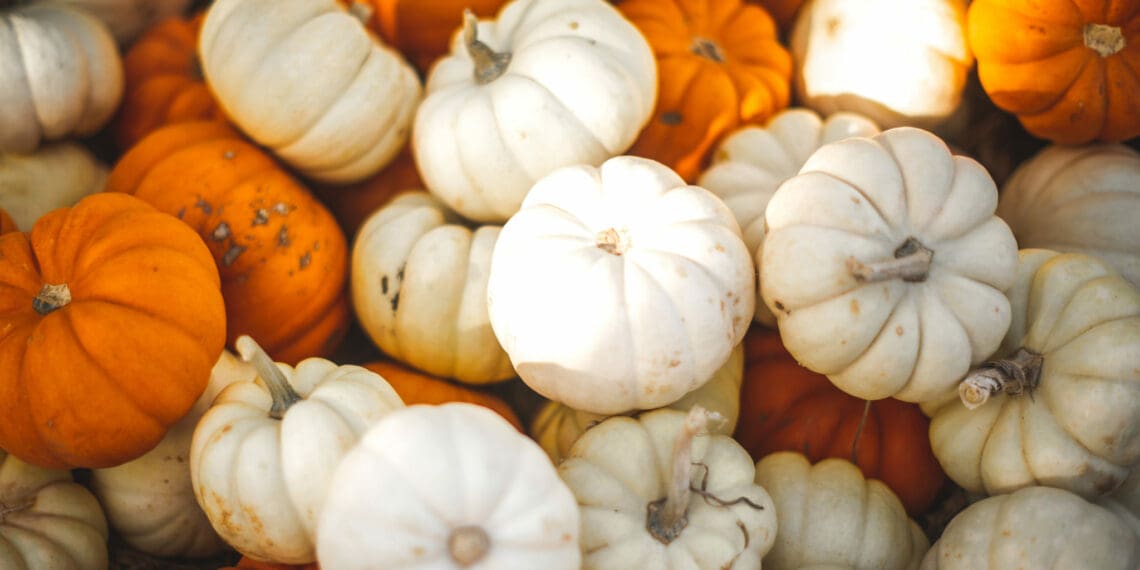
On Thursday, 26 October it is National Pumpkin Day! Yes, we know it is more of an American celebration, but here in Mzansi this beloved fruit – yes, it’s actually not a vegetable – that forms part of the Cucurbitaceae family (pumpkins, squash, and gourds) holds a special place in our hearts and deserves some tender loving care.
Pumpkins are packed with health benefits. From vitamins to fibre and antioxidants, pumpkins offer a nutritious addition to our diets. From their seeds, which are rich in protein and healthy fats, to their flesh, which is a delicious source of vitamins A and C, thus minimising the risk of many illnesses.
A favourite among farmers
Apart from their nutritional value, this uniquely shaped fruit is a favourite among farmers.
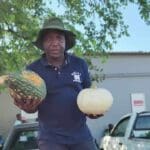
Farmers like Mixo Ngobeni from Limpopo, who specialises in this commodity, became interested in growing pumpkins by doing market analysis in his area and wanting to grow something unique.
“I discovered that not many farmers around Giyani grow pumpkins, so I went for it when I saw the opportunity. I have come to realise that many people actually love pumpkins, and this gave me the confidence to continue growing them,” he says.
“Also in my research, one of the things that pushed me was that I stay in an area (Giyani) where weather conditions are favourable to pumpkins. Pumpkins require a lot of sun, so with this kind of information, all I could see was just an opportunity to win through the challenges.”
Planting pumpkin
Ngobeni shares tips on growing pumpkins and what farmers need to know about their soil, their PH level, and the nutrients in it.
1. Soil preparations
I use a tractor to plough, dance (to soften the soil), and then create ridges (some call them rows). The rows should be wide enough to allow good spacing because the pumpkins can really spread and the roots can really grow big. Thus, I make use of a drip irrigation system with 0.6-mm spacing.”
2. Planting seeds
Seeds are planted directly in the soil. I don’t use trays to plant first, then transplant. I plant directly in the soil. Before planting, I will water the ground where I need to plant my seeds using drip irrigation so that the soil has moisture and also to know where my drip is dripping the water.
3. Fertilisation
Pumpkins take 4 to 5 days to start germinating, so once the two leaves come out from the ground (about 5 cm), I apply fertiliser (N.P.K.-Nitrogen-Phosphorus-Potassium-2:3:4 ratio).
Weeds should be monitored during the germinating stage, mostly the first 4 weeks. But once the leaves have fully grown and the plant starts spreading, weeds don’t usually have a chance to grow since the leaves cover the whole land and make shade for the pumpkin’s fruit.
A second application of fertiliser, LAN-Lime Ammonium Nitrate, is applied 6 weeks after planting.
4. Irrigation
As a farmer, I always go around and monitor my crops to see what is happening and to check if all my crops are growing nicely. Soil moisture is something I monitor a lot, as the weather can be harsh, so I usually apply irrigation twice a week.
5. Pest control
Aphids, bollworms, ladybirds, nematodes, and pumpkin flies are some of the pests that you deal with while growing the crop.
But as for me, we have our agricultural officers and agricultural chemical shop, which I consult whenever my crops are attacked. They recommend which chemical to use to prevent such, and most of these chemicals are applied every seven days, but mostly they state the usage in the description; the same applies to the diseases found.
6. Harvesting
It takes about 16 weeks (4 months) to grow a fully mature pumpkin. One of the things to notice is that the fruit is fully ripped, the stem has dried out, and once you cut it inside, you will see this crispy gold or yellow colour inside. (But obviously, you can’t cut all of them.)
Pumpkin recipe
Ngobeni says it is very common for people to eat rice with pumpkin or butternut on it, especially during Christmas time.
He adds that parents also use it to feed their babies because it is soft, provides vitamin C, and strengthens the immune system.
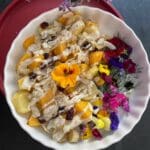
Thus, besides just planting pumpkins for extra income or having it as a normal side salad for your dish, there are many other healthy ways you can add it to recipes for your meals.
Nosimphiwe Qonya, better known as Chef Mathangane from Pretoria, says she loves adding pumpkin to her beef stew and shared an easy and delicious way that one can experiment with pumpkin.
ALSO READ: Fruit South Africa looks ahead amid 10-year celebrations
Sign up for Mzansi Today: Your daily take on the news and happenings from the agriculture value chain.
Pumpkin Heaven
Ingredients
- 1 Pumpkin
- 1 Sweet potato
- Any preferred salad dressing
- Sweet chilli sauce
- White almonds
- Coconut flakes
- Cranberries
Instructions