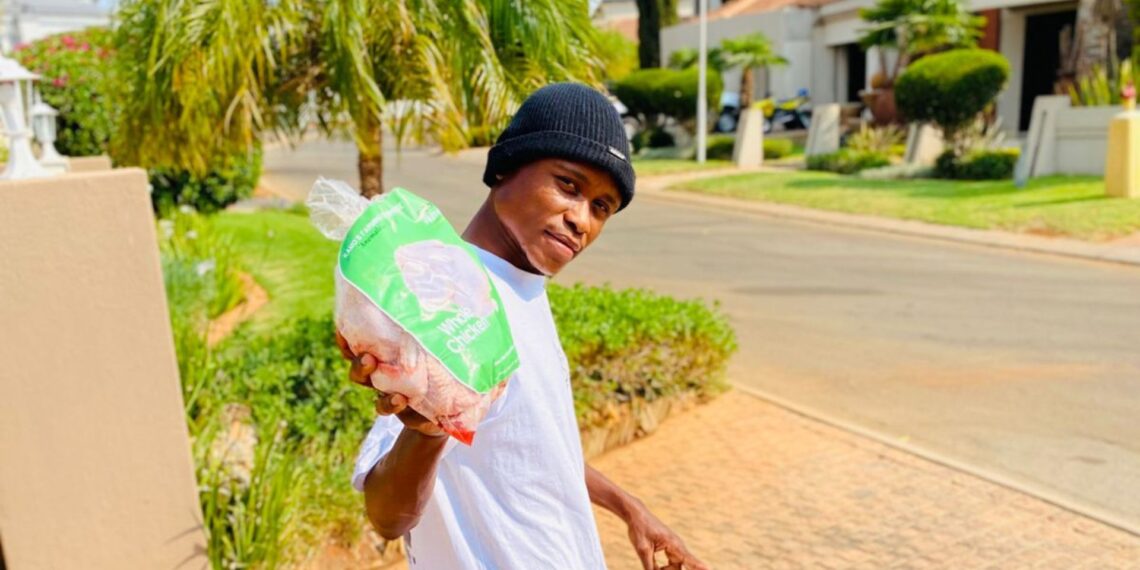
Kamogelo Thobejane, a determined young farmer from Serishane, Limpopo, has turned his passion for poultry into a thriving business, despite facing countless obstacles along the way. His farming journey wasn’t a sudden decision but was nurtured by deep family roots in farming and honed through formal education.
Thobejane comes from a farming family, which sparked his interest in agriculture from a young age. His parents farmed primarily for subsistence, instilling in him a love for farming. However, he wanted to take things a step further and transform this passion into a commercial venture.
After completing his matric in 2012, Thobejane pursued further education at Waterburg TVET College, studying primary agriculture and national vocational certificate levels. Thanks to a collaboration between Waterburg TVET College and the University of Limpopo, Thobejane had the opportunity to continue his education, eventually earning a national diploma in animal production. He later completed his bachelor’s degree in agricultural management in 2021.

Launching a poultry business
After completing his studies, Thobejane ventured into the poultry business, a move he had been preparing for while studying.
“Due to the high unemployment rate, while I was busy studying, I just decided to save some of my allowance so that I will start this,” he shares. This strategic saving allowed him to establish his business, Kamo’s Farming Enterprise, in 2021.
Thobejane initially funded the business by working as an agricultural assistant practitioner at the department of agriculture for seven months. However, the government terminated the contract due to budget constraints.
“Even when I was in the department, I was busy with my business. I was placed around my home and I was travelling from work to home, so I was able to take care of my business,” he explains.
His family also helped manage the poultry when he wasn’t available.
Related posts
- Poultry farming: Essential insights to boost your production
- Poultry industry urges master plan revamp to address trade tariffs
- ChickenFacts calls for new Poultry Master Plan amid trade turmoil
A helping hand goes a long way
Thobejane chose poultry for its relatively quick return on investment compared to other types of livestock.
“With poultry, it’s a quick mind. The chickens take about six weeks to grow, and we start selling them when they are five weeks old. Rather than large stock, they take nine months. The process is long, but with poultry, I think you make quick cash,” he says.
His business produces a cycle of 100 chickens every few weeks to meet his market demand in various regions of Limpopo, ensuring his customers don’t run out of stock.
“I keep my cycle running so that my customers don’t run out of chickens. The number of chickens increases during festive seasons because there’s a high demand.”
Like any business, Thobjeane faced challenges, with load shedding a major obstacle. “With load shedding, the chickens cluster together and cause suffocation, especially in winter because it’s too cold, and there’s a low growth rate,” he says.
However, a thoughtful gift from his brother, a gas heater, helped him manage during power outages.
Another challenge Thobejane encountered was high demand, particularly during peak seasons like weddings or festivals. Running the business from his backyard, he also lacked proper equipment for processing chickens, which was time-consuming. To solve this, he invested in a plugger machine.
“I slaughtered by hand, but it was challenging. Now with the plugger machine, things are much easier.”

Looking ahead and giving back
Thobejane has ambitious plans for his poultry business.
“In the future, I want to see myself having a nice structure, like those automated chicken houses, and also having a solar system panel because load shedding is stressful. Gas is expensive,” he says.
More than just growing his business, Thobejane is passionate about giving back to his community. He shares his knowledge by helping people start their own businesses.
Additionally, he is the vice secretary for Youth in Agriculture and Rural Development (Yard). “I also want to create job opportunities for people, paying back to the community,” he shares.
His advice to aspiring farmers is straightforward: “They must use what they have. You don’t have to have a fenced structure to start with. As long as you can protect your chickens, you’re good to go.”


READ NEXT: David risks all to build 200-hectare farming dream
Get Stories of Change: Inspirational stories from the people that feed Mzans