For the 28-year-old Linda Mvelase, the farming bug could not leave him. Even though he worked elsewhere to make a living, he would return to finish the legacy his father started.
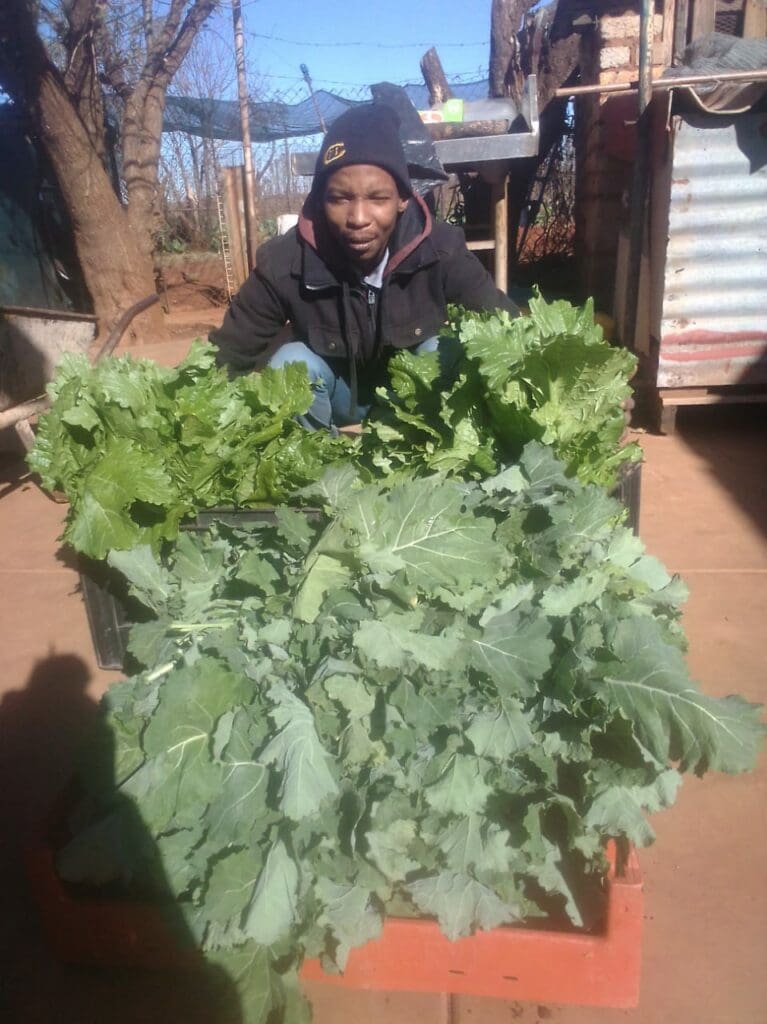
Mvelase grew up in a farming family in the Khutsong location in Carletonville, Gauteng. His father owned one hectare of land in Khutsong and used to farm with chickens and vegetables until his death in 2008.
“When I was young my father used to take me along to the farm where I would help him around the farm. For me at that time, it was just a fun activity and lending a hand to my father.
“As I got used to go with him, I started having an interest in farming and wanting to know more about the pros and cons of farming. However, I was young and had to focus on my schoolwork. Unfortunately, in 2008, we lost my dad and the whole family stopped farming,” he says.
Mvelase says the family decided to rent out the farm and no one in the family was active in farming. After matriculating in 2012, he went to do odd jobs in the library and restaurants, but he kept on thinking of a plan of how to revive his father’s legacy of farming.
Getting a helping hand
In 2019, he approached Umsizi Community Training to learn more about agriculture. That was the turning point in his life and he never looked back.
“For me to approach the organisation, I needed to upskill myself and know all that I needed to restart farming. The organisation trained me on horticulture and organic farming.
“I remember we took a trip to Graaff-Reinet where we met industry leaders who really taught us a lot a lot about farming, especially livestock, which is my intertest,” he says.
Mvelase then engaged with the farmers who were renting his father’s one hectare of land so he could take it over. However, the farmer forum which his father belonged to decided to give him a new hectare of land because the other farm was already in the peak of production.
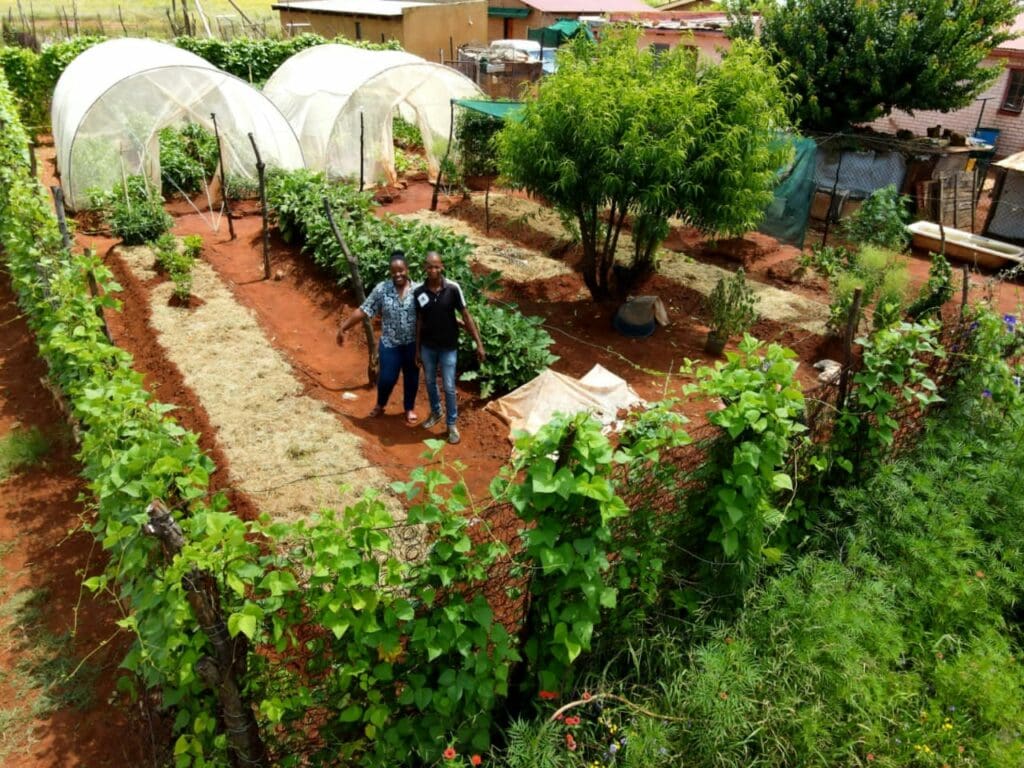
“I settled for the other hectare that was given to me. The Umsizi Community Training organisation came through for me by putting up nets for me and assisting with other logistics because they loved my idea of farming.
“I am currently farming with spinach and beans, and am planting potatoes now. I also do organic chicken farming. My market includes abattoirs in town, which is mostly on Wednesday and local market day in the location on Thursday – so that is where my market is and it is very strong.”
Looking forward
Mvelase says following the death of the farmer who rented his father’s farm, the family allowed him to take over the farm.
“The farming journey that I am into is not easy, but it is worth it. My biggest challenge is theft of my crops and lack of support from our local authorities. The Merafong local municipality is not supporting us as local farmers in a sense that the is no development of farmers and recognition.”
Despite all the challenges, he believes that he will make it in the agricultural industry. “I want a big farm where I will be able to farm and create jobs for the young people in the farm because the unemployment is high.
“Agriculture is everything for me, the future is in agriculture and I believe I have space to work in this sector.”
Mvelase calls on the government to make agriculture compulsory in schools as this is where the future lies.
“Our government really failed us by taking out agriculture as compulsory subject and substitute it with Life Orientation. We need agriculture in our schools. Some of us were disadvantaged with this decision, now we are doing catch up with our white counterparts,” he explains.
He encourages young people who want to get into farming, to come into it with an open-minded attitude.
“Everyone everywhere needs to do farming, even if its backyard farming. Our country needs food at this point in time, not only that but also creating jobs.”
Mvelase says it is through agriculture that the country can fight of all the social challenges and create an enabling space for the economy to grow.
ALSO READ: Not even disability can keep Dolly from farming
Get Stories of Change: Inspirational stories from the people that feed Mzansi.