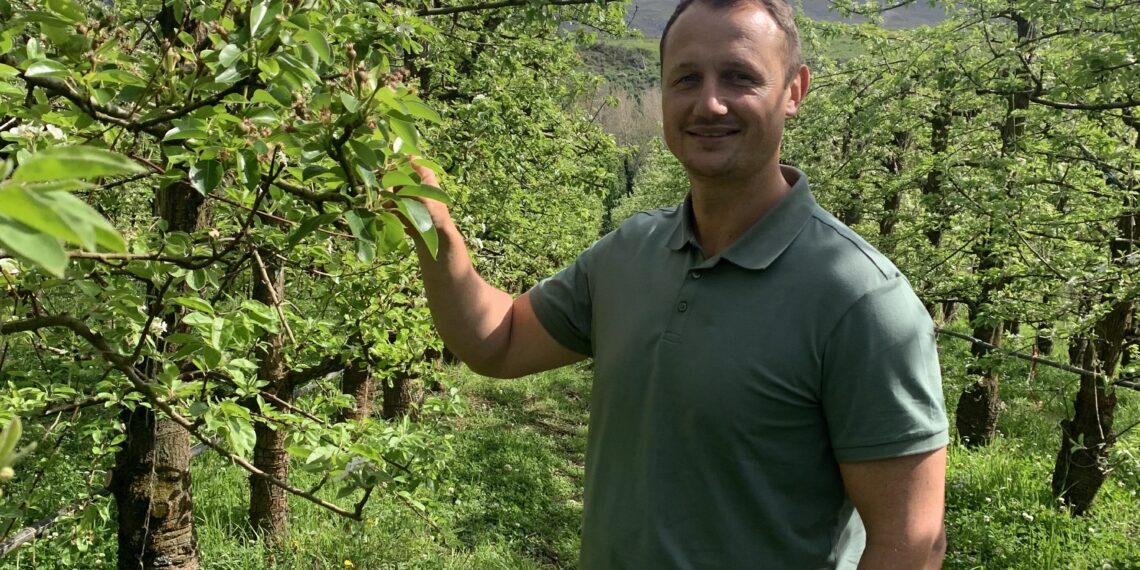
In the rolling Hemel-en-Aarde Valley near Hermanus in the Western Cape, a quiet revolution is unfolding at Diepgat Farm. Fifth-generation farmer Ruhan Hauman, one of Tru-Cape’s innovative producers, has achieved his best crop ever in 2025, both in yield and pack-out percentage. His secret? Farming with nature rather than against it.
After returning from a professional rugby career in France, Hauman traded stadium lights for orchard sunshine, bringing home not just strength and discipline but also a renewed sense of purpose. “In Europe, people care deeply about where their food comes from and how it’s grown,” he recalls.
“When I had to order pesticides in my first week back, I lost sleep over it. It didn’t feel right. I wanted to farm in a way that builds life, not destroys it. To eliminate pesticides, I had to start by building soil health and diversity.”
A new vision for old land
Diepgat spans 25 hectares of apples and pears, along with onions and a Jersey dairy that supplies milk to Fairview for cheese making. When Hauman took over operations in 2019, he was determined to rethink how food could be grown on land his family had farmed for generations.
He had no formal agricultural training; just curiosity, determination, and a growing library of research, books, and documentaries such as Kiss the Ground and What Your Food Ate. His father, Len, and their team were initially cautious, but Hauman knew that proof would come through practice. “There are not many regenerative fruit farmers in South Africa, so trials were the only way forward. Seeing is believing,” he says.
Related stories
- Cattle and cover crops power vineyard regenerative study
- Regenerative agriculture: A sustainable solution for soil health
- Mixed farming: Double the hustle, double the rewards
- Jobless graduate turns EC homestead into opportunity hub
Hauman’s first step was to “close the loop” on soil fertility. He divided orchards into test blocks, comparing organic and conventional methods. Compost made from cattle and chicken manure, and even “manure water” from the farm’s dairy, proved far more effective than synthetic fertilisers.
“The manure water and compost combination gave by far the best results,” he explains. “Incredibly, everything we need is already here on the farm – we just had to use it better. Closing the loop has also cut our production costs dramatically.”
By 2022, Diepgat had gone completely without synthetic fertilisers, an achievement that few commercial fruit farms can claim.
Cover crops, cows, and the power of soil
Next came an experiment in natural partnerships. Clover and other cover crops began to thrive between the orchard rows, enriching the soil and attracting pollinators. To build even more fertility, Hauman introduced two herds of Jersey heifers into the orchards from post-harvest to bud break.
“It was incredible to see the change,” he says. “We allow the cows to graze about two-thirds of the vegetation. Clover and other favourable species pop up without sowing, and the effect on the soil is visible.”
This living ecosystem brought cascading benefits. With stronger soils and a thick green carpet of cover crops moderating temperature, the orchards now need only one-third the water they used before. “We now irrigate once a week instead of three times,” Hauman notes proudly; a crucial saving in South Africa’s water-stressed climate.
Even pollination improved so much that he halved the number of beehives needed per hectare.
Healthier soils, healthier fruit
Protecting irrigation systems by lifting lines off the ground and mowing cover crops mechanically during summer further strengthened the system. The result: more resilient trees and fewer pests.
“Healthier soil leads to healthier plants with better pest and disease resistance,” Hauman explains.
He’s also cutting back on chemical sprays, experimenting with softer mineral oils, biological controls, and meticulous insect monitoring. A flock of ducks helps keep snails in check, and Hauman hopes to reintroduce natural predators to control insect pests in future.
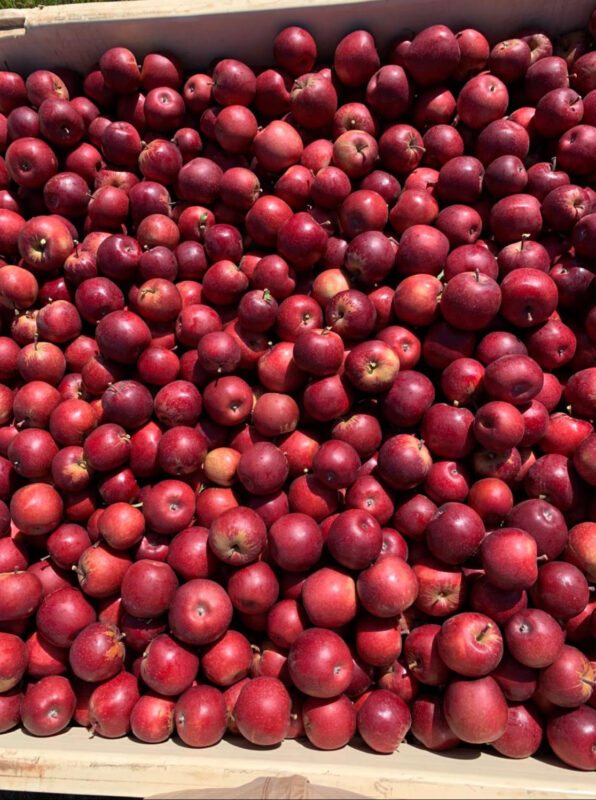
The rewards have been extraordinary. Biodiversity has flourished: dung beetles, egrets, earthworms, and even fish eagles now thrive on Diepgat. “The gradual improvement over the past three years has been the most rewarding,” Hauman reflects. “Our latest crop was our best yet, even as neighbouring farms had only average seasons. Both yield and pack-out improved, while input costs dropped significantly. It proves that healthier soils grow better fruit.”
Farming for the future
For Hauman, the transformation is about more than economics. “It’s not about chasing organic certification or premiums. It’s about doing the right thing. And about balance: healthy soil, healthy trees, healthy fruit, and ultimately healthy people. We want to leave the land better than we found it.”
That ethos aligns perfectly with Tru-Cape’s own vision for sustainable fruit production. As managing director, Roelf Pienaar, notes, “By rethinking long-standing practices, Ruhan is proving that fruit farming can be profitable, productive, and environmentally restorative. It shows how growers can reduce inputs, support biodiversity, and still deliver excellent harvests. That is the future of fruit farming.”
Growing consumer awareness and tighter regulations on agrochemicals may soon make regenerative farming more than a niche; it could become a cornerstone of responsible agriculture. And at Diepgat, where clover blooms between apple rows and fish eagles soar overhead, that future is already taking root.
ALSO READ: Family roots inspire Limpopo cousins’ rise in organic farming