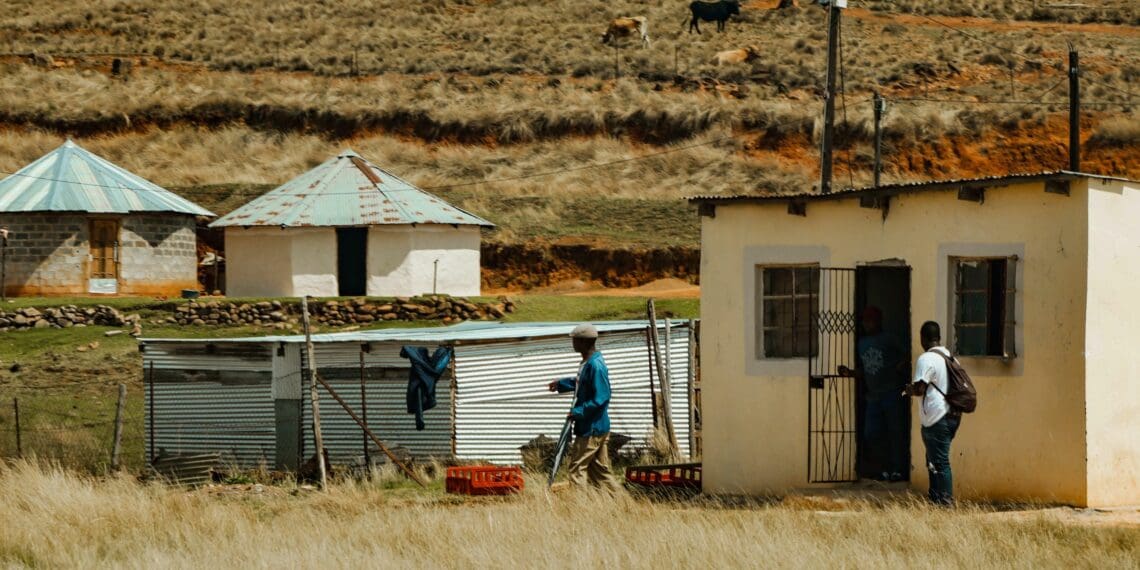
Rural African communities are among the most vulnerable people in the world to climate change, yet they are also a key part of the solution.
While government commitments to reducing emissions and reliance on fossil fuels are critical, the people on the ground could hold the secret to a just energy transition. It is time to put communities at the centre of climate change mitigation and adaptation strategies.
The 27th Conference of the Parties (Cop27) on climate change, being held in Sharm el-Sheikh, Egypt, from 6 to 18 November 2022, will test the collective commitment of global leaders to tackling this severe threat to humanity.
From an African perspective, it will reveal whether developed countries are committed to a just energy transition in the Global South and whether African leaders are willing to fight for the most vulnerable people in their countries.
Resource Africa was founded to support local communities in southern Africa to reach their goals of sustainable development and biodiversity conservation, both of which are negatively affected by climate change.
Rather than short-term climate projects being implemented with communities involved as “stakeholders”, we advocate for communities directly accessing carbon markets or other climate financing mechanisms to increase their resilience.

Where Africa fits in
In an insightful policy paper published by the Southern Africa Trust titled “Climate Change and the Just Energy Transition – is Africa Trapped?” Claude Kabemba clarifies the position Africa finds itself in and advocates for a united African negotiating approach at Cop27. He explores the injustice and inequality that have created the current crisis and points out that African and other developing nations have the right to more climate financing from developed countries.
Africa has not been a major contributor to the current climate change crisis, yet its people are more vulnerable to the impacts of droughts, floods and other climate-related disasters than those in developed countries.
On the other hand, African nations insist that they need to use fossil fuels to meet current energy needs and support future economic development. They argue that preventing them from doing so is simply deepening historical injustice and effectively trapping Africa in poverty.
While Africa is pressured to stop using coal, oil and gas, the war in Ukraine has starkly revealed the degree to which Europe relies on fossil fuels imported from Russia. Worldwide, energy prices are rising and food security is increasingly shaky, with the latter exacerbated by droughts and floods associated with climate change.
Against this backdrop, Cop27 could become an every-country-for-itself battle, with few compromises or cooperative agreements on the cards.
ALSO READ: Cop27: ‘Africa needs voices of change’
In the crossfire of global crises
Although politicians point to current crises and the need for economic stability as a reason for maintaining our reliance on fossil fuels, civil society, climate change experts and activists urgently warn that we cannot continue business as usual.
For example, the Intergovernmental Panel on Climate Change (IPCC) ended its Summary for Policy Makers based on its latest report with this statement: “The cumulative scientific evidence is unequivocal: climate change is a threat to human well-being and planetary health. Any further delay in concerted anticipatory global action on adaptation and mitigation will miss a brief and rapidly closing window of opportunity to secure a liveable and sustainable future for all.”
Meanwhile, rural communities in Africa and around the world are caught in the crossfire of these global crises and political wrangling, with almost no protection from climate-related disasters. Their situation is exemplified by the African proverb: “When two elephants fight, the grass gets trampled.”
To add to the problems communities face, energy projects – whether dirty or green – often involve evictions and displacement, while the energy produced is not available locally and rural areas receive little or no economic development in return. Thus people living in the shadow of power plants still use firewood and candlelight.
Addressing three crises at once – climate, energy and food – is a complex challenge facing the whole world. Yet the size of the challenge should not deter African and world leaders from finding just and equitable solutions.
Women and young people
In his analysis, Kabemba points out that rural women farm the land to produce food and collect firewood to meet household energy needs. Improving their access to green energy and increasing their resilience to climate shocks through improved agricultural practices should therefore be a top priority in national climate change plans.
Bringing women and young people from rural communities into climate change discussions requires leadership that is willing to listen at every level of governance. The stance of African leaders at Cop27 should be informed by the needs and vulnerabilities of people living with the impacts of climate change, rather than purely economic and political power.
In this view, a just energy transition is not only about rich countries financing poor countries, it is about bringing green energy and climate solutions to the people who need it the most.
Communities playing their part
Community-based organisations can play a key role in this approach to climate change by creating a platform for governments and civil society to collaborate with and listen to local communities. Communities can translate global ambitions into local actions by contributing to mitigation and adaptation measures.
A system known as community-based natural resource management (CBNRM) has been particularly successful in southern African countries, where it contributes to habitat and biodiversity conservation. This involves communities setting aside large areas of their land to support wildlife populations, which has significant implications for climate change.
The savannahs and woodlands protected by communities are carbon sinks, while the diverse livelihoods supported through the sustainable use of wild plants and animals contributes to climate adaptation and resilience.

Using carbon credits, habitat conservation can be included as a livelihood option for communities rather than an opportunity cost, thus preserving carbon sinks. Other locally driven projects could include harnessing solar power for cooking and lighting, and introducing conservation agriculture or alternative livelihood options to increase resilience – especially of rural women.
In this system, governments and civil society would play supporting and facilitative roles. Governments can reduce unnecessary red tape and develop enabling policy frameworks, while civil society can provide the necessary training and information to help communities choose projects and ideas that suit local conditions.
While community-based natural resource management has been tried and tested for a couple of decades in southern Africa, community-led climate change solutions are still in their infancy. Experience from the former can help develop an approach to the latter to move in this direction.
Change in attitude
It is clear that the world cannot continue with “business as usual” on many fronts – greenhouse gas emissions must be cut, fossil fuels phased out and nationally determined contribution plans implemented.
Besides these measurable goals and plans, however, another more fundamental change must take place: a change in attitude that could make all the difference. Rather than viewing them as helpless victims of climate change, governments and civil society should recognise rural communities as partners for finding solutions to this complex global problem.
Creating an enabling environment that fully includes local communities in the search for climate change solutions will take commitments to change at every level of governance. And change clearly is just what the world needs at this juncture; local communities could help the world mitigate and adapt to climate change from the ground up, thus bypassing international political stalemates.
To modify the African proverb somewhat – when the “elephants start paying more attention to the grass than their opponents, both the grass and the elephants can flourish”.
- This article was first published in Daily Maverick.
ALSO READ: Cop27: Africa needs a different approach
Sign up for Mzansi Today: Your daily take on the news and happenings from the agriculture value chain.