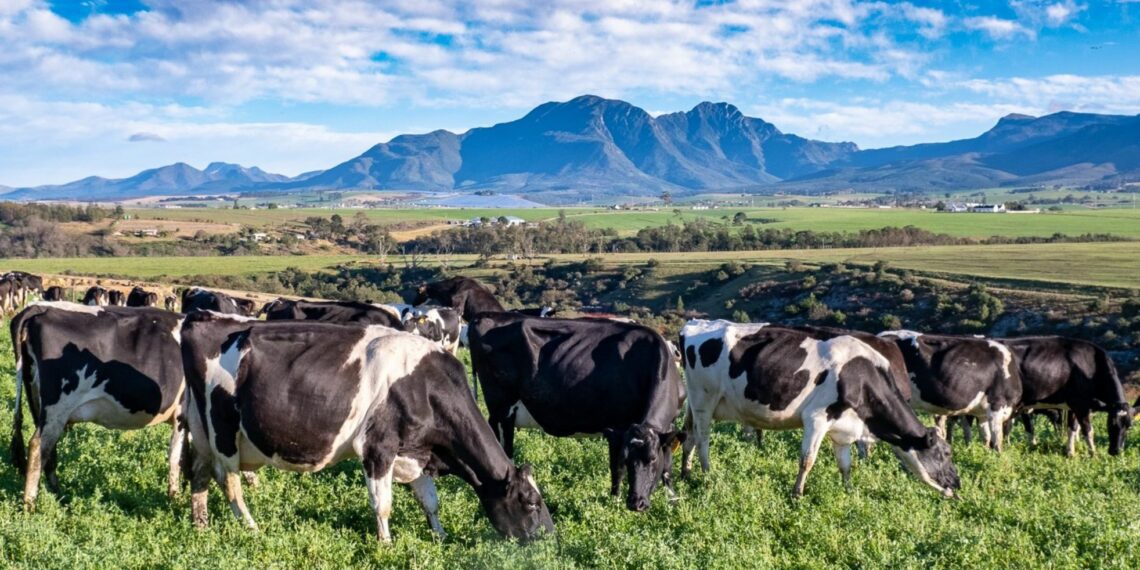
The South African dairy industry has shown remarkable resilience and innovation over the past 25 years, but its leaders warn that the industry faces severe challenges that could undermine progress if left unaddressed.
In the board of directors’ annual report, Dr Bonile Jack-Pama, chairman at Milk SA, stressed the importance of entrepreneurial leadership in shaping the industry.
“Key to the South African dairy industry’s competitiveness is innovation and, more importantly, our entrepreneurs with vision and passion. One stands astonished when observing the advancement and buoyancy of the dairy industry over the last 25 years in all areas from technology to marketing, not only with a purpose to nourish the growing population, but also to grow demand,” he said.
Fewer farmers, more milk
Despite significant progress in efficiency, dairy producers face an unforgiving operating environment.
“Our milk producers and manufacturers of dairy products in particular, are at the coalface of the enormous challenges that every new day brings in our beloved South Africa, especially in terms of infrastructure and government services and an unfriendly business environment overall,” Jack-Pama said.
He pointed out that since 2000, the number of milk producers has dropped by 85%, yet overall production has increased by 76%. This reflects the rise of larger-scale operations, greater efficiency, and an expanding range of products within the secondary industry. At the same time, it highlights the tough macroeconomic environment and the difficulties linked to transformation.
Related stories
- KZN dairy farmers ramp up vaccinations to fight FMD
- Farming in the fast lane: Tshilidzi races ahead in dairy
- Black dairy farmers build legacies, but face market crisis
- Agri WC applauds farmers’ resilience, urges support
Jack-Pama urged that the dairy industry’s contribution to economic transformation be given more recognition. He stressed that the industry is a vital part of South Africa’s economy and should receive stronger support and collaboration from government, which, he argued, often overlooks the broader benefits a thriving commercial sector brings to both transformation efforts and the overall well-being of society.
“Key to the South African dairy industry’s competitiveness is innovation and more importantly, our entrepreneurs with vision and passion.”
However, without stronger government support and improved resilience strategies, he noted that those entrepreneurs may struggle to sustain the progress made over the last quarter-century.
Transformation and animal diseases
Efforts to integrate black dairy farmers into the commercial sector remain central to Milk SA’s mandate. Project manager Godfrey Rathogwa explained that the Sustainable Commercialisation Project, funded by surplus statutory levies and a R10.35 million Jobs Fund grant, continues to support small-scale black-owned dairy enterprises.
According to Rathogwa, during 2024, participating farmers supplied 2.1 million kilogrammes of milk, though production dropped 9% compared to 2023 due to herd reductions and fodder shortages. Farmers also faced devastating setbacks, including cow deaths from diseases and accidents, fire damage to grazing lands, borehole failures, and Eskom power cuts that spoiled milk supplies.
“Farmers were strongly advised to consult their local veterinarians for information regarding vaccination programmes and integrated dairy herd disease management programmes,” he said.
Milk SA’s animal health and welfare programme, Dr Mark Chimes, stressed the need for practical solutions to the foot-and-mouth (FMD) disease crisis.
“Dairy farmers and processors face unique challenges in the face of FMD. Farmers are affected by the restrictions on red meat processing in addition to the restrictions on milk processing. Furthermore, dairy cattle suffer more severe symptoms with FMD than beef cattle, leading to significant milk production and livestock losses.
“On the other hand, milk processors that accept milk from quarantined farms lose their export licence and need to double pasteurise or UHT treat the milk to neutralise any virus present in the milk,” he said.
READ NEXT: Poultry farmers: A guide to selling to abattoirs