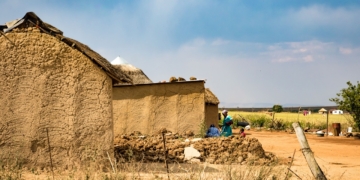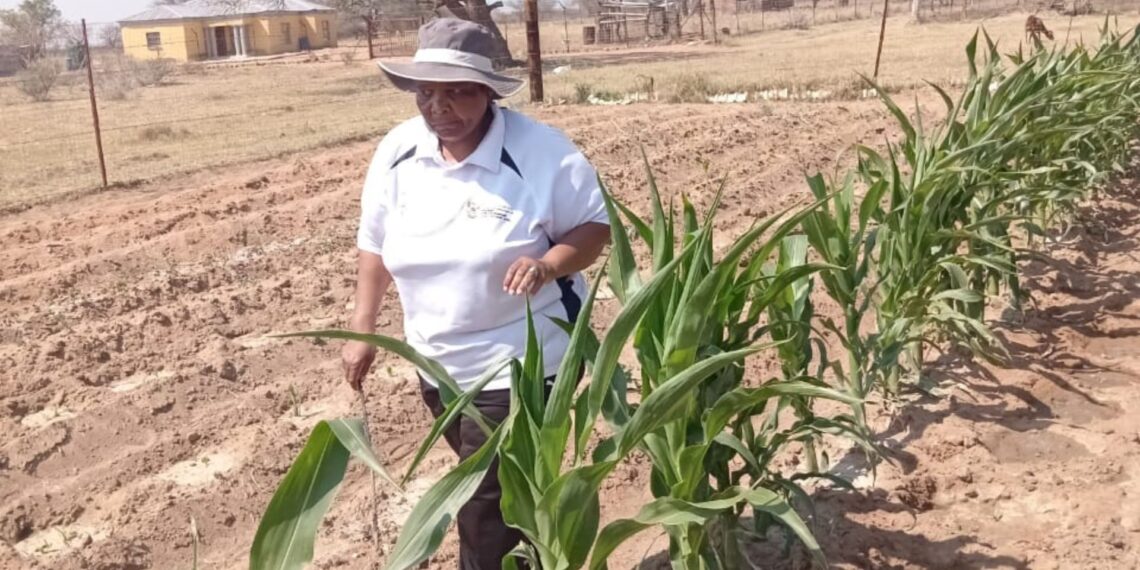
For Victoria Setwaba, farming was not simply a career change but a calling. After decades in education and public service, she joined her husband and father-in-law on their family farm in Bochum, Limpopo.
“I can say farming is my passion. For years, I was helping, and I noticed people coming to ask, ‘Where can we get sweet potatoes? Where can we get groundnuts?’ For two to three years, we didn’t plant anything, but the demand was always there.
“I realised this was a real opportunity, and that’s when I decided we should continue farming,” she says.
With her husband, Steven, who has been farming for more than ten years, Setwaba now works a hectare of the family’s eight hectares of land, producing mixed crops and rearing goats.
From classroom to farmland
Her transition from classroom to field was not without challenges. Like many first-time farmers, Setwaba quickly discovered that enthusiasm alone was not enough — markets mattered most.
“My biggest mistake was not having a market. With farming, you must start with the market first before you plant. Out of excitement, I just wanted to farm, so we put the seed in the ground without thinking about where it would go afterwards.”
That reality hit when she planted spinach with enthusiasm, only to find the local market already saturated. “People do buy when they come directly to the farm, and sometimes I deliver to other women who sell at the market, but I realised I had to change my approach.
“Now I know you must find a market first and then decide what to plant.”
Even with these setbacks, she chose to see them as stepping stones rather than failures. “One thing I did right was taking my soil for testing, so I know what crops are suitable. But I still need to learn more about when and what to plant, and the right seasons for each crop.”
Her family’s farming tradition guided her. The Setwaba farm has always been diverse, with crops such as maize, groundnuts, beans, and sweet potatoes forming its backbone.
“In the past, when my father-in-law planted maize, groundnuts, beans, and sweet potatoes, people came directly to the farm to buy. There was always a market for those crops because people knew about them and trusted the quality.”
Building on this legacy, she has also experimented with potatoes and other vegetables, strengthening food security and opening additional streams of income.
Related stories
- Seed libraries, food gardens empower Cape communities
- Smart crop protection for greenhouse farming
- Fresh out of farming school, Memani’s agribusiness takes flight

Agroprocessing ambitions
When spinach flooded the local market, she refused to give up. Instead, she turned the challenge into an opportunity by embracing agro-processing, with the help of fellow farmers and a UN Women’s course.
“I was advised to cook it, dry it, and package it. That has been a solution. Now I don’t stress about excess spinach. Once a week, we cook it in a big pot, dry it, and then package it for sale.”
This new approach reduced waste and added value to her produce. Inspired by her stepdaughter, who farms chillies and produces sauces, Setwaba is determined to grow her agro-processing venture further.
Her diversification extends beyond crops. Goats have become an integral part of the farm, offering both household support and a buffer when crop income is delayed.
“We rear goats not just for the family but also as part of our production. They are an important part of the farm because they provide us with flexibility. When there’s no immediate cash from crops, we can rely on the goats.”
Together, the crops and livestock create a more resilient farming system, less vulnerable to seasonal ups and downs.

Turning surplus into opportunity
Setwaba’s work goes beyond her farm. She also serves as secretary of the National Farmers Union (Nafu) in her region, a role that allows her to continue teaching in a new form.
“My role is to coordinate activities, arrange meetings, and communicate with the farmers. Mostly, we share information so that everyone stays informed about opportunities in farming.”
Her background in education shines through.
“Teaching is still my calling, but now I apply it differently. Learning never ends, and when I gain knowledge, I make sure to share it with others. That way, no one is left behind.”
Through Nafu, she connects farmers with training, workshops, and support programmes, while also guiding them through the paperwork required for agricultural funding.
Looking to the future, Setwaba has her sights set on growth and specialisation. “We’re preparing our eight hectares and working hard to expand. In the future, I want to specialise in one main crop so that I can focus and build from there.”
What keeps her moving forward is the satisfaction of seeing her hard work come alive. “As a farmer, when I walk through the fields and see them green, my heart is happy. It makes me feel good to know I planted something, and I can see the future in it.”
For Setwaba, farming is not just about produce — it is about empowering her community, embracing lifelong learning, and sharing knowledge across generations.
“Food is needed every day, and the market will never be saturated. The key is to know what crop to plant, when to plant it, and to keep sharing knowledge so that together we can provide food for our communities.”


READ NEXT: Poultry farmers: A guide to selling to abattoirs