Farmers in the Eastern Cape have endured major livestock and crop losses due to severe water shortages and a prolonged drought. In some parts water shortages have been coming for 10 years. And despite the provincial government saying it will cost millions to help the province recover, it also deems aid from the United Nations to be unnecessary.
Of the about 16,9 million hectares of land the province sits on, just over 1,7 million hectares are affected by prolonged drought conditions, says Eastern Cape rural development and agrarian reform spokesperson Masiza Mazizi.
Mostly affected are the Ngqushwa municipality, Mnquma, Mbhashe, Raymond Mhlaba, Cala, Ngcobo, Makana, Graaff-Reinet and Enoch Mgijima. Commercial and new farmers in the Sarah Baartman district, Amathole and Chris Hani are also facing severe drought and water challenges.
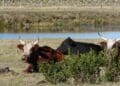
Farmers in these parts have resorted to maintaining only their nucleus herds and have sold off all excess animals to lessen the feed burden.
“The number of animals [cattle, goats and sheep] in the [affected] area is 50 756 large stock units. The cost estimate for feed relief for a period of three months to maintain the existing herd amounts to R199,853 million. The requirement for stock water is R15 495, 801,” he says.
UN intervention required?
Retief Odendaal, a member of the provincial legislature for the Democratic Alliance, recently wrote to United Nations Water chairperson Gilbert Houngbo, asking for intervention.

Odendaal wants the UN to provide assistance and expertise to the South African government to help combat the water crisis, particularly in the Eastern Cape.
“We wrote to bring the plight of the people of the Eastern Cape to their attention and to lobby them to reach out to the provincial government and offer much-needed expertise,” says Odendaal. “Maybe, with the eyes of the world on them, the ANC will eventually take action and serve the people of the province.”
Asked if he thought the province needed the assistance, Mazizi says, “No. Only sustainable agriculture resource management and early warning of adverse weather conditions are a solution to agricultural disasters.”
The department, he further points out, supports water conservation and resource-sensitive agricultural management practices. “In addition, farmers are supported and encouraged to produce fodder for disaster conditions and to remain within the grazing capacities of their farms.
“The department… has the capacity to deal with agricultural disaster relief schemes, but funds for this are not available.”
Drought declaration to remain in place
In October this year, Agri Eastern Cape – the voice of organised agriculture in the province – approached the provincial disaster management centre to request a redeclaration of the drought in the Eastern Cape.
This, after the national government declared the drought in three provinces (Eastern Cape, Western Cape and Northern Cape) a national disaster. The declaration was meant to unlock financial support for suffering farmers and residents. However, those affected are yet to see any support from government.
Megan Maritz, assistant to Agri Eastern Cape’s natural resources, economics and trade manager told Food For Mzansi that they had contacted the department of cooperative governance and traditional affairs (Cogta) in the province to find out about the status of the national drought declaration.
“A response was received from Andile Fani (head of department), stating that the classification of the drought [would] be in effect until the situation within the municipalities has improved.”
“The classification served to confirm that the drought existed and allowed for the implementation of mitigation plans.”
According to Maritz, Fani also said that business plans to request funding from the national disaster management centre were being drawn up in order to allocate funding based on merit.
“To date, nothing has come of this and as far as we are aware no funding has been allocated,” Maritz tells Food For Mzansi.
Prolonged drought conditions and subsequent water shortages have resulted in “pastures and crops diminishing to almost nothing as there is no water to keep them irrigated and growing,” says Maritz. “As a result, livestock herds have had to be halved, and in many cased reduced to less than a third, in order for farmers to survive through the drought.”
Maritz furthermore says that the recent heavy rainfalls in the province did not really bring relief. “The land is still dry. The dam levels have also not significantly increased. I think we will see the effects of these rainfalls only in March or April next year.”
Food For Mzansi reached out to Fani for an update on the status of the drought declaration in the province. No response has been received at the time of publication.
ALSO READ: Drought disaster declaration: Still no help for farmers
‘Losses cannot even be counted’
Bhasayi Gugushe, a farmer in the Sarah Baartman district, says his losses as a direct result of the water shortage and drought are immeasurable.
“We have lost so much in the past due to drought, I can’t even count. However, things are slightly improving as we have received good rainfall over a few months. But bringing water to the farms still remain a challenge.”
Infrastructure, he adds, is also an issue. He believes that if government prioritises establishing infrastructures to channel water to affected areas and improve pipeline and tap systems, their predicament is bound to improve.
A report released in the Journal of Arid Environments also sketches a concerning picture of farmers’ struggles, as it indicates that Eastern Cape farmers are likely to remain vulnerable, especially in the dryer western interior of the province.
The report, published in January 2021, recounts many indirect losses due to the ongoing drought. These include a loss of condition in livestock leading to the loss of production with very low conception rates (conception as low as 10% was reported).
The report also details:
- Farmers experienced a loss of income due to the destocking of animals.
- A further loss of income was experienced due to having to feed animals to maintain their condition.
- Internal parasites were significantly higher, which resulted in stock losses.
- Strikingly, loss of natural game was also reported, especially kudu (that sometimes form part of the secondary business on farms, such as hunting or tourism).
- Game farmers in the area also reported low conception amongst game animals due to the drought.
Meanwhile, the agricultural department in the province tells Food For Mzansi that it has provided multiple boreholes and cleared earth wall dams in the province.
Mazizi says that between 2018 and 2020, 55 boreholes have been completed in the Amathole, Sara Baartman and Chris Hani districts, of which seven returned dry. However, the continued low rainfall depleted the ground water to such an extent that water had become very scarce since, requiring further interventions.
Furthermore, a total of 82 earth dams have been completed in all districts, while 12 water systems in Sarah Baartman, Joe Gqabi and Alfred Nzo were installed.
ALSO READ: Drought: What have we learned from livestock farmers?
Sign up for Mzansi Today: Your daily take on the news and happenings from the agriculture value chain.