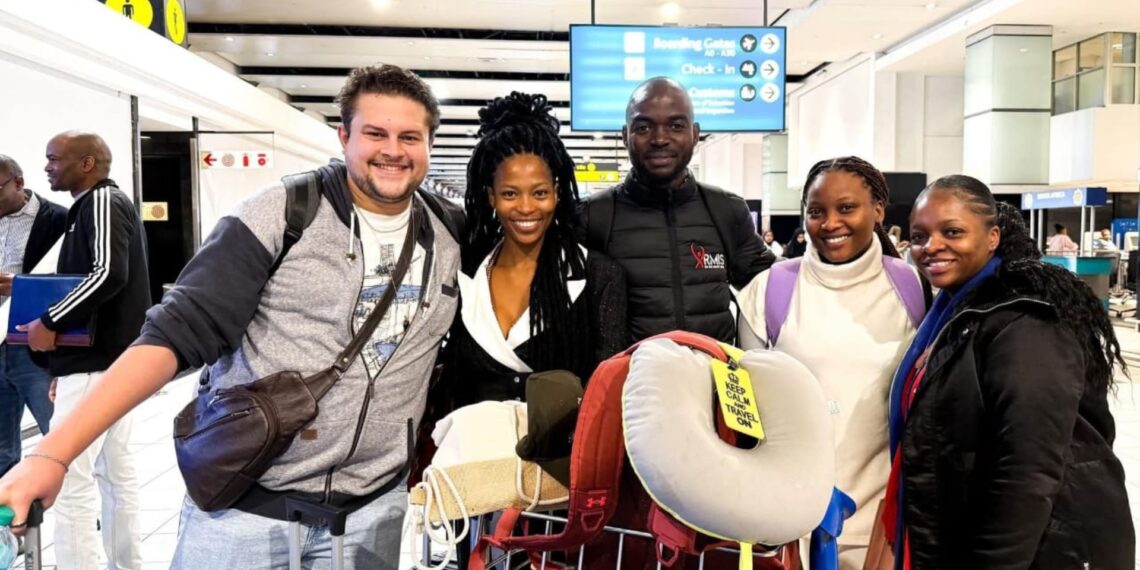
South Africa’s youth are soaking up knowledge and building vital global connections as part of an exciting agricultural exchange programme currently underway in Brazil.
The fully funded opportunity, led by the National Youth Development Agency (NYDA), has brought together participants from Brazil, China, the United States, Finland, and South Africa to learn from one another and exchange ideas on sustainable farming and food security.
Hlobi Yende, one of the chaperones accompanying the group, said the main objective of the trip is to expose the best candidates out of the 1 200 applications that were received to attend the programme to give them a once-in-a-lifetime fully funded experience to represent South Africa.
According to Yende, the aim is to gain insight into Brazil’s robust agricultural sector and understand how its systems operate, to adapt and apply those lessons to improve farming practices in South Africa.
Related stories
- Youth-led farming sparks hope and transformation
- G20: Agri-scientists champion smallholders and sustainability
- Bongi empowers youth through food, farming, and family ties
The programme also seeks to build international networks that could lead to future trade opportunities, especially given the participation of countries like Brazil, China, the United States, and Finland.
Yende said the NYDA is paving the way for young people to dream and achieve beyond borders. “What it means for the NYDA is being able to elevate yet another group of students, as this is the fourth cohort going through this programme.
“They are contributing towards the empowerment and upliftment of the youth and exposing us beyond borders. Broadening our mindsets and showing us that it’s possible to dream beyond borders,” she said.
Hands-on agricultural learning in Brazil
Several days into the programme, the group is already energised and deeply impressed by the insights gained, with Yende expressing eagerness for the experiences still to come.
One of the standout moments so far was a visit to a calf nursery in Brazil, the world’s fifth-largest dairy producer, a hands-on experience that left a lasting impression on the group.
“They are focusing mainly on the commodities that I am currently farming with, which are livestock (cattle to be specific) and grains (maize and soya). We got to visit a maize trial field and we are still shocked at the fact that they get 15 hectares from 1 ha on dryland, which is amazing and makes you wonder how you can improve our yields to get to that number,” she said.
Yende noted that the journey has already expanded her knowledge, with hopes of building meaningful networks and exploring potential export opportunities to grow her business. She also emphasised the value of the group dynamic, describing the South African delegation as a diverse and engaging team that has made the experience both enriching and memorable.
READ NEXT: Tech & trade: Youth urged to redefine farming in Africa
A scientist’s perspective
Participant Keagan le Roux, currently working in a diagnostic lab, is passionate about agricultural science and aspires to deepen his involvement in plant genetics and research.
“I have a strong passion for agricultural science and aspire to become more involved in plant genetics and research, particularly in developing more resilient and reliable crops to support food security in South Africa.
“Coming into the Brazil-South Africa Agricultural Exchange Programme, I was eager to expand my knowledge of agricultural systems, learn from Brazil’s innovation in sustainable farming, and gain exposure to methods that could be adapted to address South African challenges, especially in the areas of genetic diversity and food resilience,” Le Roux said.
For Le Roux, the experience has already been transformative. “We’ve explored many facets of Brazilian agriculture so far, and it has been incredibly eye-opening. I was particularly drawn to agroecology and the rehabilitation of forest land, which highlighted the pivotal and often understated role of agriculturists in environmental sustainability.”
READ NEXT: Export ready? Here’s what to know about Sacu