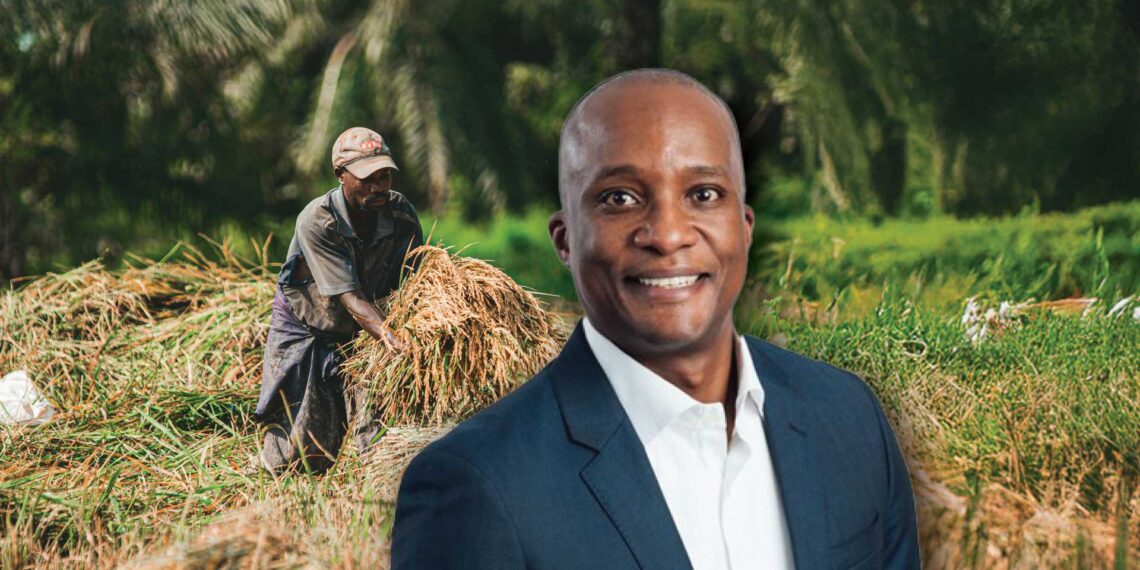
Despite barriers, young South Africans are reshaping agriculture. Diale Tilo, executive director at Kgodiso Development Fund, shares how others can learn from youth making waves in agriculture.
Even though young people aged 18 to 34 make up over a third of the South African population, the average age of a farmer in South Africa is 62 years old (Sihlobo, 2017). This means that currently, young people are largely underrepresented in the agricultural sector, and given how key this demographic is to its transformation, this poses a serious risk.
Despite growing urgency, agriculture continues to be overlooked by young people. Many still view farming as outdated, unskilled, and labour-intensive – an image that fails to reflect the sector’s evolving realities.
Barriers such as limited access to land, funding, training, and mentorship also contribute to this disconnect. As a result, many young people turn to urban employment, unaware that farming can be a viable and rewarding career path when supported by the right resources, networks, and knowledge.
The Kgodiso Development Fund (KDF) was founded by PepsiCo South Africa in 2020 with the strategic priority of addressing these exact barriers by supporting youth participation, rural economic development, and inclusive growth within the country’s agricultural sector.
The young farmers that KDF has funded thus far have brought innovation, sustainability, and fresh energy with them. Their involvement promises to spark economic development, create jobs, and lead to the introduction of modern, climate-smart farming practices.
A new generation: Simphiwe Mabuza’s story
At just 31 years old, Simphiwe Mabuza is a shining example of how the youth can lead the way in agriculture and represents the next generation of black commercial farmers. Based in Breyton, Mpumalanga, Mabuza runs operations at his father’s farm, Lisise Farming, a 553-hectare grain operation. With the support of the Kgodiso Development Fund and Standard Bank, the farm secured R4.4 million in funding to grow its business.
Related stories
- Closed doors: Young farmers still left out of agri power circles
- 30 under 30: A toast to young changemakers in wine
For Mabuza, farming is about more than producing crops – it’s about redefining what it means to be a young, black farmer in a historically exclusive industry. It’s about legacy, breaking barriers, and expanding opportunities for future generations.
His love for farming began during school holidays, particularly Christmas breaks spent at his grandmother’s house, where his father would gather the grandchildren at dawn to spread fertiliser using small buckets.
“For my father, farming wasn’t just work, it was a way of life,” Mabuza reflects.
With a diploma in operations management, he transitioned from metropolitan life to the fields, determined to bring his skills back to the land.
“It was a hard but necessary shift. This farm is part of my family’s legacy,” he says. “Many of my peers who’ve seen me running the farm have come to realise that, while it’s demanding, it’s far from impossible. You just have to start and seize the opportunities that come your way.”
With nine years of hands-on production experience and four seasons of independently managed operations, Mabuza has shown impressive growth, technical competence, and business acumen. His operations stimulate local economic development and food security through grain production and transformation within the agricultural value chain.
Mabuza is not only scaling his own operations but is also becoming a role model in his community, leveraging mentorship from his father and sharing knowledge with peers, multiplying the developmental impact of this funding.
Importantly, farming is not just about innovation; it’s also about preserving heritage. It’s about blending traditional wisdom with modern techniques to create more sustainable, effective systems. This dual approach can only be driven by a generation that values both past and future.
Mabuza is committed not only to farming but also to uplifting the community around him. Lisise Farming partners with local service providers – from veterinary care to equipment maintenance – ensuring that the local economy benefits from its operations. Farmworkers regularly receive 50kg bags of mealie meal to support their families, and meat from livestock is shared as part of an ongoing tradition. The farm also donates mealie meal regularly to the local church.
This kind of community-rooted agriculture fosters resilience, combats malnutrition, reduces reliance on imports, and strengthens local food systems.
“It’s about contributing to food security in this nation,” Mabuza explains. “But it all starts here, with our community. No one is coming to save us – we are our own liberators. It’s more than farming. It’s about self-sufficiency for ourselves, our families, and our country.”
The future is growing
With youth unemployment a pressing issue, agriculture stands out as a career that not only sustains life but also offers economic transformation, especially in a market like South Africa.
Globally, agriculture contributes over 25% to the GDP of many developing countries. Engaging youth can supercharge this impact by introducing technology, new energy, and modern solutions. Young people are well-positioned to integrate advancements such as AI, drone technology, and remote sensing into traditional practices, elevating the entire industry.
Farming, when reimagined and restructured, can unlock economic freedom, social equity, and environmental sustainability. Farming is about more than just growing food; it’s about shaping a future that works for everyone: economically, socially, and environmentally.
Youth are not just the future of farming; they are the now. With access to land, resources, and knowledge, they can radically transform both their communities and the broader agricultural landscape of South Africa.
It’s time to invest in the next generation of growers and, in doing so, invest in the prosperity of the nation.
- Diale Tilo is the executive director at Kgodiso Development Fund. The views and opinions expressed in this article are those of the author and do not necessarily reflect the views or positions of Food For Mzansi.
READ NEXT: Meaty bones & dumplings bring comfort and pack a punch