Long-term farm viability depends on more than immediate yields; it requires strong soil fundamentals, smart crop nutrition, and effective generational succession. Join industry leaders at the SADC Plant Nutrition Symposium on 19 and 20 November 2026 in Stellenbosch to explore actionable agronomic insights and precision tools.
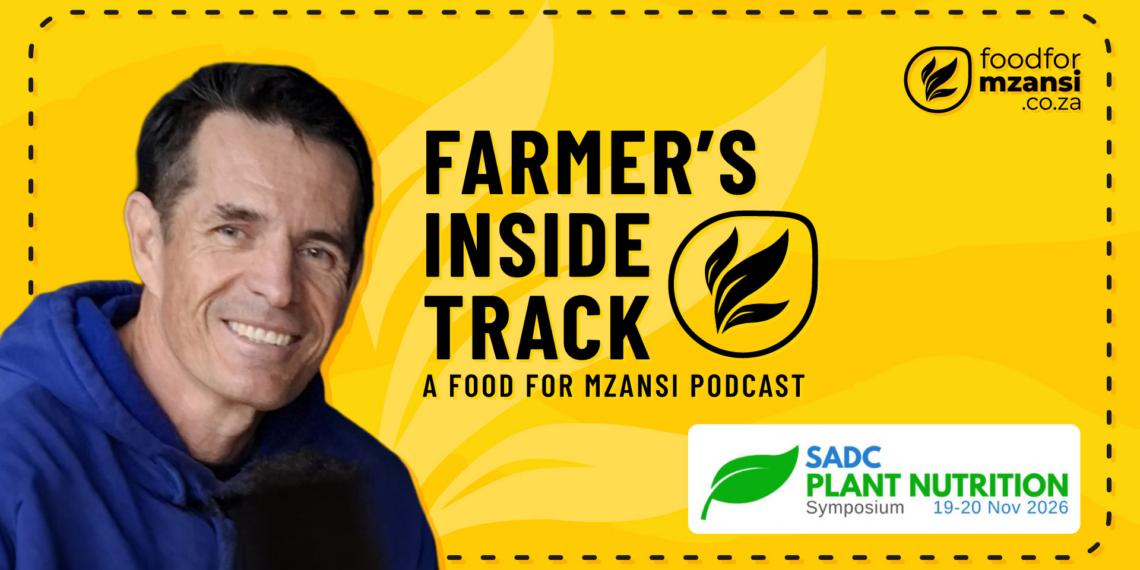
The SADC Plant Nutrition Symposium, taking place on Thursday, 19 and Friday, 20 November 2026 at the Protea Hotel, Technopark, Stellenbosch, brings growers, advisers, and agricultural experts together to explore long-term soil health, precision technology, and farm viability.
While immediate yields and weather patterns traditionally dominated agricultural strategy, long-term farm viability is shifting toward soil health, precise input management, and generational transition.
For Dr Michael Southwood, founder of the Agri Vision Foundation and organiser of the SADC Plant Nutrition Symposium, bridging the gap between scientific research and field application is essential to securing the sector’s future.
Drawing on 26 years of consulting experience and a personal background in farming, Southwood emphasises that surviving over a 30-year horizon requires building structural wealth that extends to the broader rural community.
Regenerative agriculture: Navigating generational gaps
At the operational level, that success hinges on navigating generational handovers effectively and managing farm succession with a shared vision.
“I see many older growers breaking the process and frustrating the next generation that wants to run too fast,” Southwood observes. “Both generations need to yield and find mutual ground, especially towards regenerative agriculture.”
To protect operations against price volatility and global market shifts, Southwood strongly advises against monoculture systems, encouraging producers to diversify their income streams.
“Cash flow is very important on a farm, and then you need to think medium-long term and then long term, which means one should probably have at least two, preferably three to four different branching options on the farm,” he says.
Click here to register for the SADC Plant Nutrition Symposium.
Related stories
- SADC symposium brings plant nutrition research closer to the farm
- New plant health rules to fight pests and diseases
- Plant nutrition programme delivers sustainable results
- Plant health: how to treat leaf diseases on maize
Building on a strong soil foundation
When it comes to sustainable production, Southwood advocates for prioritising overall “soil quality”, giving equal weight to physical structure, chemical balances, and biological activity.
Establishing a solid physical foundation involves alleviating compaction to ensure proper water infiltration and optimal oxygen movement, while chemical management focuses on correcting soil pH, balancing cation ratios, and eliminating toxicities.
“If you want to farm biologically, that needs to be built on a good, strong foundation, and that stone foundation is a chemical and soil physical foundation,” Southwood explains. “Nothing happens without oxygen above ground and also below ground.”
Once these fundamentals are established, producers can transition more smoothly toward biological and regenerative practices without taking severe risks.
“Regenerative means just starting to turn the big ship from an inorganic-only point of view to slowly incorporating fertiliser products that can have a slow-release or controlled-release effect, so you don’t have a big, severe salt-laden approach on the soil that negatively affects the biology,” he says.
Avoiding common agronomic traps
Short-term operational shortcuts frequently degrade land over time and compromise future productivity. Southwood highlights several critical mistakes that require active management, starting with excessive fertiliser application.
“What I do see in South Africa with consultants, whether they’re company-based or private, is we over-apply nitrogen between 15% and maybe even 40% in most cases,” Southwood cautions.
“Once you do that, you make the plant much more susceptible to disease and pathogen attacks.”
He also points to pest resistance as a growing threat across South African farming regions.
“I believe as a consultant, you need to bring in at least two new active ingredients, an insecticide and a fungicide, to your farm every year to suppress that resistant plant or disease or insect populations.”
Click here to register for the SADC Plant Nutrition Symposium.
Smart nutrition, precision measurement, and carbon
Managing crop nutrition requires moving away from rigid, standardised recipes and using precision tools to monitor both crop needs and soil health in real time.
Rather than relying on guesswork, producers can use pre-season and post-harvest analyses to establish exact nutrient extraction norms and base cation percentages.
During the winter months, applying organic acids and biostimulants helps activate soil carbon, while ongoing monitoring of soil electrical conductivity (EC) and pH prevents harmful salt buildup by allowing growers to split fertiliser applications into smaller, targeted doses.
In-season sap analysis further empowers farmers to make real-time adjustments to nitrogen, potassium, calcium, and Brix levels in the field.
While weather stations, predictive disease software, and satellite imagery streamline day-to-day decision-making, Southwood says the ultimate indicator of farm health is soil carbon.
“The currency in plants is carbohydrates, but the currency in soil is carbon,” Southwood emphasises. “Carbon would buffer your soil to peaks in temperature; carbon would buffer the soil from saturation… so one has to measure it every year and know what direction your soil is going into.”
Beyond delivering practical knowledge to growers, attending the symposium directly supports a larger community purpose.
“The main motivation of the symposium is to fund the operational cost of our non-profit company, Agri Vision Foundation, that focuses on food security and entrepreneurship and healthy families,” Southwood concludes.
Joining the regional conversation
By participating in the SADC Plant Nutrition Symposium, producers and technical advisers gain access to actionable agronomic insights while actively supporting the foundation’s initiatives across Southern Africa.
Click here to register for the SADC Plant Nutrition Symposium or contact the Agri Vision Foundation team for delegate bookings and programme details at agrivisionfoundation.co.za.
Tickets and online access are now available.
READ NEXT: Mastering foreign exchange: Smart strategies for SA agri exporters