South Africa’s rural development debate often starts with a familiar idea: if rural households have more land, they can produce more food, earn more money and become “emerging farmers” who eventually develop into commercial farmers.
This idea appears in several government policy documents, such as the National Development Plan 2030, the Comprehensive Rural Development Programme, the Strategic Plan for Smallholder Support and the Agriculture and Agro-processing Master Plan.
Within these documents and political rhetoric, farming is expected to act as the main engine for economic development in the deprived former homelands of South Africa. This ambition is rooted in South Africa’s history.
Under colonialism and apartheid, laws such as the 1913 Natives Land Act restricted Black land ownership and concentrated much of the Black population in the former “homelands”. These areas became characterised by overcrowding, poverty and inadequate infrastructure, which continue to shape rural livelihoods today.
Current agricultural and rural development policy therefore combines several objectives: redressing unequal access to land, improving agricultural production and food security, creating employment, expanding market participation and developing an inclusive rural economy.
This has often meant providing small-scale farmers with land alongside agricultural inputs, infrastructure, finance, training and other forms of support intended to increase production and participation in agricultural value chains.

But research findings from two rural communities suggest that this picture is too simple. Our farming systems research team at the University of the Free State investigated the role farming actually plays in rural households’ livelihoods, the constraints on agricultural production and the alternative farming futures that might be possible.
We engaged with 132 small-scale farming households in two provinces. We used household surveys, life history interviews, farm mapping and focus group discussions.
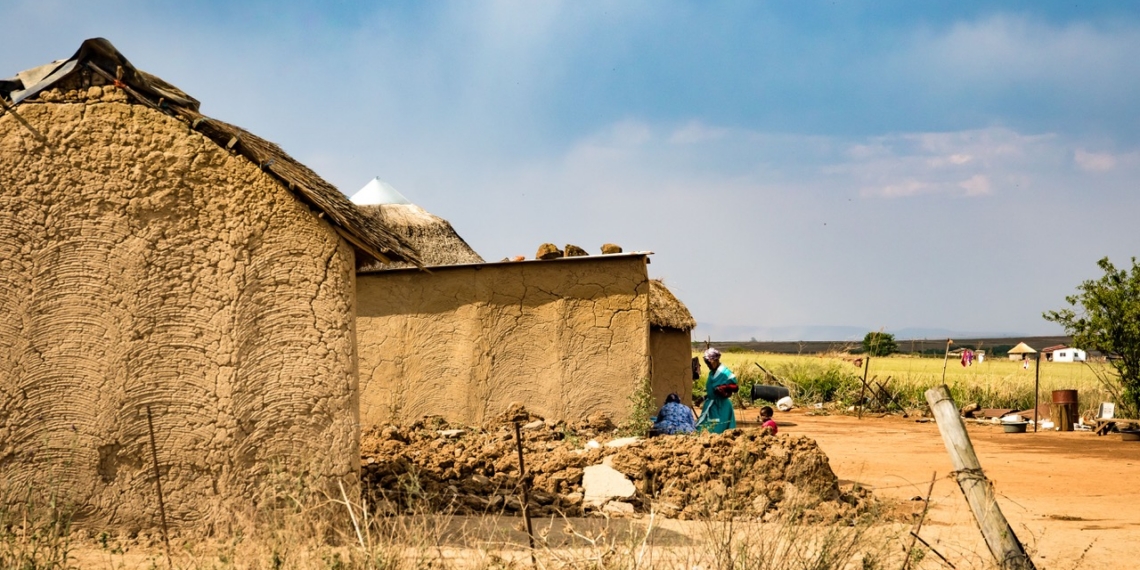
The study locations were Emmaus, near Bergville and the Drakensberg mountains of northern KwaZulu-Natal, and Thaba Nchu, about 60km from Bloemfontein, the capital of the Free State. These communities were selected as they are both in former homeland areas, but differ in their environmental and socioeconomic circumstances.
Related stories
- High input costs threaten land reform success
- Nyhontso outlines billions to boost land reform and viability
- Systemic failures stall SA’s land reform progress
- CPA crisis: Non-compliance drags land reform down
Our study found that farming remained important to food security and the income of rural households, but it was rarely the main source of income. Instead, households combined farming with wage employment, small businesses, social grants and other activities to make a living.
This matters because rural development policies that focus mainly on increasing agricultural production or expanding access to land (as South Africa’s do) miss the interconnected factors that actually determine whether households can improve their livelihoods. These factors, including labour dynamics, infrastructure, markets, institutions and household aspirations, determine whether people can – and want to – expand farming.
Farming is part of a broader livelihood system rather than a standalone route out of poverty.
Farming is only one part of rural livelihoods
First we conducted a survey of households. This collected a broad range of information about land, production, incomes and so on.
In both survey locations, rural households differed hugely from one another.
Some households had very limited incomes and depended heavily on off-farm sources of income such as social grants, wage employment and small businesses. They often invested these resources back into farming. For most households, farming contributed to food security and provided some income, but it was rarely enough to support the household on its own.
Only 16% of households in Emmaus and 19% in Thaba Nchu were able to surpass the South African Food Poverty Line (currently R868 or US$54 per person per month), and off-farm sources contributed the most to their income.
The differences between households matter. A household with a stable income from employment may be able to buy livestock, hire labour, or invest in farming inputs. A poorer household may have land but lack the money or labour needed to cultivate it. The two households may therefore have access to similar agricultural resources but very different opportunities to benefit from them.
The same applies to aspirations. Some households see farming mainly as a way to secure food. Others see it as an income earner. Only 12% of household heads in Emmaus and 36% in Thaba Nchu aspired to farming as a business. Household dependants (aged between 18 and 32), on the other hand (64% in Emmaus and 80% in Thaba Nchu), aspired to education, wage employment or migration.
This means that there is no single pathway from small-scale farming to improved livelihoods. Rural households start from different positions, face different constraints, and aspire to different futures. Treating them as a single category of “small-scale farmers” can lead to policies that work for some households while doing little for others.
The biggest constraint to expansion is labour
Another striking finding was that land was not necessarily the biggest obstacle to increasing production. Many households had access to land but could not use all of it.
Our research identified four obstacles.
Firstly, labour. A household might have land available, but insufficient labour to cultivate it.
Secondly, infrastructure. In Emmaus, for example, poor roads and inadequate water infrastructure limited the potential to expand or diversify production.
Thirdly, in Thaba Nchu, communal grazing land was important to livestock farmers, but conflicts over its use and management undermined productivity.
Fourthly, farmers couldn’t necessarily develop alternative farming enterprises. In Emmaus, for example, people like to grow maize and beans to eat themselves, leaving less land for more market-oriented crops and other farm activities.
A farming system can appear productive and profitable on paper and still fail in practice if it does not fit the community’s social and institutional realities.
Rural households also have aspirations beyond farming
One of the most important lessons is that many rural households are not simply waiting for an agricultural intervention. They have their own ideas about what a better future looks like.
Many households in our study viewed farming as a means of survival and social security rather than a long-term commercial career. Younger household members were not all interested in taking over the farm.
This does not mean that agriculture has no future in the former homelands of South Africa. Rather, the future of rural livelihoods is likely to involve a combination of activities. Rural development programmes should be designed accordingly.
We need to look at the whole system
This is where a farming systems approach can make a difference. Instead of asking only whether farmers have enough land, fertiliser, water or technology, it asks how these factors interact with the household, labour availability, markets, institutions, natural resources and people’s aspirations.
Rather than asking only how to turn small-scale farmers into commercial farmers, we should also ask: what combination of opportunities can help rural households build the futures they want?
For younger generations in particular, better opportunities may lie partly outside agriculture.
- This article was first published by The Conversation. It was written by Neo Mathinya, a lecturer at the University of the Free State (UFS), and Linus Franke, professor in soil, crop and climate sciences, UFS.
READ NEXT: Smarter farm decisions start with actionable weather data