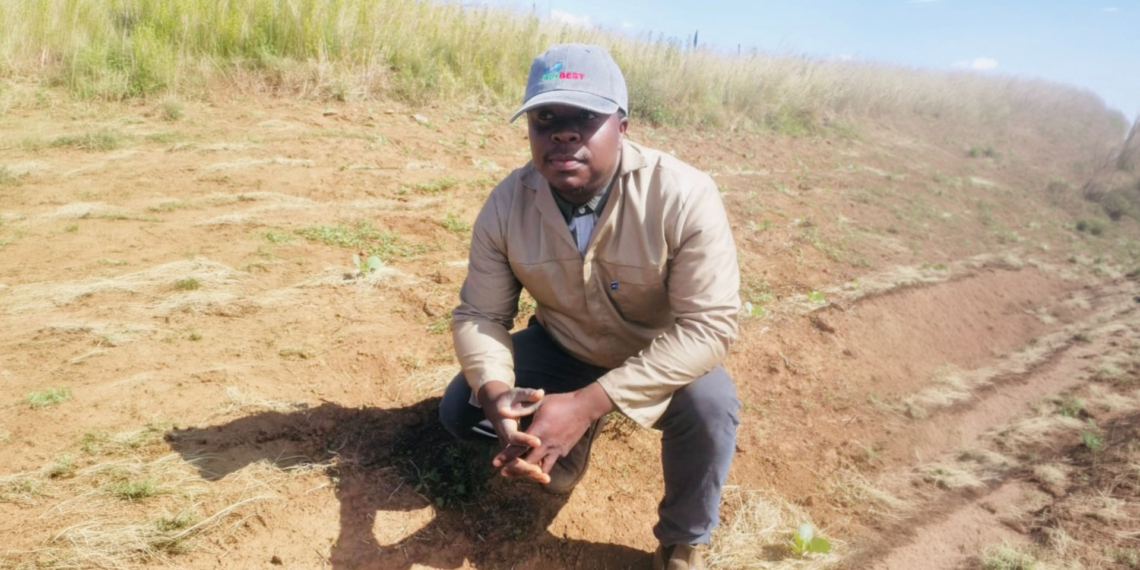
Driven by a fierce desire for absolute independence and armed with nothing but internet research and family land, Luyolo Mfenqa, founder of Co Sokwenzeka Farming & Projects, is completely rewriting the script on self-taught commercial success in the Eastern Cape.
What began as a modest 100-seed backyard experiment has grown into a commanding six-hectare agricultural force in the heart of ePhepheni village.
Mfenqa’s agricultural journey began under the guidance of his late mother, Nomakhosi, his father, Zizimbane, and his grandmother, MaMcaphu. Growing up, they constantly requested his help with traditional, indigenous farming methods on the family homestead.
“At first, it did not make sense,” Mfenqa recalls. “We were always encouraged to participate by them.”
While his elders sowed the early seeds of discipline, Mfenqa went on to attend Phepheni Junior Secondary School and later Senyuekele Senior Secondary School, where he matriculated in 2008. During that period, his future in the fields was not yet clear to him.
“At the time, I was not really aware if I liked farming during my primary or high school days, but what I remember is that I loved agriculture as a subject in primary school. I was always present during practicals. Perhaps the love had been growing slowly inside,” he says.
Related stories
- Ex-cop beats poisoning disaster to build growing livestock business
- ‘Cayenne Chilli Lady’ brings the heat with 8.5ha farming success
- Simemo Nkosi grows family farm into diversified enterprise
- 100 ha of hope: Aphiwe revives family farming legacy in Engcobo
The path to independence
After school, Mfenqa furthered his studies at Nelson Mandela Metropolitan University (now NMU), from 2009 to 2012. Following his graduation, he worked in government for over nine years in a professional role entirely unrelated to agriculture.
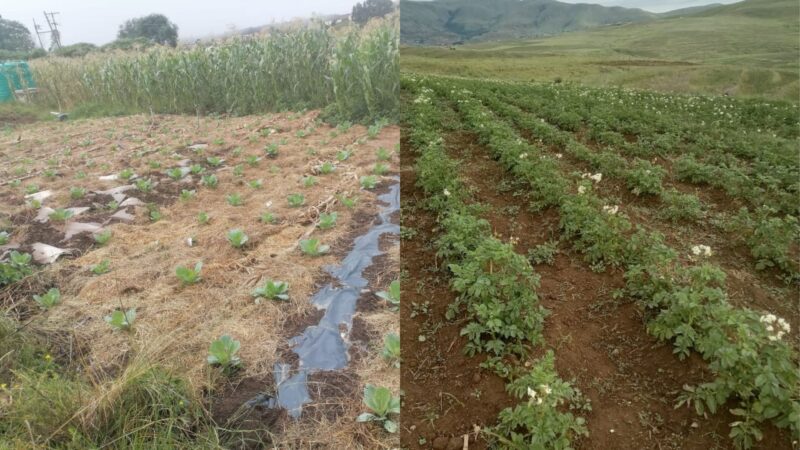
Yet, the calling of the soil never truly left him. While still working his regular job, Mfenqa began testing his hands at food production by managing a small home garden of less than 1000 square metres. He started small, planting dried beans, 100 seeds of cabbage, 100 seeds of spinach, and potatoes, gradually expanding the plot day by day to feed his family.
As the garden flourished, Mfenqa used modern technology to bridge his lack of formal training. He spent hours watching online videos of other successful farmers, conducting research, and meticulously applying those lessons to his own soil.
By 2023, having fallen deeply in love with the process and possessing a wealth of new practical knowledge, he made the bold decision to venture into farming full-time.
“I wanted to be independent, do my own thing in my own space,” he explains.
From backyard garden to six hectares
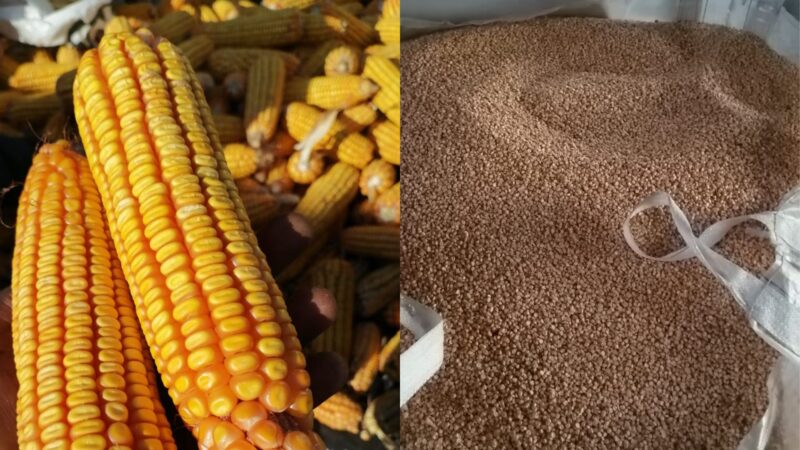
What started as a backyard experiment quickly grew. Over the past two seasons, Mfenqa has expanded his crop rotation to include both dry and green mealies.
As the operation gained momentum, he received crucial advice to formalise his business to unlock growth opportunities. He officially registered his agribusiness as Co Sokwenzeka Farming & Projects in 2025.
Today, his active farming operations span six hectares, combining his own yard with his father’s previously underutilised land. Mfenqa already has his sights set on further expanding across the rest of his father’s land as soon as resources allow.
To keep operations running smoothly, Sokwenzeka Farming & Projects relies on a flexible labour model. While Mfenqa does not employ permanent workers, he utilises four part-time assistants – two men and two women – and frequently opens his gates to community members who stop by looking for work during peak operational periods.
The harvest is marketed locally, with Mfenqa driving around the community to supply local vendors, spaza shops, and established retail outlets like Boxer.
Conquering hurdles through passion
Despite his rapid expansion, Mfenqa’s journey is not without its trials. The farm currently operates entirely without external funding, forcing him to fund every expense out of his own pocket while his financial applications remain pending.
“Irrigation and being limited to water access bring other challenges around farming, as we are unable to constantly produce products as they are needed in the market,” Mfenqa admits.
Proper fencing is also a persistent issue, making it difficult to protect profits because funds must constantly be diverted to fix structures on the farm.
Yet, his vision for the future remains unshakeable. “I would love to see myself somewhere in the next few years on a bigger farm, with different crops available in different seasons. In fact, I want to have different vegetables all year round and take my products into neighbouring countries.”
His advice to aspiring producers reflects the grit required to transition from a backyard plot to a commercial operation: “Farming is something you must spend your absolute love, energy, and time on. You have to do it because you need to, not just for show. When challenges hit, your love for the land is what will conquer them.
“My biggest advice is to be teachable and register your company early so you are recognised for growth. But do not wait for funding to begin. Start small – even with just 100 seeds – sell your crop, and always dream of building something bigger.”
READ NEXT: ‘Cayenne Chilli Lady’ brings the heat with 8.5ha farming success