Komati is shifting from its coal-mining past toward a resilient, diversified future. Through the SEF initiative, the Seriti Institute is strengthening food security, restoring community confidence, and laying the groundwork for a technology-enabled local economy.
Since March 2025, Seriti Institute has been implementing the Social Employment Fund (SEF) in Komati – a catalytic public employment programme designed to stabilise communities, build skills and advance inclusive local development in an area deeply affected by economic decline.
Komati, Mpumalanga, a place long shaped by a single economic identity, is gradually beginning to cultivate new forms of work and community wellbeing.
Building on the earlier insight shared in When short-term jobs are not enough: Lessons from Komati’s Just Transition, the priority now is assessing whether the systems introduced through the Social Employment Fund are generating the early gains needed to support a more resilient and diversified local economy.
What matters most at this stage is whether these efforts are strengthening confidence, stabilising livelihoods, and laying the groundwork for lasting renewal.
Creating employment and food security
Since March 2025, Seriti Institute, funded by the Industrial Development Corporation (IDC), has been strategically implementing the SEF programme across six thematic areas: Food Security and Nutrition, Greening and the Environment, Healthcare, Parenting, Sports and Recreation and Digital Inclusion.
The programme initially aimed to recruit 300 participants but exceeded expectations and engaged 425 individuals on contract. A total of 125 participants have since exited into employment and education opportunities. This reflects the early impact of the programme in strengthening employability and creating pathways.
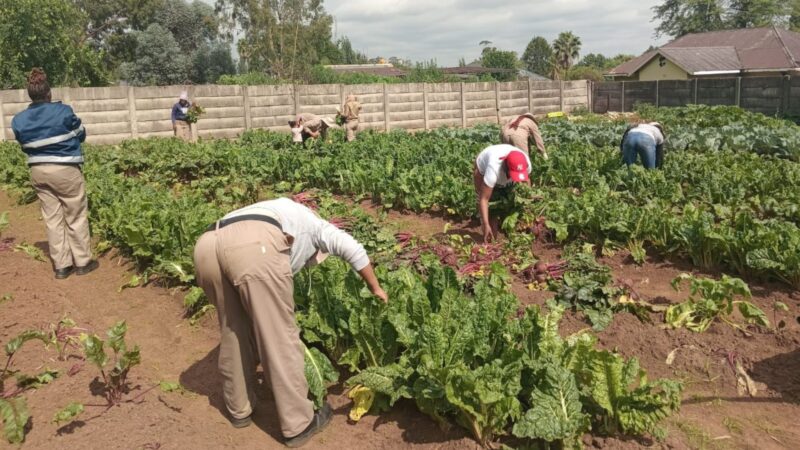
Agriculture has emerged as a central pillar of progress. Participants have cultivated more than 20 000 seedlings across seven production sites, while the seedling nursery has produced over 60 000 units. Training, infrastructure and consistent participation have contributed to improved food security and early enterprise potential. Participants have also shared how the programme is influencing their confidence and sense of direction.
“For years, coal was our identity, our work and our way of surviving,” reflects Lorial Nel, a former mine contractor. “Stepping into agriculture felt impossible at first, but now, growing food and seeing what our hands can create is restoring our confidence. This transition is giving us purpose again.”
Beyond agriculture, SEF has strengthened multiple social support functions that are essential during economic disruption. Through Seriti’s aRe Bapaleng programme, 447 household visits and 310 parenting and nutrition sessions have supported families requiring structured care.
Health screenings, 531 to date, have been conducted with the assistance of the mobile clinic and retired nursing personnel. Youth development activities now reach more than 209 young people, and 25 participants have completed leadership and community engagement training.
These interventions have played an important role in stabilising community well-being, which is a foundational requirement in any transition process.
Related stories
- Seriti’s community-led farming model delivers real rural change
- Seriti leads grassroots movement for clean air in Jozi
- Proposed Transformation Fund needs clarity to drive real change
Digital inclusion continues to expand. A total of 207 individuals have enrolled in online skills courses, supported by Digital Champions who assist with access, navigation and progress tracking. Thirteen participants have earned digital certifications. These emerging digital capabilities will be essential as Komati shifts toward a more diversified and technology-enabled local economy.
Water and land access
Despite clear momentum, several structural constraints continue to limit scale and durability. Access to land remains a critical barrier, as much of the suitable land is owned or managed by mining entities, with approval processes still unfolding. Without land for expansion, SEF cannot establish a central production hub capable of increasing agricultural output or supporting enterprise development.
Water scarcity presents a related constraint. Municipal water supply is inconsistent and costly for agricultural use, and access to mine-provided water remains delayed due to administrative processes. These constraints affect livelihood restoration, long-term planning and the pace at which Komati can reposition its local economy. Without timely resolution, the community risks losing momentum at a critical stage of transition.
As Dr Siphesihle Qange notes, “Our work in Komati demonstrates that structured programmes, community ownership and consistent participation can create real pathways for development. The progress achieved is meaningful, but long-term opportunity will only emerge if partners commit to supporting the conditions that allow this community to grow beyond its historical economic base.”
Komati’s trajectory continues to show that community-centred public employment can stabilise and uplift regions undergoing economic transition. The progress achieved underscores the value of structured implementation, reliable support systems and consistent engagement.
However, the long-term viability of this work depends on an enabling environment that allows growth to continue beyond short project cycles. The transition underway has created momentum, and what is required now is ensuring that this momentum is reinforced, resourced and supported to last.
Private-public partnerships key to growth
For Komati to advance meaningfully, coordinated action is required to unlock suitable land, secure reliable water access and build durable investment partnerships. These elements are essential to sustain the gains made through SEF.
Seriti Institute calls for strengthened collaboration across both the public and private sectors. By aligning mandates, accelerating decision-making and leveraging collective resources, partners can support a coherent pathway for Komati’s economic renewal. The progress underway is significant, and coordinated commitment is now essential to ensure that Komati’s transition evolves into long-term, community-led progress.
READ NEXT: Post-planting checklist for a successful crop season