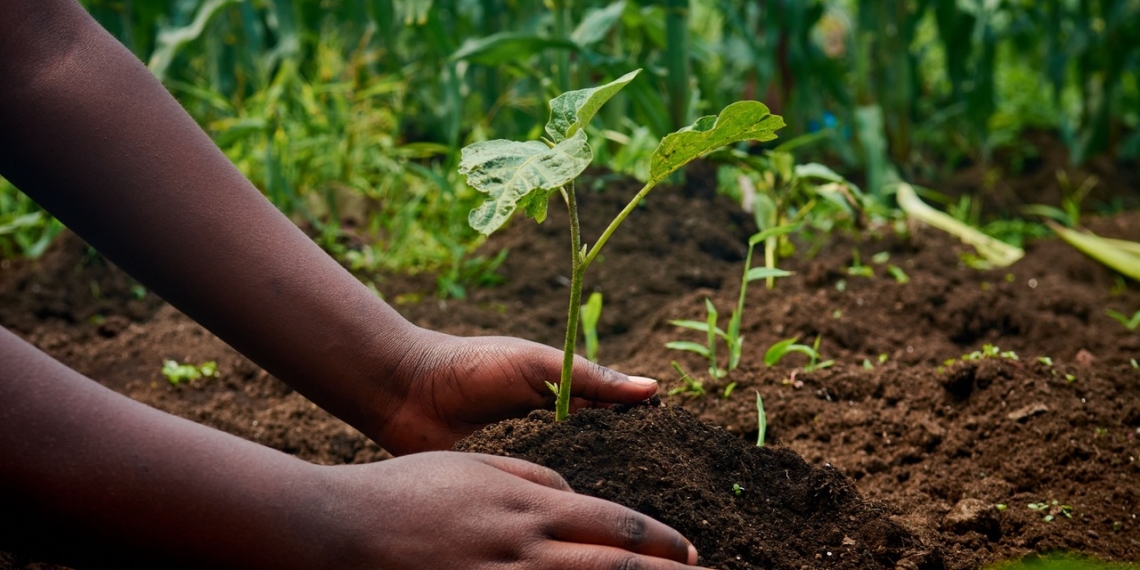
Crop protection is changing, giving farmers more tools to work with. Make sure your team has the knowledge to use them responsibly with CropLife South Africa’s online training. Sign up now.
Your farm has a range of crop-protection tools available. But do the people using them have the knowledge to use them safely and responsibly? Sign up now for CropLife South Africa’s online responsible-use training.
Crop protection is changing, and farmers have access to a range of tools to protect their crops, from integrated pest management and biological solutions to lower-risk technologies and conventional agricultural remedies.
But having a range of options also means having a responsibility to use them correctly. When agricultural remedies are misused, there can be consequences for people, the environment and the future availability of some crop-protection tools.
Having the right product on the shelf is only part of the job. The people handling it need to understand what they are using, how to use it safely and what to do if something goes wrong.
That is where training comes in.
CropLife South Africa’s Responsible Use of Agricultural Remedies: Train the Trainer course is designed to give farmers, farm managers, supervisors and farmworkers practical knowledge they can use on the farm.
And you don’t need to take your team out of the field for a day to do it.
The course is fully online and self-paced, giving participants three months to work through the training. They can also complete it in a single day if that suits them. It covers everything from understanding agricultural-remedy regulations and reading labels to safe handling, personal protective equipment, emergency response and decontamination, as well as waste management and container disposal.
Once completed, the certificate is valid for three years.
So, if people on your farm handle agricultural remedies, why wait? Sign up now and give them the knowledge they need to do the job responsibly.
Related stories
- Safe pesticide management: A guide for SA farmers
- Pest resistance: CropLife SA champions responsible stewardship
- How CropLife SA is leading responsible pesticide disposal
It starts with knowing what’s in your hands
For anyone handling an agricultural remedy, the label is one of the most important tools available.
It tells you how the product should be used and provides important information about hazards and precautions. Understanding hazard communication, including the symbols, warnings and instructions used on labels, is an essential part of responsible use.
The same applies to personal protective equipment.
Knowing that PPE is required is one thing. Knowing what to wear, when to wear it and how to use it properly is another.
And then there is the question nobody wants to face, but everyone should be prepared for: what happens when something goes wrong?
Understanding emergency response and decontamination procedures before an incident happens can make a crucial difference.
Responsible use is therefore not simply about what happens when a product is applied.
It starts before the container is opened and continues until the product and its packaging have been dealt with properly.
Don’t just train one person
This is where the train-the-trainer approach becomes particularly useful for farmers. The course by CropLife South Africa isn’t simply designed to give one person a certificate and leave it there.
People who successfully complete the training retain access to resources that they can use to share what they have learnt with colleagues, co-workers and peers. That means the knowledge can move through the farm.
A farm manager can use it with a team. A supervisor can reinforce good practice with workers. And a trained employee can share what they have learnt with colleagues.
One person can start the conversation, but the goal is a whole farm that understands responsible use.
For farmers managing permanent teams as well as seasonal workers, that can be particularly valuable. Responsible use becomes something that is reinforced as part of everyday farm life, rather than something that only comes up during an inspection or after an incident.
The rules are changing too
There is another reason for farmers and farm managers to keep their teams up to date: the regulatory environment around agricultural remedies continues to evolve.
South Africa’s agricultural-remedy regulations have introduced additional requirements around certain restricted agricultural remedies, while the Globally Harmonised System has changed how chemical hazards are communicated through labels and other information.
For the people working directly with agricultural remedies, understanding these requirements matters.
But farmers don’t need another complicated document sitting in an office. They need people on the farm who understand what the rules mean in practice. That is what makes practical training so important.
The farmer’s toolbox needs looking after
Farmers need tools that work for their crops, their conditions and their businesses. That means making the most of the options available, while using them in a way that protects their continued use.
The crop-protection toolbox is not simply about having more products. It is about having the right tools available when farmers need them, and knowing how to use those tools responsibly.
When a tool is misused, it can have consequences that extend beyond a single application. Responsible use therefore plays a role in protecting the tools farmers have today, as well as the options available to them in the future.
And the farmer’s toolbox isn’t just what’s in the chemical store or sitting in the farm shed. It is also the knowledge, skills and experience of the people working on the farm.
So perhaps the question isn’t simply: “What’s in your toolbox?”
It is also: “Does everyone on your farm know how to use it responsibly?”
Give your people the tools
The Responsible Use of Agricultural Remedies: Train the Trainer course is available to enrol in throughout the year.
It is online, self-paced and designed to fit around the realities of working in agriculture. Participants have three months to complete the course, although they can work through it in a single day if they choose. The resulting certificate is valid for 36 months.
Most importantly, the knowledge doesn’t have to stop with the person who completes it. It can be shared. It can be reinforced. And it can help farmers make responsible use of the tools available to them, today and into the future.
Click on this link to sign up for the Responsible Use of Agricultural Remedies: Train the Trainer course.
READ NEXT: Five farming friends, one vision: Growing from setbacks to success