Thursday, October 22, 2026
SUBSCRIBE
22 GLOBAL MEDIA AWARDS
Food For Mzansi
  • News
  • Changemakers
  • Lifestyle
  • Farmer’s Inside Track
  • Food for Thought
No Result
View All Result
  • News
  • Changemakers
  • Lifestyle
  • Farmer’s Inside Track
  • Food for Thought
No Result
View All Result
Food For Mzansi
No Result
View All Result
in News

Small-scale pig farmers face bloody axe

Rising feed prices and other market uncertainties will ultimately push many of Mzansi’s small-scale farmers out of the industry, predicts SAPPO chief executive Johann Kotzé

by Zolani Sinxo
25th January 2022
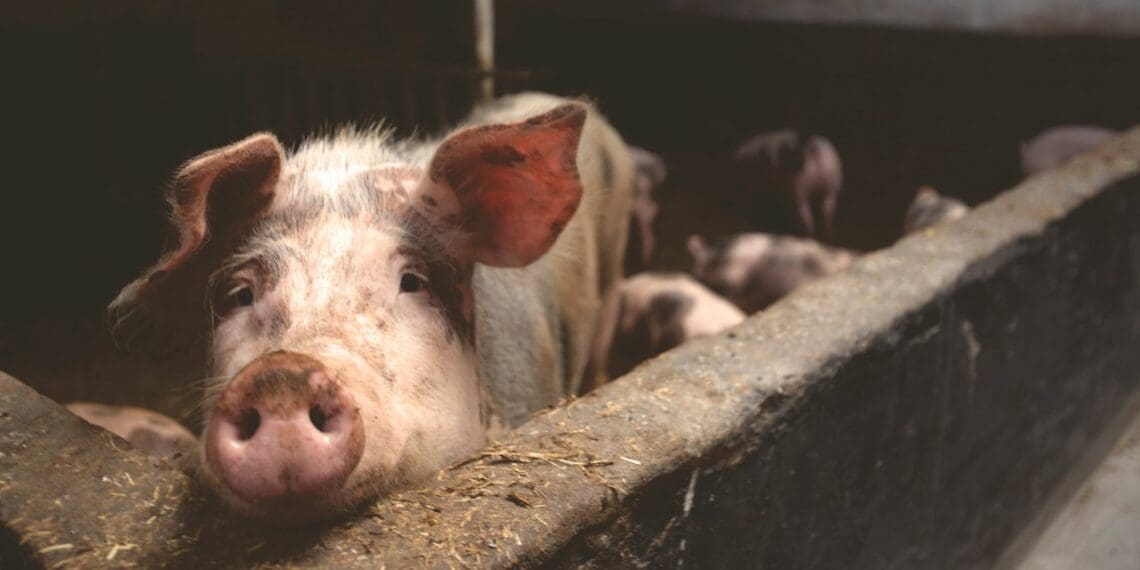
Producers who farm with between 100 and 400 pigs will, most likely, not survive the predicted tough economic outlook for 2022, believes SAPPO. Photo: Supplied/Food For Mzans

Producers who farm with between 100 and 400 pigs will, most likely, not survive the predicted tough economic outlook for 2022, believes SAPPO. Photo: Supplied/Food For Mzansi

Share on FacebookShare on TwitterShare on WhatsApp

Many small-scale pig farmers will not survive 2022. This is the prediction of Johann Kotzé, chief executive of the South African Pork Producers’ Organisation (SAPPO). He is expecting a tough year ahead for the pork industry.

Farmers are under pressure due to market uncertainties, including rising feed prices, which will ultimately push many small-scale farmers out of the industry, says Kotzé.

“I suspect we’ll lose many farmers who farm between 100 and 400 pigs. They’re really feeling the pinch. The industry had also suffered from the impact of African swine fever in 2021. This has made things difficult.”

Zolani Sinxo: Your prediction that many small-scale farmers will be axed might be a shocker for Food For Mzansi readers. Let’s unpack the factors influencing your prediction.

Johann Kotzé: The interim informal sector is not profitable for them and, most importantly, they are struggling to buy feed for their pigs. This places many farmers to resort to kitchen waste and this also is not recommended as it threatens food security. Feeding waste is not actually wrong, but some food waste puts animals at risk of diseases. Many of these pigs sometimes find it very difficult to be accepted in the markets because of the risks they are associated with.

It’s been a tough two years with the Covid-19 pandemic, but if you had to give a five-year overview, how did things go in the pork industry? Has the demand for pork increased?

The demand for pork has increased. We are doing excellently. There is a massive demand for pork because of the low retail price. However, the difficulty is that the farmers are not doing excellently and when there’s too much pressure on production profits and when your margins are low, the smaller-scale pig farmers are going to fall.

Large-scale farmers can survive because they can buy in bulk. This means even though the industry is doing well, the smaller farmers are not doing well. This means we are going to lose the smaller farmers.

If you had to look in your crystal ball, what’s your projection for the next five years?

We are seeing a lot of people immigrating to pork, or rather choosing to eat pork over other meat diets because of its low prices. We know other meats products have become quite expensive, so we are seeing a great future for the next five years. Beef prices are quite high, and lamb prices are going through the roof. I don’t think these prices will go down soon. As the pork industry, we are currently well-positioned in the markets. We will continue to be a protein of choice because we are affordable.

SAPPO does quite a bit to support small-scale farmers. Tell us about some of the initiatives.

We do have membership programmes where we try to assist members in terms of cost-effective farming methods and reducing production costs. We also link our members with abattoirs, making it easy for them to sell their products in the market. As SAPPO we continue to mentor our small-scale farmers in terms of finding effective ways to mitigate the risks and ensure they are exposed to many markets.

What are some of the things that you are most excited about for 2022?

The industry continues to show positive signs in terms of growth. We remain positive and believe everything will work out well despite the challenges. We are motivated by the mindset of our people who continue to turn every challenge into an opportunity. What excites me is the positive attitude and the determination to succeed. We try to survive at all costs.

ALSO READ: ‘Start big,’ advises Gauteng pig farmer

Sign up for Mzansi Today: Your daily take on the news and happenings from the agriculture value chain.

Zolani Sinxo

Zolani is an award-winning journalist and holds a National Diploma and a B Tech in journalism, he is a journalist at heart with a particular interest in developmental journalism, politics, African development stories, environment, and global and national current affairs. He started to develop an interest in writing and storytelling at a young age after he co-authored a folk tales children’s book in 2005 titled Our Stories, Amabali Ethu. After graduating, Zolani worked at various government institutions where he worked in the marketing and communication departments specialising in media liaison and editorial management. His passion for developmental journalism saw him being a co-founder of a community newspaper in Stellenbosch, Umlambo News. He has also worked for the Group Editors as a journalist for the George Herald and is also the editor of Idinga community newspaper. Zolani loves books, especially on Africa’s politics, history, stories, and biographies of African leaders who have made a significate contribution to the continent’s socio-economic wellbeing.

Tags: Pig farmersSmall-scale farmersThe South African Pork Producers (SAPPO)
News

CPAs urged to register for free governance support toolkits

by Staff Reporter
21st October 2026

With 82% of registered CPAs facing non-compliance issues, Vumelana Advisory Fund has introduced free support toolkits to improve land management...

Read moreDetails

Potatoes and tomatoes plunge while avocado prices soar

20th October 2026
Becoming bankable: How to get your farm ready for finance

Becoming bankable: How to get your farm ready for finance

20th October 2026

Fixing SA’s agricultural visa system to protect seasonal harvests

20th October 2026
‘Beware the dangers of illegal foot-and-mouth vaccines’

SA and Namibia reevaluate livestock trade after FMD outbreak

20th October 2026

Promising early conditions predicted for 2027 SA wine harvest

Fixing SA’s agricultural visa system to protect seasonal harvests

Smart irrigation: Precision tools boost crop yields while cutting costs

Becoming bankable: How to get your farm ready for finance

Agda pushes for pathways to commercialise emerging farmers

Join Food For Mzansi's WhatsApp channel for the latest updates!

JOIN NOW!
Next Post
Vermiculture, or vermicomposting, is the use of worms to break down organic waste and turn it into compost. Photo: Sippakorn Yamkasikorn

How to use vermiculture to make your own fertiliser

THE NEW FACE OF SOUTH AFRICAN AGRICULTURE

With 21 global awards in the first six years of its existence, Food For Mzansi is much more than an agriculture publication. It is a movement, unashamedly saluting the unsung heroes of South African agriculture. We believe in the power of agriculture to promote nation building and social cohesion by telling stories that are often overlooked by broader society.

Agda pushes for pathways to commercialise emerging farmers

Karoo sheep tallow finds new purpose in Mzansi beauty brand

Why simple farm records beat complex systems

Crowdfunding breathes new life into neglected Limpopo citrus farm

Mogogelo farmers receive packhouse and cold storage facilities

Godongwana unveils fuel relief and R10 billion El Niño buffer

  • Awards & Global Impact
  • Our Story
  • Contact Us
  • Cookie Policy
  • Privacy Policy
  • Copyright

Contact us
Office: +27 21 879 1824
News: info@foodformzansi.co.za
Advertising: sales@foodformzansi.co.za

Contact us
Office: +27 21 879 1824
News: info@foodformzansi.co.za
Advertising: sales@foodformzansi.co.za

  • Awards & Global Impact
  • Our Story
  • Contact Us
  • Cookie Policy
  • Privacy Policy
  • Copyright

Chat Options

About this assistant

This feature generates automated answers summarised from Food For Mzansi articles. By using it, you are interacting with an AI system (provided by Google), not a human. AI can make mistakes. Please refer to the source articles for verification and citation purposes.

Our staff do not check or moderate Lerato’s answers in advance, but may review some later. Our journalists continue to write and edit all the articles Lerato uses as sources.

To estimate unique and returning web users, we store a random browser ID in this browser. WhatsApp users are counted by phone number. The same person using both channels may be counted twice.

I'm Lerato, your AI assistant!
No Result
View All Result
  • News
  • Changemakers
  • Lifestyle
  • Farmer’s Inside Track
  • Food for Thought

Copyright © 2026 Food for Mzansi